Syrien
Syrien ein Jahr nach Assad: Reform oder Unsicherheit?

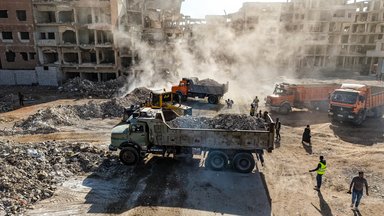
Innere Konflikte und strukturelle Hürden
The transition is taking place under difficult conditions. Large parts of the country are beyond the control of the central government. Local power centers that emerged during the war continue to shape politics and the economy. This fragmentation makes it difficult to build state authority, hinders unified administrative action, and slows down reforms.
In Daraa, in the southwest, and along key transit corridors, clan structures and former rebels dominate. Kidnappings, attacks, and violence remain commonplace. In Suweida, home to the Druze minority, skepticism towards the new government persists. Escalations of violence have left deep divisions, and many residents doubt the government's ability to guarantee security.
On the coast, rivalries within Alawite networks are exacerbating the situation. In the northeast, the Kurdish-dominated Syrian Democratic Forces (SDF) control key oil and gas fields as well as administrative structures. An agreement between the government and the SDF would be crucial to securing territorial integrity and energy sovereignty. However, in addition to the internal Syrian power struggle, Turkey opposes any strengthening of the SDF and views even limited aspirations for autonomy as a threat.
Sicherheitspolitik und internationale Dimension
Despite the challenges, there has been progress in security policy. According to the government, nationwide operations have led to the arrest of suspected extremists. The organization ACLED has recorded a decline in attacks in cities.
EinAA turning point was President al-Sharaa's visit to Washington. The US intensified cooperation with the new government, for example through joint intelligence gathering, technical support, and coordinated operations against ISIS cells. Washington sees a more stable Syria as an opportunity to contain cross-border threats and thereby guarantee Israel's stability.Wendepunkt war der Besuch von Präsident al-Sharaa in Washington. Die USA intensivierten die Zusammenarbeit mit der neuen Regierung, etwa durch gemeinsame Aufklärung, technische Unterstützung und koordinierte Operationen gegen ISIS-Zellen. Washington sieht in einem stabileren Syrien die Chance, grenzüberschreitende Bedrohungen einzudämmen und dadurch Israels Stabilität zu garantieren.
Gesellschaftlicher Zusammenhalt und wirtschaftliche Öffnung
NebenBesidesBesides security policy issues, societal restructuring remains a central task. President al-Sharaa bases his legitimacy on a transitional political constitution and an election whose competitive conditions were strictly restricted and resembled more of a selection process. The vote marked the symbolic beginning of the transition rather than a genuine democratic process. In the coming years, it will be crucial whether stable institutional foundations for political participation can be established. This includes a binding timetable for the constitutional process, independent election oversight, and reforms to media and party law that enable public debate and organizational diversity. The constitutional process itself is still in its early stages. It must clarify how the executive and legislative branches will be legitimized in the future, which mechanisms for the separation of powers will apply, and how minority rights can be constitutionally guaranteed. Another key area concerns transitional justice and property rights. For many who wish to return, dealing with past expropriations remains a crucial issue, alongside economic prospects. Without transparent procedures for clarifying property rights, restitution, or compensation, reintegration will hardly succeed. At the same time, questions remain regarding amnesties, reintegration programs, and reforms of the security services. These measures are intended to protect returnees as well as curb informal power structures. Instruments such as GDR and SSR programs, ombudsman offices, or local security pacts could offer reliable protection to minorities and vulnerable groups. However, transitional justice must not be limited to dealing with the past. It must also create mechanisms to prevent future arbitrariness and thus strengthen trust in the new state. Regarding security policy issues, the societal reorganization remains a central task. President al-Sharaa bases his legitimacy on a transitional political constitution and an election whose competitive conditions were severely restricted and resembled more of a selection process. The vote marked the symbolic beginning of the transition rather than a genuine democratic process. In the coming years, it will be crucial whether stable institutional foundations for political participation can be established. This includes a binding timetable for the constitutional process, independent election oversight, and reforms to media and party law that enable public debate and organizational diversity. The constitutional process itself is still in its early stages. It must clarify how the executive and legislative branches will be legitimized in the future, which mechanisms for the separation of powers will apply, and how minority rights can be constitutionally guaranteed. Another key area concerns transitional justice and property rights.For many wishing to return, dealing with past expropriations remains a crucial issue, alongside economic prospects. Without transparent procedures for clarifying ownership, restitution, or compensation, reintegration will hardly succeed. At the same time, questions arise regarding amnesties, reintegration programs, and reforms of the security services. These measures are intended to protect returnees while also curbing informal power structures. Instruments such as GDR and SSR programs, ombudsman offices, or local security pacts could offer reliable protection to minorities and vulnerable groups. However, transitional justice must not be limited to simply coming to terms with the past. It must also create mechanisms to prevent future arbitrariness and thus strengthen trust in the new state.organizational diversity. The constitutional process itself is still in its early stages. It must clarify how the executive and legislative branches will be legitimized in the future, which mechanisms for the separation of powers will apply, and how minority rights can be constitutionally guaranteed. Another key area concerns transitional justice and property rights. For many who wish to return, dealing with past expropriations remains a crucial issue, alongside economic prospects. Without transparent procedures for clarifying property rights, restitution, or compensation, reintegration will hardly succeed. At the same time, questions remain regarding amnesties, reintegration programs, and reforms of the security services. These measures are intended to protect returnees as well as curb informal power structures. Instruments such as GDR and SSR programs, ombudsman offices, or local security pacts could offer reliable protection to minorities and vulnerable groups. However, transitional justice must not be limited to dealing with the past. It must also create mechanisms to prevent future arbitrariness and thus strengthen trust in the new state.sicherheitspolitischen Fragen bleibt die gesellschaftliche Neuordnung eine zentrale Aufgabe. Präsident al-Sharaa stützt seine Legitimität auf ein politisches Übergangsverfassung und eine Wahl, deren Wettbewerbsbedingungen stark eingeschränkt war und mehr einer Auswahl glich. Die Abstimmung markierte eher den symbolischen Beginn der Transition als einen echten demokratischen Prozess. In den kommenden Jahren wird entscheidend sein, ob es gelingt, stabile institutionelle Grundlagen für politische Teilhabe zu schaffen. Dazu gehören ein verbindlicher Zeitplan für den Verfassungsprozess, eine unabhängige Wahlaufsicht sowie Reformen im Medien- und Parteienrecht, die öffentliche Debatten und organisatorische Vielfalt ermöglichen. Der Verfassungsprozess selbst steckt noch in den Anfängen. Er muss klären, wie Exekutive und Legislative künftig legitimiert werden, welche Mechanismen der Gewaltenteilung greifen und wie Minderheitenrechte verfassungsrechtlich gesichert werden können. Ein weiterer zentraler Bereich betrifft Übergangsjustiz und Eigentumsrechte. Der Umgang mit früheren Enteignungen bleibt für viele Rückkehrwillige neben wirtschaftlichen Perspektiven ein entscheidendes Thema. Ohne transparente Verfahren zur Klärung von Eigentum, Restitution oder Entschädigung wird Reintegration kaum gelingen. Gleichzeitig stehen Fragen zu Amnestien, Reintegrationsprogrammen und Reformen der Sicherheitsdienste im Raum. Diese sollen sowohl Rückkehrer schützen als auch informelle Machtstrukturen eindämmen. Instrumente wie DDR- und SSR-Programme, Ombudsstellen oder lokale Sicherheitspakte könnten Minderheiten und gefährdeten Gruppen verlässlichen Schutz bieten. Übergangsjustiz darf sich jedoch nicht nur auf die Aufarbeitung der Vergangenheit beschränken. Sie muss auch Mechanismen schaffen, die künftige Willkür verhindern und so das Vertrauen in den neuen Staat stärken.
MinderheitenMinoritiesMinoritiesMinorities such as Alawites, Christians, Druze, and Kurds have so far reacted with mixed feelings. The loss of the old order raises questions about protection, participation, and cultural self-determination. In cities, initial civil society initiatives are emerging, often spearheaded by returnees or exile networks, promoting education, career opportunities, and local reforms. However, mistrust remains deep. Many Syrians fear that political participation could once again be tied to loyalty and personal networks rather than to due process. This is precisely why economic reforms are of particular importance. In transitional societies, institutional trust is often built less through political pronouncements than through visible improvements in everyday life. Market liberalization can play a key role in this. Where companies invest, jobs are created, and prices remain stable, the conviction grows that reforms are effective and do not only benefit certain groups. Furthermore, they convey a sense of new beginnings. such as Alawites, Christians, Druze and Kurds have so far reacted with mixed feelings. The loss of the old order raises questions about protection, participation, and cultural self-determination. In cities, the first civil society initiatives are emerging, often spearheaded by returnees or exile networks, promoting education, career opportunities, and local reforms. However, mistrust remains deep. Many Syrians fear that political participation could once again be tied to loyalty and personal networks rather than to due process. This is precisely why economic reforms are of particular importance. In societies in transition, institutional trust is often built less through political pronouncements than through visible improvements in everyday life. Market liberalization can play a crucial role in this. Where companies invest, jobs are created, and prices remain stable, the conviction grows that reforms are effective and do not only benefit certain groups. Moreover, they convey a sense of new beginnings.Alawites, Christians, Druze, and Kurds have so far reacted with mixed feelings. The loss of the old order raises questions about protection, participation, and cultural self-determination. In cities, initial civil society initiatives are emerging, often spearheaded by returnees or exile networks, promoting education, career opportunities, and local reforms. However, mistrust remains deep. Many Syrians fear that political participation could once again be tied to loyalty and personal networks rather than to due process. This is precisely why economic reforms are of particular importance. In transitional societies, institutional trust is often built less through political pronouncements than through visible improvements in everyday life. Market liberalization can play a key role in this. Where companies invest, jobs are created, and prices remain stable, the conviction grows that reforms are effective and do not only benefit certain groups. Moreover, they convey a sense of new beginnings.wie Alawiten, Christen, Drusen und Kurden reagieren bislang mit gemischten Gefühlen. Der Verlust der alten Ordnung wirft Fragen nach Schutz, Teilhabe und kultureller Selbstbestimmung auf. In Städten entstehen erste zivilgesellschaftliche Initiativen, oft getragen von Rückkehrern oder Exilnetzwerken, die Bildung, berufliche Perspektiven und lokale Reformen fördern. Doch das Misstrauen bleibt tief. Viele Syrer fürchten, dass politische Teilhabe erneut an Loyalität und persönliche Netzwerke gebunden sein könnte, statt an rechtsstaatliche Verfahren. Gerade deshalb kommt wirtschaftlichen Reformen eine besondere Bedeutung zu. In Übergangsgesellschaften entsteht institutionelles Vertrauen häufig weniger durch politische Ankündigungen als durch sichtbare Verbesserungen im Alltag. Marktöffnung kann dabei eine zentrale Funktion übernehmen. Wo Unternehmen investieren, Arbeitsplätze entstehen und Preise stabil bleiben, wächst die Überzeugung, dass Reformen Wirkung entfalten und nicht nur bestimmten Gruppen zugutekommen. Zudem vermitteln sie ein Gefühl von Aufbruch.
VorAgainst this backdrop, the new government's course is remarkable. The decision to pursue economic liberalization marks a clear break with the state-centric economic order of recent decades. The fact that a significant portion of the new parliament supports this approach lends the reform agenda additional political credibility. A more open economic order not only creates incentives for investment but also opens up access to economic participation for new social groups. However, its potential remains limited as long as structural obstacles persist—blocked financial channels, unclear legal frameworks, and a sanctions situation that continues to lead to excessive caution in the international financial sector.diesem Hintergrund ist der Kurs der neuen Regierung bemerkenswert. Die Entscheidung, wirtschaftliche Liberalisierung voranzutreiben, markiert einen deutlichen Bruch mit der staatszentrierten Wirtschaftsordnung der vergangenen Jahrzehnte. Dass ein relevanter Teil des neuen Parlaments diesen Ansatz mitträgt, verleiht der Reformagenda zusätzliche politische Tragfähigkeit. Eine offenere Wirtschaftsordnung schafft nicht nur Investitionsanreize, sondern eröffnet auch neuen gesellschaftlichen Gruppen Zugang zu wirtschaftlicher Teilhabe. Doch ihr Potenzial bleibt begrenzt, solange strukturelle Hindernisse bestehen – blockierte Finanzkanäle, unklare rechtliche Rahmenbedingungen und eine Sanktionslage, die weiterhin zu großer Vorsicht im internationalen Finanzsektor führt.
The waivers and the US government's decision to lift the Caesar sanctions send an important signal, but hardly change the economic landscape. Banks don't focus on political announcements, but rather on long-term legal certainty. As long as it remains unclear whether the sanctions will be lifted, financial institutions will remain cautious.sowie die Entscheidung der US-Regierung, die Caesar-Sanktionen aufzuheben, senden ein wichtiges Signal, verändern die wirtschaftlichen Rahmenbedingungen aber kaum. Banken orientieren sich nicht an politischen Ankündigungen, sondern an langfristiger Rechtssicherheit. Solange unklar bleibt, ob die Aufhebung erfolgt, bleiben Finanzinstitute zurückhaltend.
DieserThis situation is hindering economic liberalization. Even where reforms are taking hold and investors are showing interest, blocked payment channels and the fear of new sanctions prevent long-term contracts. International de-risking remains the biggest obstacle. Reforms have only a limited impact.Zustand bremst die wirtschaftliche Liberalisierung. Selbst dort, wo Reformen greifen und Investoren Interesse zeigen, verhindern blockierte Zahlungswege und die Angst vor neuen Sanktionen langfristige Verträge. Das internationale De-Risking bleibt der größte Hemmschuh.Reformen entfalten nur begrenzte Wirkung.
Ausblick: Chancen unter Druck
One year after the political changes, reforms, diplomatic opening, and security policy progress show that Syria has a chance for a new beginning. However, the process remains fragile. Whether sustainable institutional reconstruction succeeds depends on whether security, the rule of law, and economic liberalization progress simultaneously, and whether international sanctions policies enable reforms.
The country is at a point where progress can easily be undone. Without solutions for institutional credibility, investment protection, and territorial order, Syria risks remaining in a state of limited stability.
Germany can help by providing technical expertise, for example in building state institutions, reforming the financial administration, and creating reliable investment conditions. A coordinated European stance on sanctions is equally important. Partial relaxations or waivers are not enough; a stable political framework is needed that recognizes progress without ignoring security concerns.
Syria is undergoing a transformation. Whether this new beginning succeeds depends on the convergence of political will, reforms, and international support. Only then can a sustainable future emerge from the current opening.