War in Europe
From the everyday routine of war of East-Ukrainian media makers

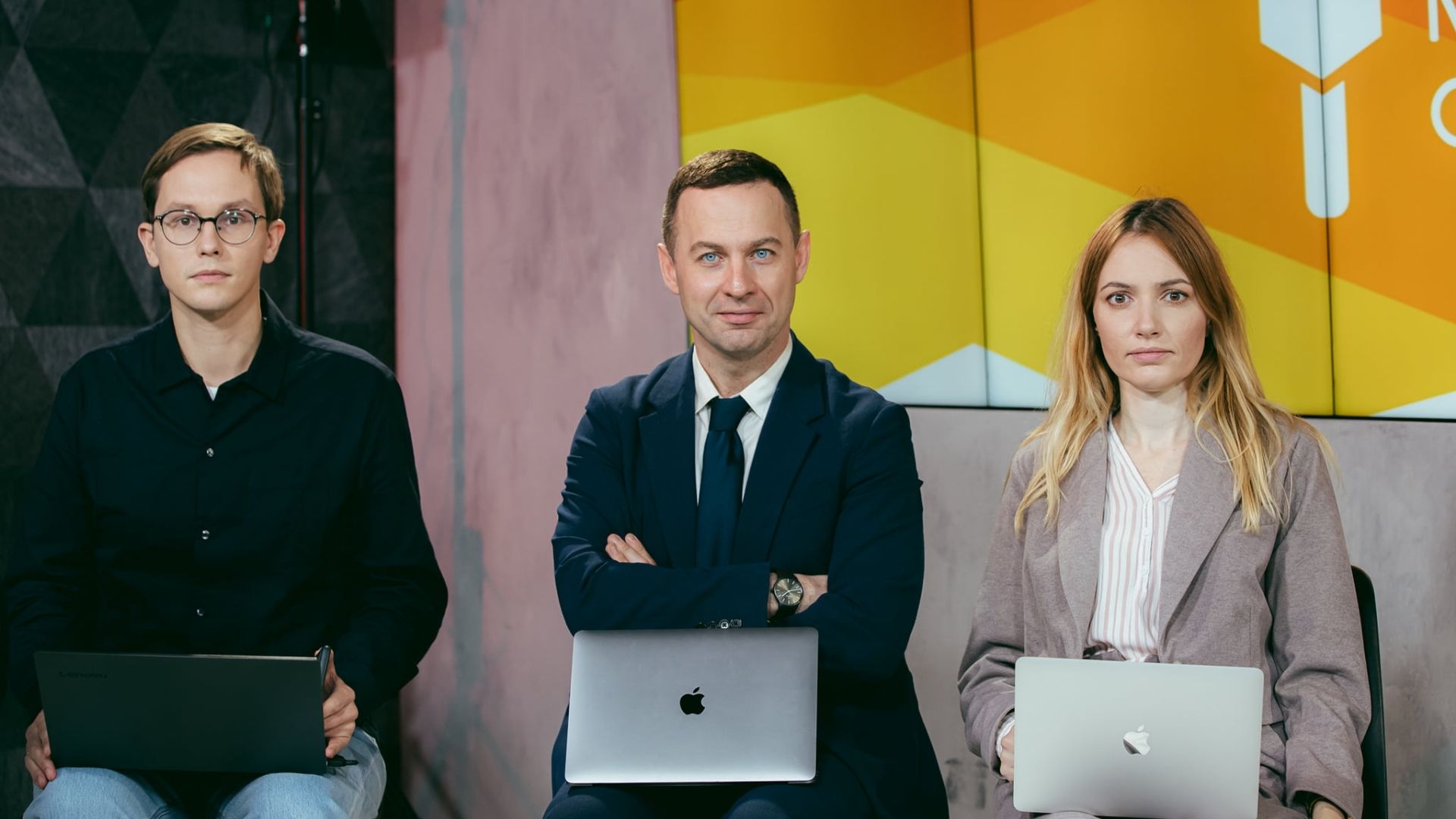
The Donetsk Information Institute was founded in Donetsk in 2009 by a group of journalists led by Oleksiy Matsuka
On February 24, 2022, the Russian Federation launched a war against Ukraine - constant shelling, fighting in so far peaceful cities, the first dead, the first wounded, children became victims. Resulting in a flood of homeless people, all trying to flee further away to safer places to at least save their lives. We are among the citizens of Ukraine who unfortunately have to experience this for the second time, Yuliia Didenko, a journalist and editor-in-chief of Donbas-News.Video at the Donetsk Information Institute, tells us from Ukraine.
"We" - meaning the team of the media organization called Donetsk Information Institute, which was founded in Donetsk in 2009 by a group of journalists led by Oleksiy Matsuka.
From the beginning, the organization's task has been to spread freedom of expression and democratic values in society with a special focus on the Donbas. The main projects of the Donetsk Information Institute are the Donbas News website and the YouTube channel of the same name. I joined the organization in 2013. In 2014, Russia annexed Crimea and ignited war in Donbas. We worked in Donetsk until the end, but after Igor Strelkov-Girkin's group broke into the city, we had to flee to Mariupol. However, we have never stopped our work on either side of the contact line.
Since 2014 we have faced Russian hybrid aggression. Now Putin's regime has unleashed a full-scale war against all of Ukraine. Such a relapse is a heavy blow - having experienced the outbreak of hostilities twice, and the transfer of our organization this time to Lviv. On the other hand, as brutal as it may sound, we were now much better prepared for it. After all, we already had experience. It's bitter, but was invaluable in the current situation. Above all, we were shaped by the experience of fighting Russian propaganda.
In the last eight years we have worked in several areas. We produced broadcasts, reports and exposés about the falsifications and propaganda techniques from the Russian Federation and on the part of its proxies, the so-called Luhansk and Donetsk People's Republics "LDPR".
We created and distributed media literacy educational materials to teach people to distinguish news from fakes and journalism from propaganda. We have continued to film in the Occupied Territories, despite all the dangers, in order to remain an impartial channel for Ukrainian citizens in Donetsk and Luhansk Oblasts on both sides of the line of contact. Importantly, we were able to maintain content production and reception of videos from Donetsk and Luhansk to show what is really happening across the territory. Of course, we also reported on what was happening in the Ukrainian-controlled parts of the Donbas. And we made sure that our content creates connections between the occupied and the free part of the Donbas - and we do it in Russian, contrary to the Kremlin's propaganda.
Thanks to the donations from various organizations from the USA, EU and Canada, we have been building bridges between residents of Donbas cut off from Russia and the rest of Ukraine for eight years.
During this time, we repeatedly demanded explanations from representatives of the so-called Donetsk People's Republic "DPR" on certain claims - such as the "tanks of the Armed Forces of Ukraine" allegedly buried in the gardens of civilians near Mariupol. Of course we didn't find any tanks on site. We revealed the names of sponsors of the ruling DPR power clique, who in reality wanted to become local oligarchs and through appropriate connections had expanded their businesses in Donetsk. We also exposed numerous lies about the European Union, alleged human rights violations or the downing of the Boeing MH-17, which were also massively spread by propagandists of the Russian Federation and the "DPR"/"LPR".
The past first month of severe Russian aggression against Ukraine has shown that everything we have done in the last eight years has not been in vain. Because we warned people about Putin's lies and pointed out his intentions to go to war. But now we have even more plans, we want to get involved even harder and more diligently.
"Over the past month we have worked hard to fight disinformation and provide the public with the most important information about the situation in Ukraine - with a particular focus on the Donetsk and Luhansk regions," said Lubov Rakovitsa, the head of the Donetsk Information Institute.
Despite the danger to the lives of our colleagues who were in various cities of Ukraine at the beginning of the invasion, including Mariupol, Sloviansk, Severodonetsk and Kyiv, we began to implement new projects.
This includes a series of videos called #ЗнайПравду (Know the Truth) about the core narratives of Kremlin propaganda and debunking new myths that are gradually being planted out of Russia to justify military aggression.
A video from this project was recently shared on YouTube (Ukrainian and Russian-speaking). In the Russian segment, it ranked 7th in popularity. In this video we analyzed a fake interview with Marianna Vyshemirskaya - the young woman whose photos went around the world after the bombing of the hospital complex, Mariupol Maternity Ward No. 3. A Russian investigative committee opened a case into the alleged hostage-taking in the Mariupol Maternity Hospital and attached a prepared testimony from the young woman to the investigative file, who was in Maternity Hospital Complex No. 3 at the time of the airstrike. However, in the written official documents on the case, the Russian investigators refer to Maternity Hospital No. 2 at a completely different address in the besieged city. This is just one of the many inconsistencies in the Russian version of this tragic incident that we analyzed and were able to uncover. Although Marianna Vyshemirskaya is currently in Russian-controlled territory, she was still willing to clear up the false reports with us on camera.
In addition to this project, which deals directly with Russian fakes, we also publish a daily summary of events related to the war in Ukraine (with a focus on the Donbass), as well as a series of stories about migrants and refugees - about people who, just like as had to flee twice from the war.
"The results of the analysis of the reach of our media activities make it clear that the desire to get up-to-date information about Ukraine, to find an alternative to the Kremlin propaganda and to learn more about how to debunk this Russian propaganda is rapidly growing," says our director Lubov Rakovica.
The number of views of our channel on YouTube has increased massively compared to the average before the start of the Russian invasion on February 24, 2022. Since then, our channel has been viewed 3.5 million times, which is 3 million more than usual. Our YouTube channel has become an important source of information for Ukrainians (especially in the Donetsk and Luhansk regions on both sides of the contact line) – 1 263 000 views (35.8%), and for people in Russia – 1 187 000 views (33.7%), from Kazakhstan – 80 200 (2.3%) and from Belarus – 75 700 (2.2%).
Last month 969 000 people visited our website (up from 157 500 in January); with 2 397000 sessions (up from 403 500 sessions in January). Since the start of the large-scale invasion, 228 000 people from Russia have visited our website (previously it was 12 000).
Since the start of the Russian war in Ukraine 11 400 people have subscribed to our YouTube channel, up from 108 000 on March 23.
“Due to improved audience awareness, there have been increasing attempts by hostile hackers to disrupt our media resources. Over the past month, our website has been subject to massive DDoS attacks, affecting 2 000 IP addresses at once. One of the advertising networks that placed its banners on many Ukrainian websites, including ours, was also attacked by hackers," said Bogdan Karkachov, editor-in-chief of the News of Donbass website.
We are also seeing an increase in bot activity among all of our most recent videos. We take it as further confirmation that we have become an important information channel that is successfully bringing verified truth to the areas afflicted with Russian propaganda.
“Our target audience is residents of Donetsk and Luhansk regions. Mainly Russian-speaking citizens of Ukraine. Our competitors are the media of the so-called LDVR and Russian media. Our goal is to give people information in the language they are familiar with, the language they speak on a daily basis. Also, now our audience in Russia is growing too. We believe that this is partly due to the Kremlin's complete eradication of all freely available information channels and media. Many residents of the Russian Federation and other Russian-speaking countries are looking for information that offers an alternative to the Kremlin's propagandists. This includes Ukrainian-Russian language resources. So, the role of the Ukrainian-Russian-language media increases significantly in the conditions of war," said Lubov Rakovitsa.
Yuliia Didenko completed an educational program of FNF's International Journalism and Media Dialogue Program for Eastern European journalists in Berlin in 2018.
Translated from Russian by Peter Cichon, Theme Manager Media Freedom Worldwide.