Cuba
Recruitment for Russia
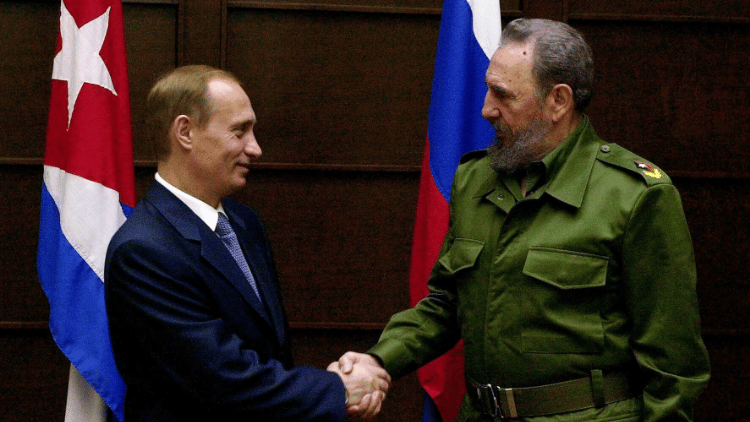
Russia and Cuba have maintained close relations since the days of the Cold War. This is symbolised by a photograph from 2000 showing Vladimir Putin with the late Cuban revolutionary leader Fidel Castro.
© picture alliance / ASSOCIATED PRESS | CRISTOBAL HERRERAFrom North Korea, it is well known: the isolated communist country sends large numbers of soldiers to Ukraine to fight alongside Russia’s aggressor at Putin’s behest. Many pay with their lives. In September 2025, the Friedrich Naumann Foundation for Freedom already published a study on this. Now it has done the same for Cuba. The author of the new study is Carolina Barrero, founding director of Ciudadanía y Libertad, an organization promoting civil rights in Cuba, which operates in exile in Spain.
Cuban Soldiers Fighting for Russia in Ukraine
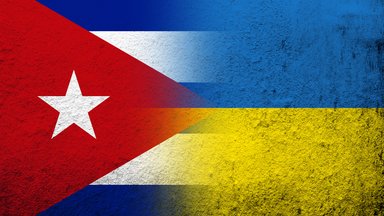
Cuban mercenaries in Russia’s war of aggression against Ukraine reveal a dangerous network of forced recruitment, exploitation, and geopolitical risk for Europe.
The findings are alarming. Intelligence sources in Ukraine confirm that by 2023, over 1,076 Cubans had already fought in Ukraine, supported by convincing evidence such as passports. Nearly 100 of them have died. The actual number of Cubans fighting is estimated to be between 5,000 and 25,000. Around 60 percent of those recruited were lured with false promises of civilian employment—offered monthly wages of $2,000, many times higher than Cuban salaries. They receive a short training of two weeks and are then sent to especially exposed and dangerous positions, where they face extremely high risks of death. The U.S. State Department classifies these events as state-sponsored human trafficking.
One wonders why the European Union, and particularly Germany, have not yet reacted. Politically, it would be natural to impose the same sanctions on Cuba as on Russia as a complicit state—apart from the international legal obligation to cease economic cooperation with a regime that facilitates human trafficking.

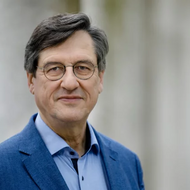
Karl-Heinz Paqué talks to author Carolina Barrero about the new study ‘Cuba in the War in Ukraine’.
© FNFNothing of the sort is happening with Cuba. One can speculate as to why. It is noticeable that Latin American dictatorships have for decades been treated relatively leniently by Europe when they self-identify as “leftist.” This applies to Chávez’s and Maduro’s Venezuela, which, despite enormous resource wealth, has driven eight million people to emigrate due to catastrophic mismanagement. In 2024, demonstrably manipulated election results denied democratic candidate Edmundo González the win after charismatic opposition leader María Corina Machado was prevented from running. Yet criticism from Europe remained strikingly moderate, even though Machado has since been rightfully awarded the Nobel Peace Prize for her struggle for freedom. The same applies to Ortega’s Nicaragua, a terrible dictatorship since the 1980s with a catastrophic economic record and forced expatriation of liberal politicians such as Félix Maradiaga in recent years.
And it applies especially to Cuba—the country that, under Fidel Castro since the early 1960s, became a kind of icon of resistance against American imperialism within the European Left. That Castro ruined the country with a corrupt command economy and drove capital and people abroad—mainly to the United States—has interested very few observers to this day. In a kind of romanticized anti-Americanism, almost everything the Cuban regime did in terms of human rights violations was forgiven. For too long, leftist intellectuals in Europe had become accustomed to interpreting Latin American communism as an anti-capitalist struggle for freedom, no matter how poor its record. Whether this leniency will continue—now in the context of state-sponsored human trafficking in favor of Putin’s aggressor—is yet to be seen. This represents a new dimension.