Russian War in Ukraine
Cuban Soldiers Fighting for Russia in Ukraine
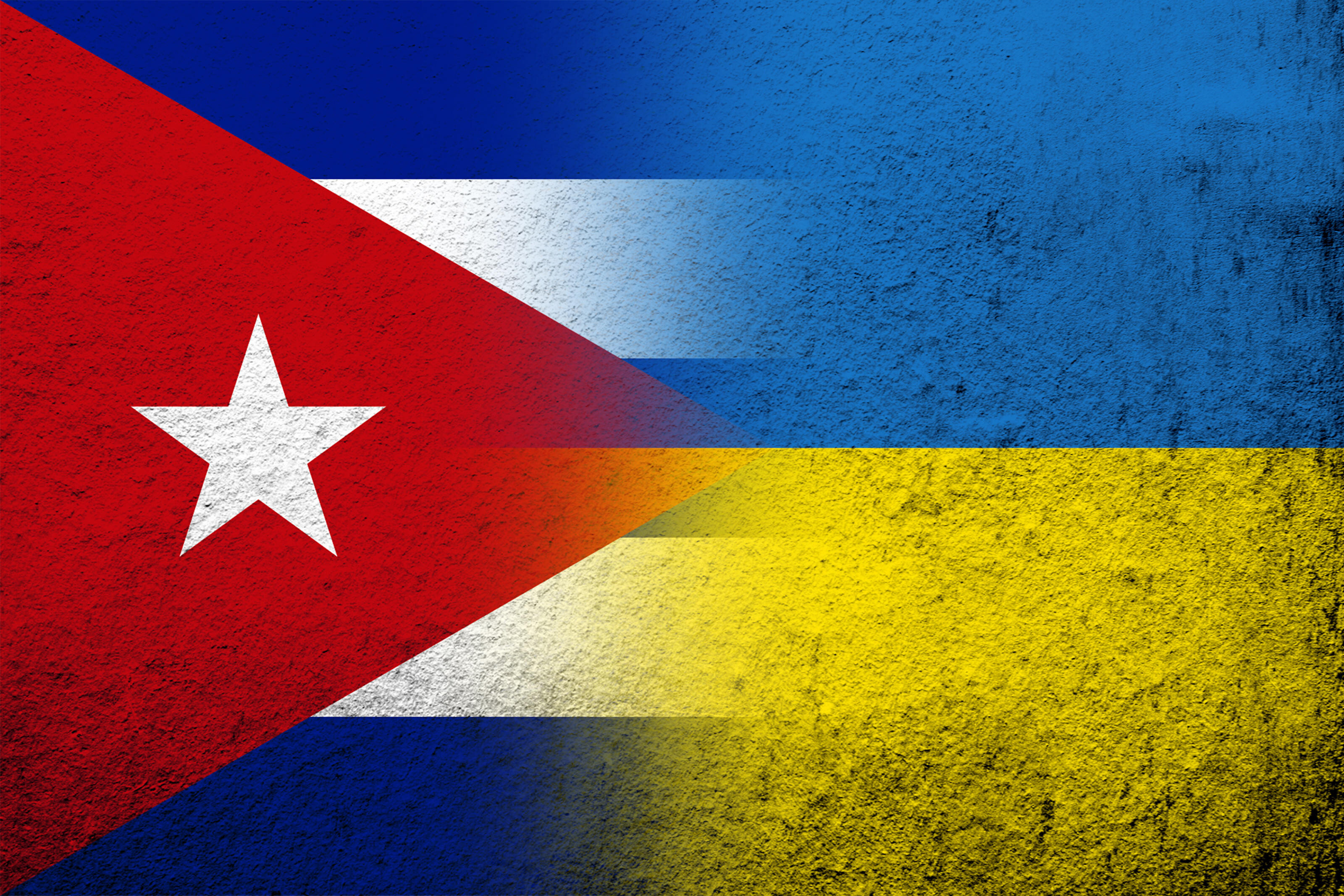
Die Nationalflagge von Kuba mit der Nationalflagge der Ukraine.
© picture alliance / Zoonar | Viacheslav ChernobrovinThe study by renowned human rights activist Carolina Barrero, founder of Ciudadanía y Libertad, is the first systematic analysis of the extent to which the Cuban regime is involved in the recruitment of soldiers for Russia’s war of aggression against Ukraine. Barrero estimates that between 5,000 and 25,000 Cubans are fighting on the Russian side. A large proportion are recruited under false pretences – often as construction workers. Many factors point to a systematically facilitated network for recruitment and deployment.
This approach fits into a broader pattern: Russia is deliberately recruiting an increasing number of foreign mercenaries. While public attention has focused primarily on North Korea’s involvement, the role of Cuban nationals has so far received significantly less scrutiny.
Barrero’s study is based on numerous interviews that reveal a pattern of coercion, deception and exploitation. The study identifies two recruitment channels: around 60% are civilian workers, around 40% are members of the military and intelligence services. The extreme income disparity – a promised 2,000 US dollars per month compared to an average wage of about 17 US dollars in Cuba – is exploited in a targeted manner.
In Russia, the recruits sign contracts in a language they do not understand, receive barely two weeks of training, and are deployed to the most dangerous sections of the front; their average life expectancy there is 140 to 150 days.
For Europe, this practice constitutes a significant security risk. Europe’s policy of imposing tough sanctions on Russia while maintaining largely normal relations with Cuba is inconsistent and flawed. It is also likely that returning fighters will pass on knowledge of modern warfare.
The paper recommends a fundamental review of Europe’s Cuba policy, including targeted sanctions, increased diplomatic pressure, and the reassessment of economic cooperation with the regime in Havana.