Russia
Alexei Navalny – A Fearless Democrat

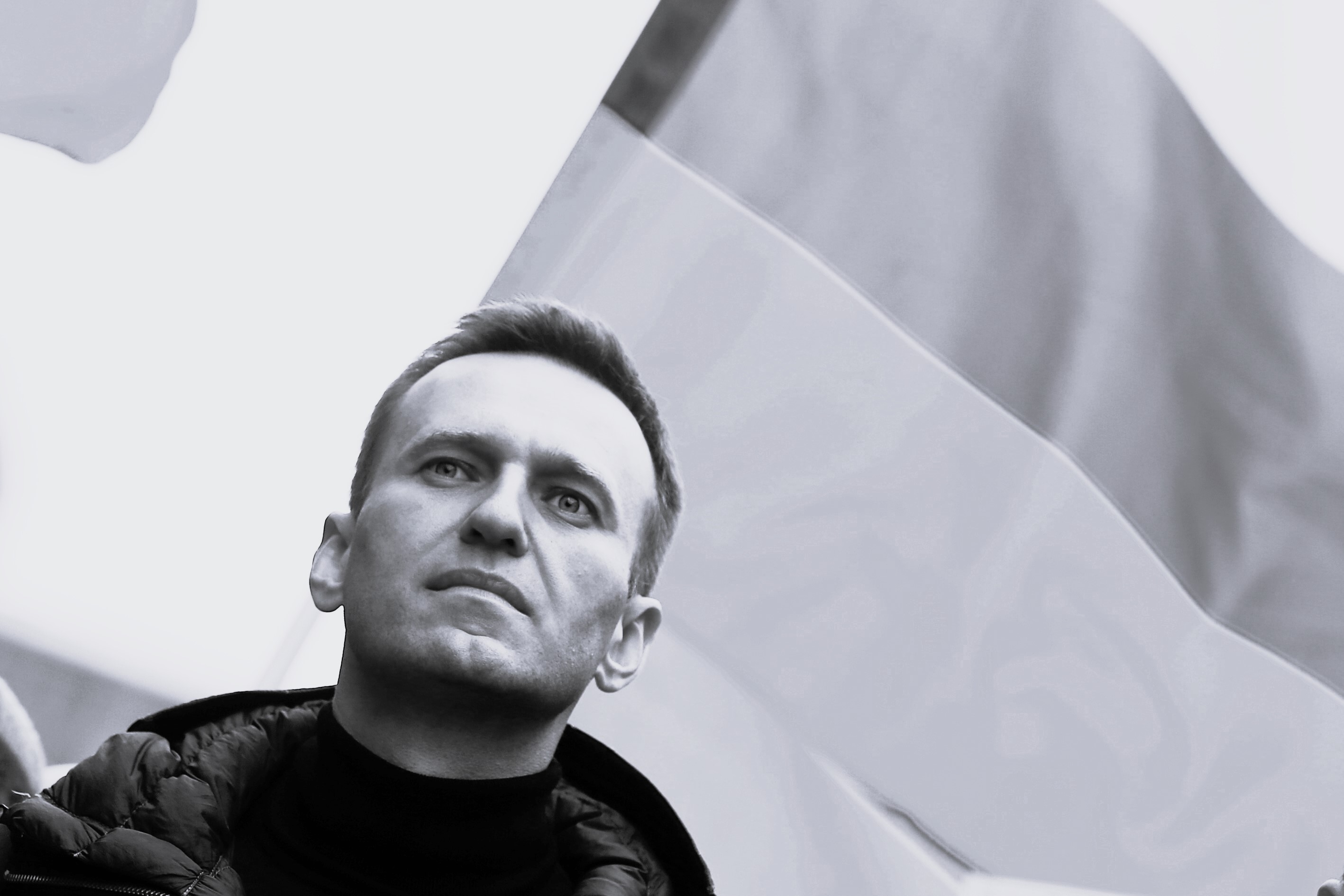
Alexej Nawalny
© picture alliance / AA | Sefa KaracanWhen large numbers of people took to the streets in Moscow on 5 December 2011 to protest against massive electoral fraud in the Duma elections, Alexei Navalny was one of the leading figures. The lawyer, born in 1976, was arrested and therefore unable to take part in the even larger protest rally six days later. It was around this time that he began his rapid rise to become one of the most important opposition politicians and activists in Putin's increasingly authoritarian and repressive Russia. However, he was no longer a political novice – since the turn of the millennium, he had been active in various forms, including eight years in various roles in the liberal 'Jabloko' party.
Exposing cases of corruption quickly became his trademark and made him popular. When he publicly attacked the highest officials in Putin's system and published numerous pieces of evidence of their self-enrichment, he struck a chord with many people who were affected by the corruption permeating the entire Russian state. This set him apart from many opposition figures who were primarily involved in parties and NGOs. Alexei Navalny always aspired to reach larger sections of the population than other opposition forces were able to. He also had the self-confidence and courage to seek the highest offices and organise structures to support him. Together with his circle of supporters, he was capable of campaigning. This is a great achievement in a repressive environment that increasingly restricts criticism and political opposition. Navalny was also an active blogger who reached many people, especially young people.
Alexei Navalny always aspired to reach larger sections of the population than other opposition forces were able to. He also had the self-confidence and courage to seek the highest offices and organise structures to support him.
Between patriotism and democracy
His political positions have changed repeatedly, apart from a few cornerstones. He has been repeatedly criticised for his proximity to nationalist movements and his statements on immigration – and not without reason. The alliances he repeatedly tried to forge also included forces that held views contrary to liberal values. In the context of Russia's war of aggression against Ukraine, he has once again sharpened his positions on Russian statehood and Ukrainian sovereignty – he now unequivocally demands recognition of the 1991 borders, including the return of Crimea to Ukraine. At the same time, his great patriotism is unmistakable – he wanted a better Russia because he loved Russia. At times, especially in his assessment of non-Russian population groups, he crossed the line into positions that liberals can no longer accept.
But more important for his political assessment are his commitment to democracy and the rule of law, to transparency in government action and to combating endemic corruption in Russia. Above all, his political vision for the future was a clear counterpoint to Putin's Russia and his accomplices. On the eve of the first anniversary of Russia's full-scale war against Ukraine, he outlined his vision in his 15 theses on the future of Russia after Putin – a constitutional state with peaceful transfers of power through democratic elections. Russia does not need to expand its territory, but rather solve its internal problems. Alexei Navalny called for the complete withdrawal of Russian troops from Ukrainian territory, as well as the punishment of war criminals and compensation payments to Ukraine. Alongside the debate on arms deliveries and tougher sanctions, these are positions that the Russian opposition continues to struggle with.
Particularly because of the balancing act between powerful actors with lasting influence in Russia and public debate in the new societies, the Russian exile community often takes a cautious stance. The Russian opposition's failure to make demands on the Kremlin and the Russian population, or its overly timid demands, are therefore often interpreted as approval of Putin's regime.

Alexei Navalny at the Boris Nemtsov Forum 2019, supported by the Foundation, with Zhanna Nemtsova and Francis Fukuyama. © FNF
Navalny: Determined in the fight for values and against corruption
Navalny resolutely sought positions of political power in order to realise his values – despite the scepticism of many who did not believe he had a realistic chance. Contrary to many expectations, he succeeded in participating in the 2013 mayoral elections in Moscow. He lost to Putin's candidate, but came in second with approximately 27% of the vote. His campaign for the 2018 presidential election was initially obstructed by those in power and then prevented by his exclusion from the elections. The instruments used were fabricated accusations and court cases, which were classified as unfair criminal proceedings by the European Court of Human Rights. Despite all the harassment, he managed to mobilise supporters across the country. At the same time, he continued his uncompromising work to expose and combat corruption, producing films and publications with revelations that were received by millions.
A life spent fighting for democracy and human rights
It was inevitable that Russia's rulers would take increasingly harsh measures to restrict his actions as a dangerous political opponent and ultimately eliminate him: the usual methods of public discrediting, harassment of those around him and relentless pressure from the security forces. In August 2020, Alexei Navalny was the victim of an attack with poison gas, the life-threatening consequences of which were treated in Germany. Despite the obvious dangers and many warnings, he returned to Russia at the beginning of 2021 and was immediately arrested. This was followed by a nine-year prison sentence and his disappearance into the Russian criminal justice system. In the meantime, nothing was known about his whereabouts, and his lawyers were only sporadically able to maintain contact with him. Even in prison, he remained unbroken and continued to represent his political positions. He believed in a democratic Russia after the Putin system.
Two years ago, Alexei Navalny died in the depths of Russia's inhumane prison system. All those who want a democratic, stable and prosperous Russia remember him. He was a patriotic democrat, a fighter for the fundamental values of the rule of law and transparency, a bitter opponent of the power structures that hold his country, Russia, in a stranglehold. His voice will be missed, but his exemplary courage and fearless commitment will live on.