Security Policy
Munich Security Conference: 3 Takeaways for Europe’s Future


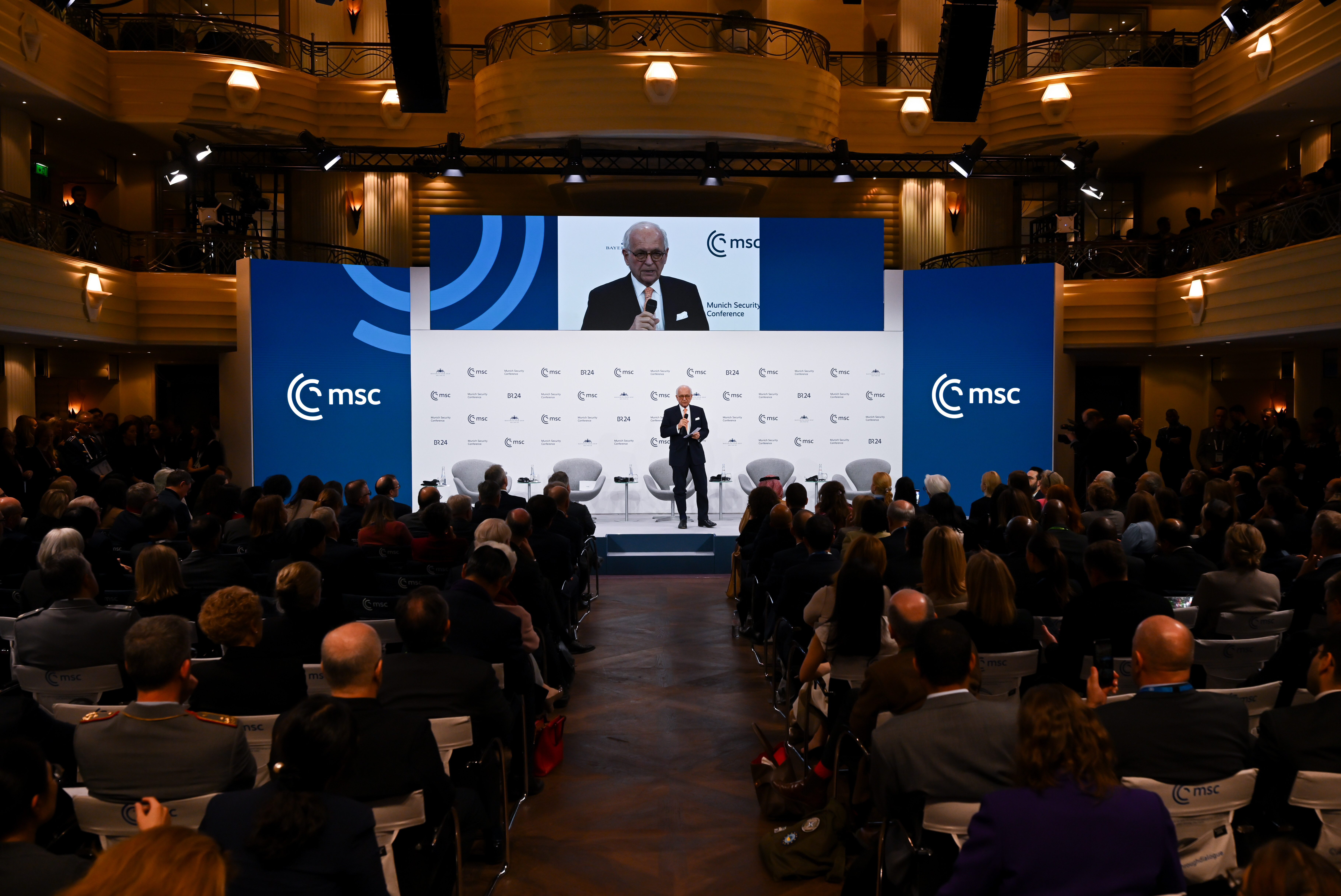
Wolfgang Ischinger, Leiter der Sicherheitskonferenz, hält am letzten Tag der Münchner Sicherheitskonferenz seine Abschlussrede.
© picture alliance/dpa | Sven HoppeThe 62nd Munich Security Conference, held against the backdrop of rapid geopolitical changes, laid bare the continuing fissures in the transatlantic relationship and the urgent need for Europe to redefine its place in global security. This year’s gathering was less about grand declarations and more about reckoning with hard truths: the rules-based international order is under unprecedented strain, the United States is recalibrating its global role, and Europe is reluctantly being pushed to forge its own path. What was once only a suspicion is now increasingly becoming a reality. Europe’s post-war security order, as we have known it, needs a fundamental redesign, regardless of who occupies the White House in the years to come. Here are three key takeaways from the discussions in Munich.
America first, Europe second?
The recalibration of the transatlantic relationship was the talk of the town in Munich. After US Vice President J.D. Vance’s provocative address in Munich last year and a rift in early 2026 driven by US President Donald Trump's revived ambition to acquire Greenland, allies were anxious to pick up on the latest signals from Washington. This year’s messenger was US Secretary of State Marco Rubio, a former Russia hawk who made a remarkable U-turn as part of the second Trump Administration.
As Rubio took to the stage, he struck a more conciliatory tone. Yet on substance, his points remained in line with Trump’s policies. The US is determined to reshape the global order and Europe is invited to join, but only on America’s terms. Rubio’s call for a revitalised transatlantic partnership was laced with familiar MAGA themes of “shared history, Christian faith, culture, heritage, language, and ancestry”. Although he received a polite applause, the question lingered: is this really what Europe wants?
Notwithstanding Rubio’s reassurances, European leaders were increasingly and openly sceptical. The US is no longer the reliable guarantor of the post-war order it once was. Instead, it is now pursuing a transactional, interest-driven foreign policy. For Europe, the choice is stark: accept a junior role in an American-led bid for global dominance or accelerate efforts towards strategic autonomy.
The US is no longer the reliable guarantor of the post-war order it once was. Instead, it is now pursuing a transactional, interest-driven foreign policy.
The rules-based liberal order is still alive, but needs reinvention
German Chancellor Friedrich Merz set the tone early on during the conference: “The rules-based international order, however imperfect, no longer exists in its old form.” His assessment was echoed by others, including French President Emmanuel Macron, who argued that Europe must “reorganise our security architecture” to meet modern challenges. The consensus in Munich was not that the rules-based order is dead, but that it must evolve. Otherwise, it risks irrelevance in an era of great power competition.
The conference revealed a major challenge: while the US is stepping back from its traditional leadership role, Europe is still grappling with how to fill the void. The old order, built on American hegemony and multilateral institutions, is giving way to a more fragmented, multipolar world. The challenge for Europe is to defend the principles of the rules-based order, while adapting them to a reality where power is more diffuse and alliances are more fluid.
The emergence of a new European security architecture
Perhaps the most significant development in Munich was the growing consensus that Europe must have a rendezvous with destiny. Macron’s call for a “European security architecture” was not just rhetoric, as talks are underway between Paris and Berlin on issues as sensitive as a joint nuclear deterrent. Merz, too, spoke of the need for Europe to “reorganise” its security structures, signalling a shift from reliance on NATO to a more integrated, self-sufficient defence posture. These views were echoed by EU High Representative Kaja Kallas, who said that she is working on a new security strategy to address “all dimensions of European security, from hard security and defence to economic security and preparedness”.
Europe taking more control should not be about replacing NATO, but about supplementing it with a more self-sufficient European pillar.
Europe taking more control should not be about replacing NATO, but about supplementing it with a more self-sufficient European pillar. The message from Munich was clear: Europe can no longer outsource its security to Washington. The war in Ukraine, the prospect of even more Russian aggression, and the uncertainty of US commitments have accelerated the push for European strategic autonomy. The question is no longer whether Europe will build its own security architecture, but how and by when.
Conclusion: A Moment of Reckoning
The 2026 Munich Security Conference was a moment of reckoning. The US is recasting its global role, the rules-based order is under strain, and Europe is being forced to confront its vulnerabilities. The path forward is difficult, but it also presents new opportunities. As Macron put it, Europe must “act proudly, and not be vilified.” The alternative is to accept a world shaped by others. The real test will come in the months and years ahead: can Europe translate its newfound resolve into action? The answers will define not just the continent’s security, but its place in the world.