USA CANADA
The Regional Office USA CANADA in Washington, D.C. is composed of two pillar programs. The Transatlantic Dialogue Program fosters political dialogue among political, business, scientific and cultural multipliers from the US, Canada and Germany and develops innovative liberal approaches and solutions to transatlantic issues. The World Order and Globalization Hub fosters dialogue among political, business and scientific multipliers by encouraging increased mutual understanding within the global economic landscape. Both initiatives seek to facilitate a transfer of knowledge among experts in order to make a worldwide contribution to social and economic progress.
News
-
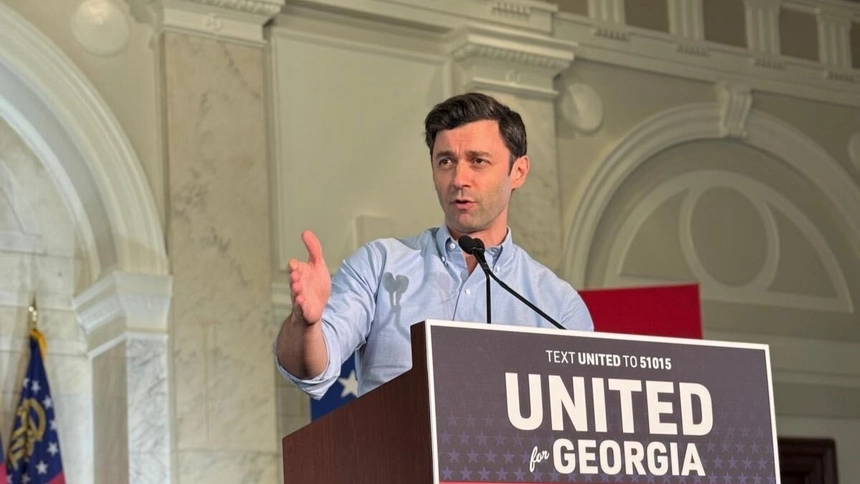
Auf den Spuren der Wahlkampf-Sieger in Georgia
Ein blauer Tsunami fegt über den Südstaat Georgia. Ab dem 3. Januar stellt der Staat die erste Afro-amerikanische Gouverneurin der USA, alle zehn Wahlämter im traditionell eher Republikanischen Bundesstaat Georgia von der „Grand Old Party“ (Republikanische Partei) verloren und beide Senatoren sind Demokraten. Senator Jon Ossoff (D) gewinnt die Wiederwahl in den US-Senat haushoch und wird schon jetzt als ein möglicher Präsidentschaftskandidat gehandelt.
-
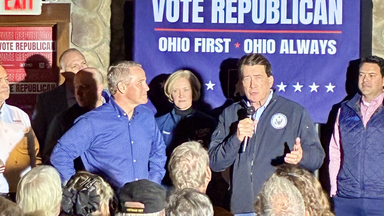
Campaigning in the battleground State Ohio
Two years into Trump’s second tenure as President of the United States, a new political outlook is emerging. This year’s midterm elections were a decisive rebuke of the reigning administration. The Democratic party flipped seven Senate seats (with two more in play), five governorships, and more than 40 House seats, outperforming even optimistic forecasters. As a result, the US-Senate and US-House of Representatives now operate with a Democratic single majority.
-
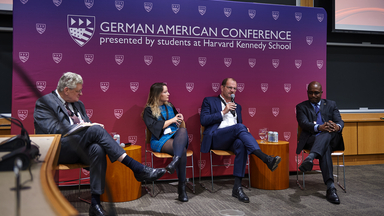
Rethinking Transatlanticism: Lessons from the German American Conference 2026
The Friedrich Naumann Foundation USA Canada hosted a delegation of young transatlanticists at the 18th Harvard German- American Conference in Cambridge, MA, October 9th to October 11th. Our delegation of young transatlanticists from Germany explored the role of liberal values, economic cooperation, and shared interests in shaping the future of transatlantic relations.
-
Winner takes all: How political campaigns get their message out and their votes in.
It is election season in the United States of America. Projected at about $11.6 billion in ad spending alone, it is again projected to be the most expensive election cycle to date. With President Donald Trump’s term set to conclude in January of 2029, voters across the country are asked to cast their ballots to elect roughly one third of the U.S. Senate, the entire U.S. House of Representatives and, in many states, governors and state legislators as well as other public officials in the midterm elections on November 3, 2026.
-
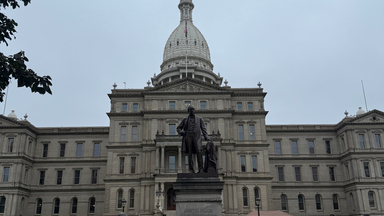
From Washington to Michigan: Power, Polarization, and the Limits of Midterm Change
With only 40 days remaining until the midterm elections, tensions across the United States are running high. While some hope the elections will set the country on a different course, others fear that the results may not deliver the change many are seeking. How could the outcome alter the current political situation in the United States? Can the two-party system continue to function in its current form? And how will growing polarization and deepening divisions within both parties affect the country’s ability to govern?
-
TRADE AND THE WORLD’S POOR
The Trump administration’s sweeping tariff policy marks an unprecedented shift in modern U.S. trade policy, raising tariff rates sharply, expanding their reach, and introducing new uncertainty into global trade. While much of the debate has focused on the consequences for American consumers, businesses, allies, and constitutional governance, this policy paper looks beyond the United States to examine how these tariffs may affect smaller and poorer countries. It argues that the impact will vary widely, with some developing economies facing modest disruption and others, such as the Kingdom of Lesotho, confronting potentially severe economic distress.
-
Kanadas Trümpfe gegen Trumps Zölle
Im Juli 2026 steht die Revision des USMCA-Handelsabkommens an. Das Abkommen zwischen Kanada, den Vereinigten Staaten und Mexiko hat in der Vergangenheit zu Handelswachstum und einer stärkeren Verflechtung der Märkte geführt. Durch die neuen Zölle der Trump-Administration sind viele Staaten betroffen, darunter auch Kanada. Trump behauptet, dass die USA nichts vom Nachbarn im Norden bräuchten. Die Zahlen sprechen eine andere Sprache.


Social Media
-
9
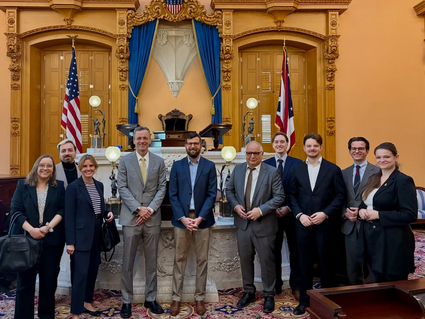
Campaigning for Democracy 🇺🇸🇩🇪 The Friedrich Naumann Foundation USA CANADA hosted FDP delegates for this year’s US Midterm Elections in Washington, DC and Columbus, Ohio. 🗳️ We look back on a week full of lively discussions and unique insights with campaign experts, data analysts and political leaders. We had the opportunity to learn from these campaign professionals about the dos and don’ts in campaigning and how the parties operate and mobilize their voters. ❗️Highlight of the study-tour was the Republican campaign rally in the small town of Bellefontaine. 👏Thank you to our excellent speakers and meeting partners for all the great insights! #fnf #fnfusacanada #transatlanticrelations #fdp #midterms
-
2
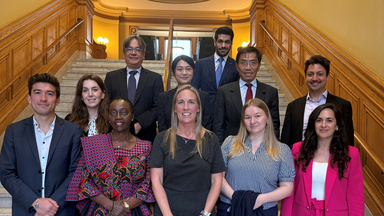
Last week we hosted another edition of 🥨 Pretzels & Politics 🏛️. 🎙️ This time, we had the pleasure of welcoming Bastian Brauns from t-online for an insightful conversation about “Working as a Foreign Correspondent in the U.S.”, moderated by our colleague Lukas Schulz. 🤝 We were especially excited to welcome Finn Flebbe and a delegation from Junge Liberale (JuLis), visiting the United States as part of our study tour on the midterm elections !🇺🇸 💬 From behind-the-scenes insights into political journalism to thought-provoking questions and lively exchanges, the evening once again showed the value of open dialogue and connecting perspectives across the Atlantic. 👏 A big thank you to our speakers, special guests, and everyone who joined us! Your curiosity, contributions, and enthusiasm are what make Pretzels & Politics such a special event. Looking forward to the next round! 🥨✨ #PretzelsAndPolitics #FNFUSACanada #TransatlanticDialogue #jungeliberale

-
5
Eine neue Ausgabe von Bagel 🥯 mit Biesel nach dem Sieg der Demokraten bei den Midterm-Wahlen. 🏛️🗳️🇺🇸 #usa #midterms #democrats #congress