Venezuela
Venezuela needs democracy - as soon as possible!
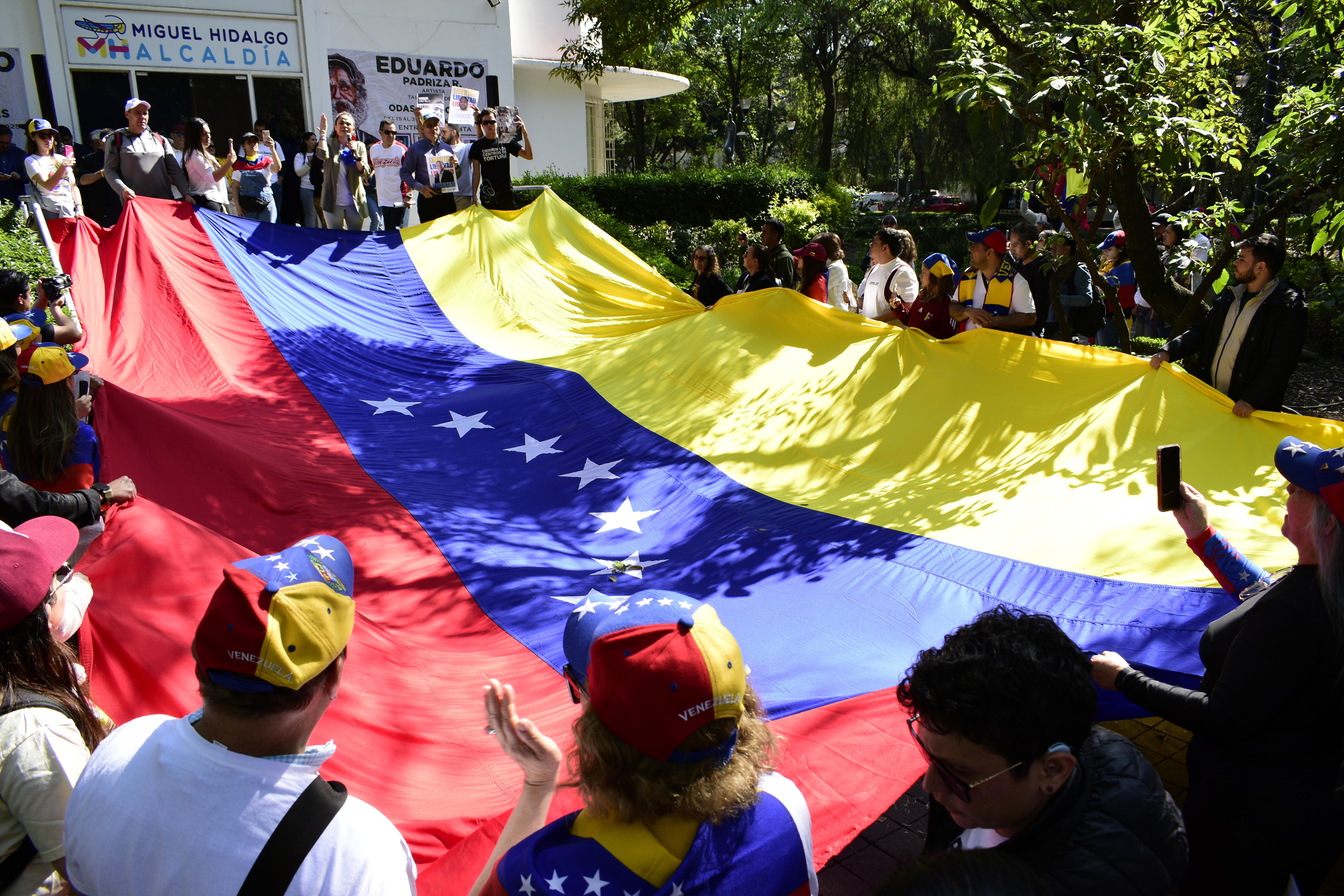
Caracas on January 4th 2026
© picture alliance / NurPhoto | EyepixDonald Trump has created facts on the ground in Venezuela. He has deposed Venezuelan dictator Nicolás Maduro and transferred him to the United States, where he intends to put him on trial for drug-related offenses. After massive electoral fraud in the 2024 presidential election, Maduro’s legitimacy as president—and that of his government—was widely in doubt. The U.S.‑led removal may violate international law, though the case is legally complicated.
What must now take center stage is the political question: What will become of Venezuela? Initial statements from the United States—from President Trump and Secretary of State Rubio—suggest that the U.S. is in no hurry to democratize the country. Worse still, in cooperation with the acting interim president Delcy Rodríguez, they intend to allow the continuation of the autocratic Chavista regime in order to combat drug trafficking and pave the way for oil deals benefiting American corporations.
This should greatly worry liberal observers. While such an arrangement might be legitimate for a very first transitional phase to maintain security and order and avoid civil‑war‑like conditions, a democratically legitimized government must follow swiftly. And such a government essentially already exists: in the July 2024 elections, Edmundo González demonstrably won 67 percent of the vote, supported by the charismatic opposition leader María Corina Machado of the liberal party Vente Venezuela, who recently received the Nobel Peace Prize. The Americans should therefore work as quickly as possible with González and the highly popular María Corina Machado, who emerged as the clear winner of the opposition primaries but was then arbitrarily barred from the presidential election by the regime. If they fail to do so, they will dramatically disappoint the vast majority of Venezuelans, both inside and outside the country, who support González and Machado. A necessary step toward democratization would also be the immediate release of political prisoners. According to the human rights organization Foro Penal, there are currently at least 863 of them.
It is important to make all of this unmistakably clear to the American president. The ideological allies of Vente Venezuela—namely the global federation of liberals “Liberal International,” of which VV is a member—have already done so emphatically. European presidents and heads of government must do the same, ideally by officially receiving González and Machado on visits. In the interest of the people of Venezuela—and, more broadly, Latin America—it is of paramount importance to send clear signals now for the quickest possible transition to democracy. Anything else would squander a tremendous historic opportunity.
The first statements by leading European politicians have been encouraging in this regard, particularly those of Emmanuel Macron and Friedrich Merz. But more must follow. Macron has already pledged his support; Merz should follow his example. And the European Union should demonstratively stand on the side of civil society, as the European Parliament has demanded in its resolution.
One thing is clear: no one can force the powerful American president to do anything through foreign‑policy pressure. But Europe can signal to him that he now bears enormous responsibility for the free world. If he fails to live up to this responsibility, the transatlantic West will collapse completely as a democratic community of values. He must therefore know what he is doing. In any case, the Europeans should make sure he knows it. And this applies not only to the “Venezuela case,” but also to other challenges about which Trump likes to issue ominous warnings—one need only think of Colombia and Greenland. Things are getting very serious now.