Government in the Netherlands
The Dutch Liberal Gamble: D66 and VVD Revitalize Dutch Politics and European Cooperation


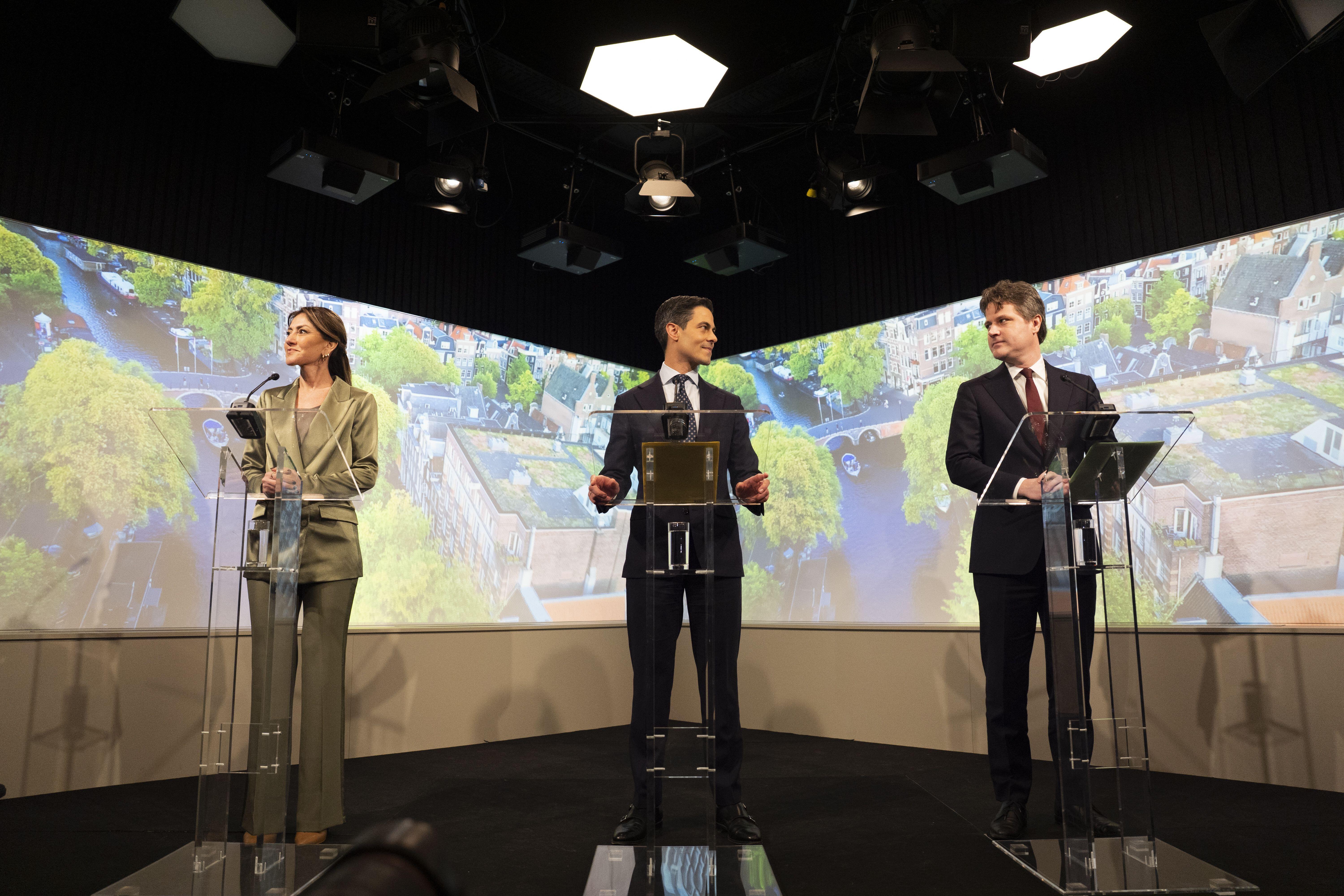
THE HAGUE – Party leaders Rob Jetten (D66), Henri Bontenbal (CDA), and Dilan Yesilgoz (VVD) presenting their coalition agreement at Nieuwspoort.
© JEROEN JUMELET / ANPA New Chapter After Years of Instability
The Netherlands has taken a bold step into uncharted political territory. After D66 and PVV won 26 seats each in October 2025, with D66 winning more votes, the progressive-liberal D66, centre-right liberal VVD, and Christian Democrats (CDA) presented their coalition agreement on January 30, 2026. The formation took approximately 117 days, a marked improvement compared to the chaotic 223-day negotiation that produced the short-lived Schoof cabinet. What makes this coalition historic is not its speed but its structure: together, the three parties hold 66 seats in the House of Representatives, 10 seats short of a majority, creating the Netherlands' first minority government in decades.
For Dutch liberals, this represents both an opportunity and a test. D66 leader Rob Jetten, set to become prime minister, secured his party's best-ever electoral result by positioning D66 as a stabilizing force after the collapse of the PVV-led Schoof cabinet, which fell after less than a year due to asylum policy disputes. The VVD, while suffering losses, retained its position as a major player by refusing to govern with the left-wing GroenLinks-PvdA alliance. Both liberal parties now face the challenge of translating their electoral success into effective governance without a guaranteed parliamentary majority.
D66 leader Rob Jetten is set to become prime minister and tasked with forming the cabinet ahead of a planned swearing-in around 23 February 2026. Jetten will serve as Prime Minister, with his party overseeing key ministries such as Education, Agriculture, Social Affairs, Housing, Climate, and Foreign Trade. The VVD, led by Dilan Yeşilgöz, will manage Finance, Defense, Justice, and Health, while the CDA takes charge of Foreign Affairs, Interior, and Economic Affairs.
Rob Jetten has framed the project explicitly as a “cabinet of collaboration”—a government that will work not only across parties in parliament but also with social partners and industry.
That framing isn’t just rhetoric: in a minority set-up, the coalition has a structural incentive to avoid ideological maximalism and instead pursue reforms that can attract support from (parts of) the left on climate/education/housing and from (parts of) the right on security/migration/competitiveness.
A Security-and-growth Liberalism, Not a Small-state Liberalism
The most defining feature is a pivot toward security as the precondition for freedom — and it is expensive. The coalition plans to raise defence spending to 3.5% of GDP and fund it partly through a new “freedom contribution” tax paid by citizens and businesses.
This is not classic “night-watchman state” liberalism. It’s closer to a modern European liberal agenda: strong defence + innovation investment + fiscal rules. Liberals will like the clarity about threats; they will argue internally about the tax instrument and distributional effects.
An Innovation State with Clearly Named Sectors
On the economic model, the agreement emphasizes targeted public investment in digital innovation, AI, offshore wind, green hydrogen and small nuclear reactors. That’s a liberal bet on productivity and strategic autonomy: not blanket industrial planning, but selective enabling of future industries.
What this could mean in practice (if implemented well):
- faster scale-up of clean-energy supply chains,
- a more competitive tech ecosystem,
- and a stronger Dutch position in EU industrial and digital policy debates.
Housing Supply as “Everyday Liberalism”
Housing is arguably the most tangible “liberal” delivery test because it affects social mobility and economic dynamism. The coalition plans €1 billion annually from 2029 for affordable housing construction and additional measures like income checks for social housing tenants.
This is a broadly liberal synthesis: increase supply (pro-growth, pro-mobility) while tightening eligibility rules (addressing perceived unfairness).
Education Gets Protected— Another Liberal Tell
Notably, the coalition shelves previously planned education cuts and instead intends to increase the education budget to retain teachers and strengthen the system.
This fits a liberal “human capital state” approach: education is treated as infrastructure for opportunity.
The Social-policy Trade-offs Are Real—and Politically Risky
To fund higher defence and investment while keeping fiscal credibility, the agreement includes measures that will be contentious:
- higher healthcare deductible (cited as rising to €460),
- unemployment benefit duration reduced (two years to one),
- pension age rising with life expectancy (from 2033),
- and a stricter approach on parts of asylum policy.
For liberals, the key question is whether this becomes reform with fairness (credible finances + work incentives + targeted protection) or a credibility agenda that bleeds legitimacy (especially in a minority parliament where left-of-centre parties may demand social and green concessions). The parliamentary debate already showed how quickly these points become flashpoints.
Liberal Priorities: Economic Competitiveness and Fiscal Discipline
From a liberal perspective, the coalition agreement titled "Aan de slag" (Getting to Work) contains several promising elements. The coalition has explicitly opted for short-term stability combined with a series of structural reforms for the medium term, maintaining corporate income tax rates and preserving innovation schemes including the innovation box, R&D tax credits, participation exemptions, and loss carry-forward provisions. Notably, the 30% expat tax regime remains intact, acknowledging that attracting international talent remains essential for Dutch competitiveness.
The agreement emphasizes fiscal responsibility, with plans to pursue strict budgetary discipline and keep the budget deficit below 2 percent. This fiscal conservatism represents a victory for VVD orthodoxy and aligns with traditional liberal economic principles. The coalition also commits to a competitiveness agenda aimed at improving growth prospects, recognizing that the Netherlands must strengthen its economic foundation amid intensifying global competition.
However, liberals concerned about the size of government may be disappointed. The coalition introduces a new "freedom contribution" levy, requiring citizens to pay 3.4 billion euros starting in 2028, with businesses contributing an additional 1.7 billion euros for national security spending. While justified by geopolitical necessities, this represents a significant new tax burden that conflicts with liberal principles of limited taxation.
The mortgage interest deduction, a politically sensitive issue, remains unchanged—a conservative choice that was important to VVD that prioritizes stability over reform. The coalition also abandoned plans to reduce the healthcare deductible, with increases of 60 euros starting in 2027, representing a retreat from social liberal ideals in favor of fiscal consolidation.
Economic Policies: A Pro-Business, Pro-Innovation Agenda
The new government’s economic platform is decidedly pro-business and innovation-driven. The coalition agreement emphasizes higher public investment in research and development, stronger public-private partnerships in growth sectors, and a push to reduce regulatory burdens—policies that align with both D66’s progressive liberalism and VVD’s market-oriented approachflint-global.com.
Key Economic Priorities:
- Support for Corporates and Middle Incomes: The coalition aims to foster a more “laissez-faire” economic environment, with targeted support for businesses and middle-income households. This includes measures to improve access to finance and streamline regulations, particularly in sectors critical to the Dutch economy, such as agriculture, technology, and green energy.
- Climate and Sustainability: While the government is committed to climate action, its approach is likely to be more market-friendly than previous administrations. D66’s influence is evident in the focus on green growth and sustainable trade, but the VVD’s cautious stance on regulatory burdens may temper the pace of reform.
- Housing and Infrastructure: Addressing the Netherlands’ chronic housing shortage remains a priority, though the coalition has scaled back ambitious targets set by previous governments. The focus will be on incremental progress, with an emphasis on public-private collaboration.
Education, Innovation, and Social Policy
On the positive side for progressives, the coalition plans to invest 1.5 billion euros in education and scientific research, though it removes oversight of programs offered in languages other than Dutch—a potential constraint on internationalization. The agreement proposes raising the legal age for tobacco and vaping from 18 to 21 and implements stricter social media regulations with a European minimum age of 15, reflecting D66's emphasis on evidence-based social policy.
Yet the coalition takes a harder line on housing policy than D66 might have preferred. Annual income checks will determine rent increases, and wealth tests will apply to new social housing tenants—measures that align more with VVD's market-oriented approach than with D66's social liberalism.
European Cooperation and Ukraine: A Firm Pro-European Stance
For Europe and international partners, this coalition represents a return to predictability. The Netherlands had suffered reputational damage during recent years of instability—four different migration ministers in one year, stalled negotiations on asylum reform, and disrupted environmental policy discussions in Brussels. Elizabeth Kuiper of the European Policy Center noted that "the question now is whether the Netherlands can re-establish itself as a reliable EU partner after years of instability".
The coalition agreement signals a more cooperative European stance than its predecessor. While specific EU policy details remain sparse in public summaries, the government's composition suggests continuity with established Dutch support for European integration. The CDA will control the Foreign Affairs ministry, traditionally a bastion of pro-European sentiment, while D66's influence ensures continued commitment to multilateral cooperation.
On Ukraine, the new coalition inherits and appears likely to maintain the Netherlands' strong support trajectory. The previous Schoof government, despite its far-right component, reaffirmed support for Ukraine "politically, militarily, financially, and morally," and the 10-year security agreement concluded in March 2024 commits the Netherlands to sustained assistance. The coalition's emphasis on making the NATO defense spending target of 3.5 percent of GDP legally binding demonstrates serious commitment to European security.
This represents a significant contrast to the previous government's instability. The new coalition's focus on international security, backed by substantial defense investment, positions the Netherlands as a more reliable partner for Ukraine and Eastern European allies. The Netherlands' participation in the "Coalition of the Willing" for Ukraine enforcement—mentioned in recent Franco-British initiatives—seems likely to continue under Jetten's leadership.
The "Freedom Contribution" (Vrijheidsbijdrage)
This is the most talked-about part of the agreement. It's essentially a security levy designed to fund the defense budget's jump to 3.5% of GDP without blowing up the national debt.
Impact on Dutch Businesses:
- The Mechanism: Instead of a direct hike in Corporate Income Tax (which the VVD protected), the contribution is levied through an increase in the Invalidity Insurance Fund contribution paid by employers.
- The Cost: Businesses are expected to cover roughly €1.7 billion of the €5.1 billion structural annual yield.
- The "Sugar Coating": To keep the business climate competitive, the government is simultaneously expanding the R&D tax credit to include AI and biotech and maintaining the Innovation Box.
- The Verdict: Large multinationals generally support the move because it funds the "security and stability" they need to operate, but SMEs are vocal about the rising labor costs.
Dutch-German Relations: The Critical Bilateral Anchor
For German-Dutch relations, this coalition offers considerable promise. The Netherlands and Germany have developed what analysts describe as an exceptional bilateral relationship, functioning as "the hinge between the two core groups in the EU"—connecting the "Big Six" larger member states with the "Affluent Seven" smaller countries. This relationship has proven particularly effective at coalition-building within the EU, complementing the Franco-German axis's consensus-building role.
The military integration between the two countries continues to deepen. All three Dutch combat brigades operate under German division command, while Germany's naval battalion serves under Dutch Marine Corps command. The November 2023 defense cooperation agreement further intensified coordination, with both countries planning joint capability development and procurement.
The new coalition's economic priorities align well with German interests. Both countries face similar challenges: managing the energy transition, maintaining industrial competitiveness against American and Chinese rivals, and addressing bureaucratic overregulation. The VVD's emphasis on reducing bureaucracy and maintaining business-friendly policies resonates with German business community concerns.
However, potential friction points exist. The coalition's strict fiscal discipline, while appealing to German fiscal conservatives, may limit Dutch support for ambitious EU investment programs that Germany increasingly views as necessary. The new German grand coalition under Friedrich Merz faces its own tensions between CDU fiscal orthodoxy and SPD investment demands, creating uncertainty about whether Berlin and The Hague will align on European fiscal policy.
Climate and energy policy represents another area where Dutch-German cooperation will prove crucial. Both countries are central to developing North Sea offshore wind capacity and green hydrogen infrastructure, with Rotterdam and Hamburg serving as key import hubs. The coalition agreement's commitment to climate measures, balanced with economic competitiveness concerns, mirrors Germany's own challenges in this domain.
The Minority Government Experiment
The coalition's most significant liberal challenge lies ahead: governing without a majority. "The new cabinet team is going to have to work hard," said D66 leader Rob Jetten. "But we think we can do it." This requires negotiating with opposition parties on each piece of legislation—a test of liberal pragmatism and coalition-building skills.
The left-wing GroenLinks-PvdA alliance has criticized the minority government as a "risky political experiment" creating "unnecessary uncertainty." The far-right PVV, while excluded from government, retains 26 seats (although 7 prominent MPs just left the party to form their own group, willing to work with the new government) and could leverage its position to extract concessions or block legislation. The coalition will need to build different majorities for different issues: perhaps partnering with GroenLinks-PvdA on climate legislation, with JA21 on some economic reforms, and with smaller parties on specific initiatives.
This arrangement tests a core liberal principle: that good policy can transcend rigid party lines through rational deliberation and compromise. If successful, the minority government could demonstrate that Dutch politics can function without either grand coalitions or populist participation. If it fails—collapsing into gridlock or forced into unsavory bargains with extremes—it may validate critics who argue that clear majorities remain essential for effective governance.
Split Opposition
While the government has no majority, the opposition is anything but united. The extreme right PVV of Geert Wilders was heavily punished at the polls following its utter incompetence in government, where despite being the largest coalition partner, they accomplished precisely nothing, and was beaten (albeit by a whisker) by D66. Recently seven relatively prominent PVV MPs left the party to form their own Parliamentary group in protest against Wilders' autocratic style, and have declared their willingness to talk to the new government. This robs Wilders of his status as opposition leader, and crucially of opening the Parliamentary debates. That role now falls to Jesse Klaver, the new leader of the Green-Labour joint group, who succeeded Frans Timmermans after Green-Labour miserably failed at the polls becoming the third party in Parlliament (the total vote of the combined left is around 20%, an all-time low). Klaver's main accomplishment as Green leader in the past to twice succeed in negotiating his party out of government negotiations, and now has to prove that he can be trusted anywhere near power and responsibility.
While the PVV is doing badly, the extreme right as such is still very much present, and their total vote was hardly dented. There is the even more rightwing Forum for Democracy (FvD) which made big gains, and the JA21 party that is if not in substance, then at least in style more reasonable than the PVV (and of which VVD was unable to convince D66 and CDA that JA21 should join the government coalition).
The next big test are nation-wide local elections on March 18th. In opinion polls D66 and Green-Labour would gain slightly compared to the Parliamentary elections, CDA and VVD would lose a bit, PVV would lose substantially and their losses would again go to FvD and JA21.
Conclusion: Liberal Opportunity or Liberal Twilight?
The new Dutch government, with its liberal core, is poised to bring moderate but meaningful changes to the Netherlands’ economy and society. Its commitment to European integration, strong Dutch-German relations, and support for Ukraine will be defining features of its tenure. While the minority status presents challenges, it also offers an opportunity to build broad consensus on key issues, ensuring stability and progress in an uncertain world.
For European liberals watching the Netherlands, this coalition represents a critical test case. Can liberal parties, facing populist pressure and economic uncertainty, deliver competent governance that rebuilds public trust? Will fiscal discipline and economic competitiveness measures prove sufficient to address citizens' security and prosperity concerns? Can liberals navigate between progressive social values and center-right economic orthodoxy without alienating both flanks?
The omens are mixed. The coalition's economic program offers continuity and stability but limited transformative vision. Its European and security commitments restore Dutch reliability but require significant fiscal resources. Its minority status enables flexibility but guarantees constant negotiation.
For European liberal parties, the lesson is sobering: Liberal parties cannot take their relevance for granted. They must offer clear value propositions, govern responsibly when in power, and maintain credibility even in opposition. The VVD and D66 survived electoral setbacks by maintaining distinct identities and governing competently. For the German FDP and other liberal parties across Europe, the Dutch example underscores the importance of pragmatism, flexibility, and a clear vision—qualities that will be essential in navigating the complexities of 21st-century governance.
As Europe faces mounting challenges—Russian aggression, American unpredictability, Chinese competition, climate transition, and democratic backsliding—it needs effective liberal voices arguing for open markets, individual rights, international cooperation, and evidence-based policy. Whether the Dutch experiment succeeds or fails will significantly influence liberalism's future viability across the continent. For now, the liberals have their chance. History will judge whether they seized it.
Authors
Jules Maaten, Regional Director FNF Europe, Brussels
Jeroen Dobber, Head of FNF Security Hub, Brussels