Korea
Iran War Highlights South Korea's Vulnerability

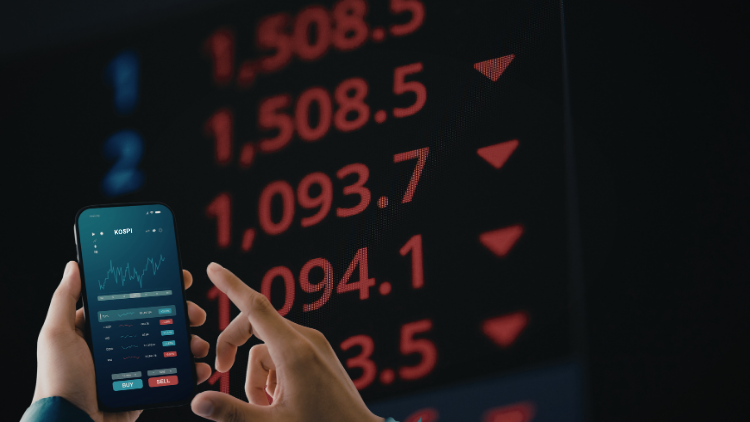
Korean Stock Market Crashed
© Illustration created with canva.The war in Iran has plunged the South Korean stock market into severe turmoil. Fears of a global energy crisis caused prices in Seoul to plummet. After several turbulent days, South Korea's leading index lost more than 12 percent on March 4, and trading was temporarily suspended. The Korean currency, the won, also lost significant value.
Although the market has since stabilized, the mood remains tense. The reason for the uncertainty is South Korea's extreme energy dependence. The highly industrialized country has no significant fossil fuel resources and is the world's fourth-largest oil importer. South Korea obtains most of its oil from the Middle East. Around 70 percent of crude oil and about 20 percent of liquefied gas imports come from this region.
Slower growth expected
According to an analysis by the Hyundai Economic Research Institute, South Korea's growth would fall by 0.1 percentage points if the average oil price over the course of the year were around $80. If it rises to $100, the decline could be 0.3 percentage points. In its latest forecast, the Korean central bank is still assuming 2.0 percent growth – based on an oil price of $64. If the price remains higher, growth could be halved. If a serious oil crisis were to occur, the consequences would be devastating.
The government is already taking economic countermeasures. President Lee Jae-myung has ordered a government cap on fuel prices for the first time in almost three decades. He wants to ease the burden on motorists. In addition, South Korea plans to release 22.5 million barrels from its strategic oil reserves, joining an international action coordinated by the International Energy Agency (IEA).
US withdraws weapons
The war zone in the Middle East is far away from South Korea. Nevertheless, the conflict has security implications for the Korean peninsula. According to media reports, the Americans have withdrawn anti-aircraft missiles from US bases in South Korea in order to better protect their bases and allies in the Middle East. There is now growing concern here that the country is less well protected against possible missile attacks from North Korea – and this at a time when confidence in American protection had already declined due to Donald Trump's unpredictable foreign policy. To counter fears, South Korean President Lee is emphasizing the strength of his own army.
The war in the Middle East has triggered a fundamental debate in South Korea about its own vulnerability. On the one hand, there is a high dependence on energy from an unstable region of the world. On the other hand, there is increasing scrutiny of the country's security dependence on the US, which is increasingly perceived as unreliable. Accordingly, there are growing calls for South Korea to become more independent in terms of both energy and security policy.
*Aurelia Schlosser is studying Korean Studies and Law in Tübingen and is currently completing an internship at the Friedrich Naumann Foundation for Freedom office in Seoul, South Korea.