Elections in the Czech Republic
The Czech Republic Heads to the Polls: Key Dynamics Ahead of the October Parliamentary Elections

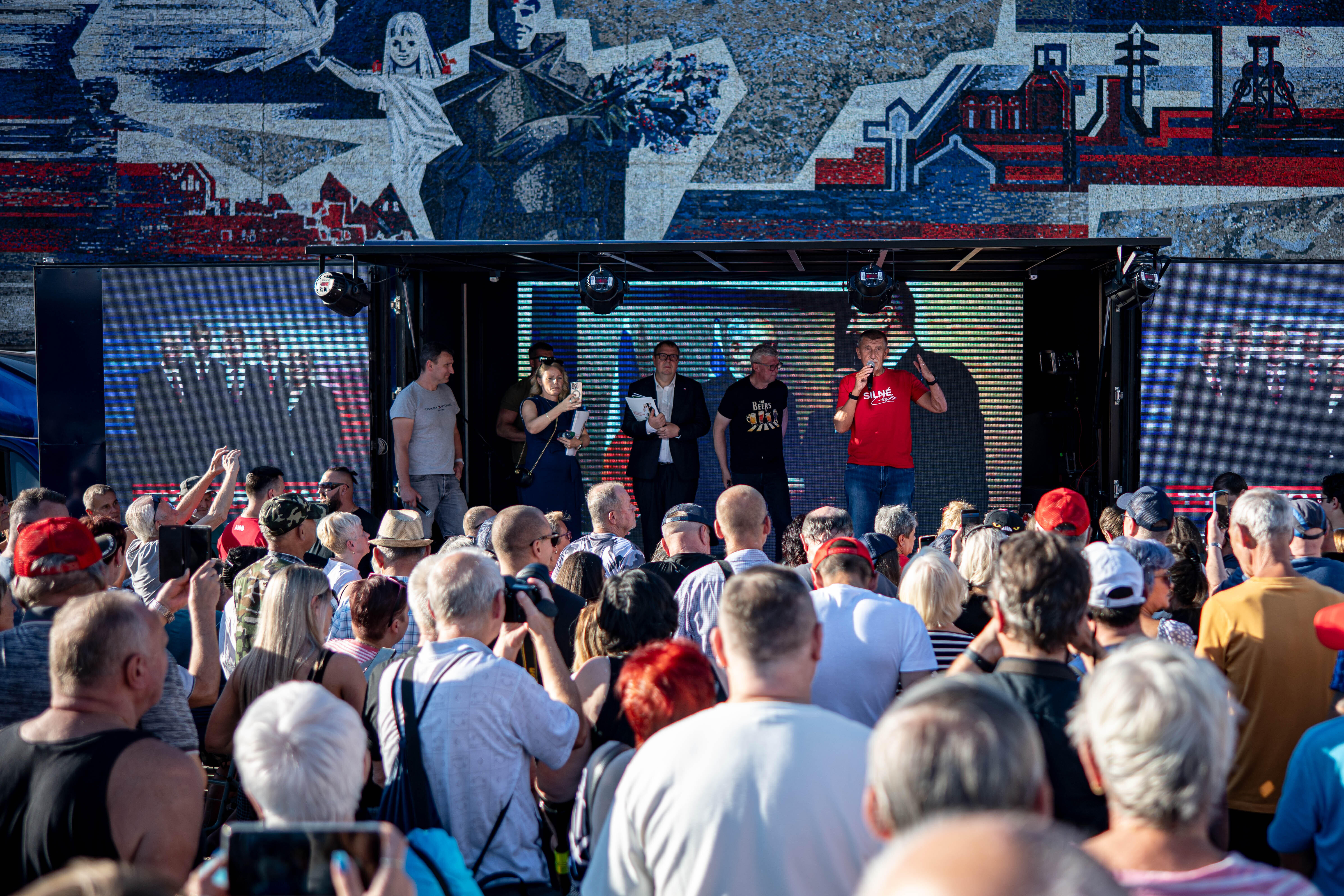
Andrej Babiš, leader of ANO movement greets supporters during an election campaign rally.
© picture alliance / Anadolu | Lukas KabonIn the run-up to the Czech parliamentary elections on 3–4 October, Andrej Babiš’s ANO movement leads the polls, raising the stakes for both Czech democracy and Europe. The vote unfolds amid shifting security dynamics, rising polarization, and a first for Czech citizens abroad: mail-in ballots. Key questions now are how deep divisions run, and whether they reshape Prague’s political future.
In the run-up to the Czech parliamentary elections on 3–4 October, the ANO movement of former Prime Minister Andrej Babiš, now aligned with the Patriots for Europe group in the European Parliament, has emerged as the front-runner. As ANO draws closer to far-right actors at both the domestic and EU levels, the stakes for Czech democracy and for Europe as a whole are unusually high. At the same time, the elections unfold against a backdrop of major shifts in Europe’s security and political environment. The possibility of a change in government in Prague is real. The 2025 contest also introduces a significant innovation: for the first time, Czech citizens living or stationed abroad will be able to cast their ballots by mail.
Debates around democracy and freedom of expression have become increasingly prominent. These two principles, long regarded as pillars of the post-1989 Czech Republic, are now widely seen as being under pressure, though different groups perceive the threats in very different ways. Divides between urban and rural areas, as well as between wealthier and poorer citizens, and between liberals and conservatives, continue to deepen. Whether these divisions deepen or can be bridged will shape not only Czechia’s next government but also its role in defending liberal democracy in Europe.
Divided Mood Ahead of the Ballot
Patterns of voter engagement reveal a society divided between resignation and determination. Seniors over 65 remain the most reliable electorate, with around 70% planning to cast their ballots, providing a solid base for ANO leader Andrej Babiš. By contrast, only 57% of first-time voters intend to participate, a figure that underscores the challenges faced by liberal and progressive parties in the Czech Republic. . Entrepreneurs and public employees report higher-than-average turnout, while low-income households and habitual non-voters are the least engaged. Swing voters are emerging as a decisive group, with their choices shaped by both campaign style and fears of ANO’s potential alliances with extremist forces such as the far-right SPD (Freedom and Direct Democracy) movement.
Behind these dynamics lies a set of pressing concerns that dominate the public agenda. Rising costs of living remain the single most important issue, resonating across almost every demographic and fueling competing narratives from both government and opposition. Younger voters highlight housing shortages, seniors and entrepreneurs stress corruption, and families with children worry most about healthcare. Yet many citizens believe politicians devote more attention to foreign policy, security, or climate than to everyday economic pressures. Low trust compounds the problem: a majority of respondents see Czech politics as lacking honesty and basic decency, with many doubting whether campaign promises will ever be fulfilled.
This general mood of disillusionment also extends to perceptions of the country’s direction and foreign orientation. Only 15% of Czechs believe their country is moving the right way, while 43% say it is on the wrong track and two-fifths describe it as stagnant. Skepticism is particularly strong among seniors and habitual non-voters, though younger people remain somewhat more optimistic. When asked about geopolitical alignment, 42% support anchoring firmly in the West, just 3% favor turning East, and a growing 55% gravitate toward “neutrality,” often understood less as strategic non-alignment and more as a desire for stability outside global disputes. Support for Western orientation is strongest among entrepreneurs and civil servants, and weakest among low-income households and disengaged voters—signaling how economic grievances shape not only domestic politics but also Czechia’s place in Europe.
Which Way Will Czechia Face?
Debate over Czechia’s international direction has intensified in the run-up to the elections. President Petr Pavel has warned that any talk of leaving the EU or NATO damages the country, while the opposition ANO movement, often accused by rivals of leaning East, publicly reaffirms its commitment to Western structures. Analysts agree that ANO itself has no strong pro-Russian sympathies nor pragramtic interests in fundamentally reorienting foreign policy, a position echoed by ANO deputy leader Karel Havlíček, who stressed that NATO membership is not up for debate.
Concerns arise, however, from ANO’s potential governing partners. A coalition dependent on the far-right SPD or the left-wing Stačilo! (Enough!) movement could complicate Czechia’s Western orientation. Both groups have engaged in anti-EU and anti-NATO rhetoric, with Stačilo! even calling for withdrawal from both alliances and a regime change. SPD leader Tomio Okamura suggested Austrian-style neutrality as a model, raising doubts about the stability of Czechia’s current trajectory if such forces gain influence in government.
Since ANO’s drift towards the right, the Czech Republic is missing a true liberal representation on the political level. While the Mayors and Independents party STAN appears as a liberal-leaning alternative in Czech politics, it still has close links with the conservative EPP on the European level. However, the party leaders met with Renew Europe to discuss closer cooperation ahead of the 2024 European elections. The fact that ANO was still part of the Renew Europe despite its drift away from liberal values complicated the situation at the time. Still, STAN positioned itself as a party willing to strengthen liberal representation in Czech politics, so long as it avoided any overlap with Babiš. How influential and successful the STAN party will be in shaping Czechia’s direction in the future remains to be seen.
The composition of the next cabinet may also determine the scope and tone of foreign policy. While a sharp break is unlikely, confrontational rhetoric or lack of attention could undermine Czechia’s credibility abroad. This would have consequences for continued support to Ukraine, participation in international missions, and the strengthening of national defence capabilities. At the same time, some constants of Czech foreign policy are expected to remain in place regardless of the government - among them stable relations with Israel and hesitation to take concrete steps toward adopting the euro.
A deeper long-term risk lies less in direct policy shifts and more in the normalization of extremist narratives. Should mainstream parties accommodate the rhetoric of radical partners in exchange for parliamentary support, these ideas could gradually shape public debate and political discourse. Even without immediate legislative changes, such a shift would weaken Czechia’s credibility, stability, and security within the European and transatlantic community.
Germany: The Partner Prague Cannot Ignore
Germany will remain a central pillar of Czech foreign policy after the elections, but the tone of the relationship may depend heavily on the next government’s composition. Analysts from the Association for International Affairs (AMO) note that if ANO governs with direct parliamentary backing from far-left or far-right forces, ties with both Berlin and Warsaw could become more strained. For Germany in particular, the stakes are high: Berlin has a pragmatic interest in keeping Czechia firmly anchored in its orbit to avoid another disruptive challenge to European unity in Central Europe.
If ANO instead rules as a one-party minority government with only indirect support from parties such as Stačilo, SPD, or the Motorists, a more cautious approach is likely. In this case, the foreign ministry would probably be led by a career diplomat tasked with day-to-day management of relations, while strategic EU and security policy would be steered directly from the prime minister’s office. Such an arrangement would aim to preserve at least functional cooperation with Germany, though it would also signal a less proactive and more reactive Czech foreign policy at a moment when Berlin expects close coordination with its key partners.
Who Can Govern? The Polls Point the Way
Signs of ANO’s growing momentum became clear already in the September 2024 Senate and regional elections. The Czech Senate is renewed in thirds every two years with 27 out of the 81 seats are up for grabs.For the first time in its history, the party topped the Senate race with 40.3% in the second round and 12 seats, while PM Petr Fiala’s governing coalition Spolu retained a relative majority with 37 seats. To explain, the Czech Senate is renewed in thirds every two years (27 of the 81 seats). So despite ANO winning the highest share of votes (seats) among the parties contesting this round, remaining seats are held by other parties. ANO also dominated the regional elections held concurrently, winning in 10 of 13 regions. Turnout, however, was depressed by severe flooding, and Prague - traditionally a stronghold of conservatives and liberals - did not participate in regional voting. Still, Andrej Babiš successfully reframed the contests as a referendum on national politics.
The latest STEM poll of September 21 confirms ANO’s lead with 30.9%, compared to 23% for Spolu, which has slipped slightly. The Mayors and Independents (STAN) surged to 12.2%, overtaking the SPD on 12%, while the Pirates stand at 11.3%, marking one of their best results this year. Two new players - Stačilo! (7.7%) and the Motorists (5.7%) - would also enter parliament. Translating into mandates, ANO would secure 68 seats, Spolu 41, STAN and SPD 24 each, the Pirates 19, Stačilo! 15, and the Motorists 9.
’These numbers point to a fragmented parliament in which the current governing coalition would lose its majority. ANO could form a cabinet by allying with parties on the political fringes: either SPD and the Motorists, or a Stačilo!–SPD alliance. Such arrangements would strengthen Babiš’s hold on power but risk drawing extremist narratives into government, complicating Czechia’s European and transatlantic commitments. The prospect of coalition-making thus not only determines who governs but also signals how stable or volatile Czech politics could become after October’s elections. The October elections will therefore not only decide the next government in Prague but also test Czechia’s commitment to the liberal values of democracy, pluralism, and European cooperation.