EU - Mercosur Agreement
EU–Mercosur: Between Geopolitical Urgency and Parliamentary Arithmetic
A geopolitical anchor in a fractured world
The EU–Mercosur Agreement represents far more than tariff liberalisation. It would create a market of over 700 million people, secure diversified supply chains, and extend EU rule-based standards across a region increasingly exposed to Chinese capital and U.S. unilateral trade instruments. At a time when global trade governance is eroding, this agreement would send a powerful signal: middle powers can still deepen integration under rules, sustainability clauses, and democratic oversight. For Latin America, the EU offers technology, investment and regulatory credibility. For Europe, Mercosur offers critical raw materials, renewable energy potential, agri-food complementarity and geopolitical alignment. Failure would not freeze the status quo. It would accelerate Latin America’s asymmetric re-alignment toward other powers
Sustainability is no longer the obstacle — it is the benchmark
Environmental concerns were central to European hesitation between 2019 and 2023. Deforestation, labour standards and enforcement mechanisms dominated the debate. But the final political agreement integrates:
- The Paris Agreement as an essential element
- Measurable commitments to halt deforestation
- Enforceable sustainable development provisions
The question in Brussels has shifted from “are there sustainability commitments?” to “are they credible and enforceable in practice?” This is now a matter of implementation and monitoring — not of reopening negotiations.

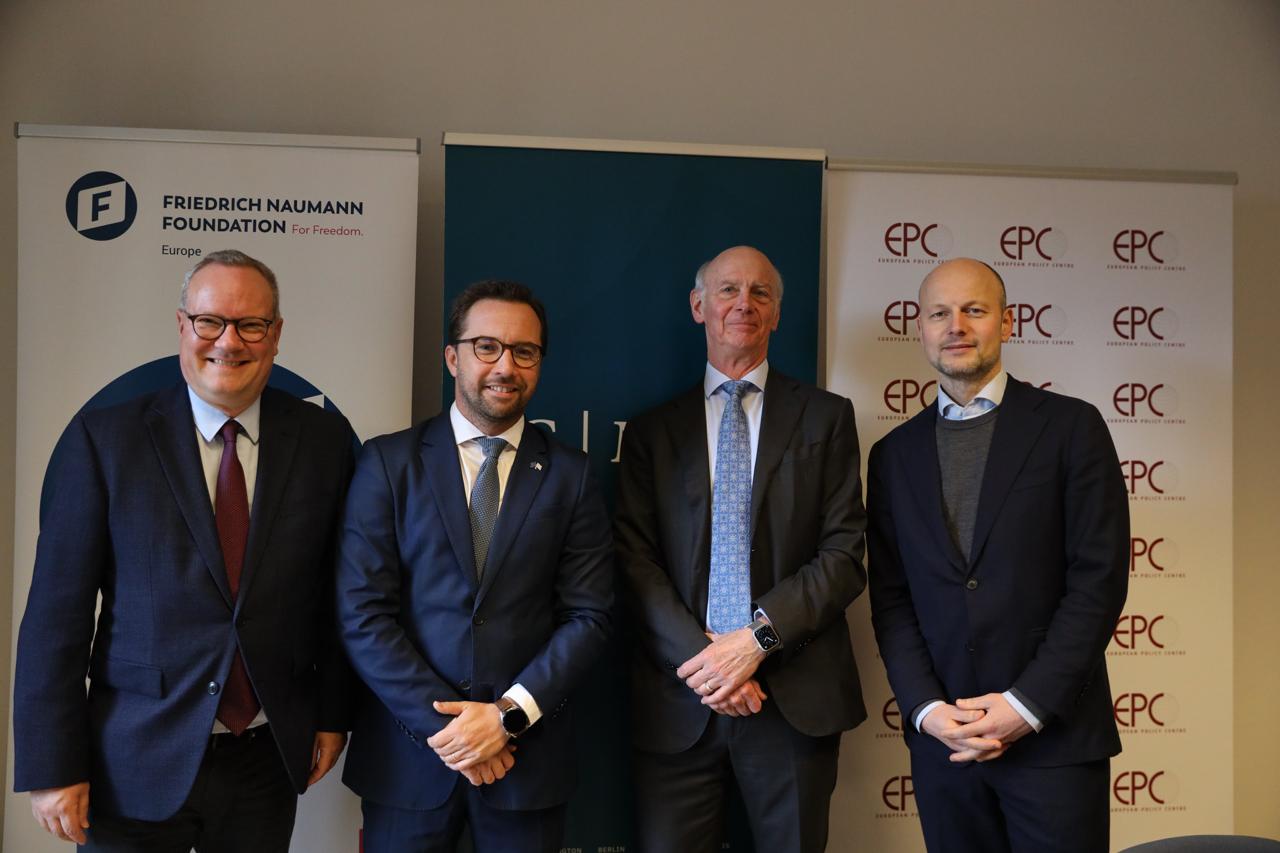
Nicolás Albertoni, former Vice Minister of Foreign Affairs during the administration of Luis Lacalle Pou.
The overlooked variable: Argentina–United States relations and geographical indications
A new and under-discussed dimension has emerged in European policy circles: the potential interaction between EU–Mercosur and a deepening of Argentina–United States trade relations as a result of the recently concluded and now to be ratified United States–Argentina Agreement on Reciprocal Trade and Investment (ARTI). The concern is not purely commercial; it is regulatory. In particular, European stakeholders worry about the treatment of geographical indications (GIs) — one of the EU’s strategic red lines and a major achievement in the Mercosur deal, with more than 350 EU products protected.
If Argentina were to move toward a bilateral understanding with the U.S. that weakens or relativises GI protections, European political support could erode. But the opposite scenario is equally plausible: The prospect of regulatory divergence in Argentina may actually accelerate EU resolve to consolidate its legal framework first through EU–Mercosur — locking in European standards before competing models take root. In other words, the Argentina–U.S. factor can either generate hesitation or strategic urgency in Brussels.
Much of the debate has focused on the European People's Party (EPP), understandably as the largest group in the European Parliament. But arithmetic alone is misleading. A positive vote will require:
- Constructive engagement from Renew Europe MEPs from countries critical about the agreement
- At least partial support or abstention from Progressive Alliance of Socialists and Democrats
- Careful dialogue with Greens/European Free Alliance — especially given the weight of Green parties in Germany and Austria
Moreover, European Parliament dynamics have changed. MEPs today align more closely than ever with national government positions. Domestic agricultural sensitivities in France, Austria, Ireland or parts of Eastern Europe translate directly into parliamentary voting behaviour. Therefore, a strategy focused exclusively on persuading EPP is insufficient. The coalition must be broader, and it must be transnational. The agreement must be framed not as a concession to agribusiness, but as:
- A climate-anchored partnership
- A supply-chain diversification tool
- A geopolitical hedge against dependency
- A competitiveness instrument in the face of U.S. and Chinese industrial policies
If the EU cannot conclude its largest interregional agreement after 25 years of negotiation — in a moment of global trade fragmentation — its credibility as a strategic actor will diminish.

Provisional application and strategic sequencing
The institutional pathway is clearer than public debate suggests. The trade pillar can move through qualified majority in the Council (which has already been achieved in January) and European Parliament approval (which is currently delayed due to the recent call by the European Parliament for an opinion by the European Court of Justice). The political and cooperation pillar follows a different trajectory requiring also ratification in line with the national procedures of the European Member States.
Provisional application remains legally viable once procedures are completed including the ratification by the first Mercosur country. From a Mercosur perspective, advancing national ratifications strengthens the signal of commitment. From a European perspective, political sequencing matters: clarity, communication and coalition-building must precede formal votes.
The real risk for Europe is not domestic contestation. It is geopolitical drift. If the EU cannot conclude its largest interregional agreement after 25 years of negotiation — in a moment of global trade fragmentation — its credibility as a strategic actor will diminish. Mercosur countries will not wait indefinitely. Nor will global investors. This agreement is not about nostalgia for liberalisation. It is about shaping the rules of the next economic cycle.
Conclusion: A political decision, not a technical one
The EU–Mercosur Agreement has reached the stage where technical objections have largely been addressed. What remains is political will. Europe now faces a strategic choice:
- Either consolidate a rules-based alliance with Latin America, anchored in sustainability and regulatory cooperation;
- Or allow fragmentation, bilateral improvisation and competing standards to define the transatlantic economic relationship.
For policy-makers in Brussels, 2026 is not just another procedural year. It may well be the year in which Europe proves whether it still has the capacity to act geopolitically — or merely to debate. The window is open. But not indefinitely.