  • Foundation
  • Scholarships
  • Values
  • Offices
    • Hubs
      Hubs

      The expertise hubs enrich the international profile of the Friedrich Naumann Foundation for Freedom. They enable joint work across regions through their focus on globally relevant policy issues. These include questions of international financial and economic policy, digital policy, security, development and human rights policy.

      • Global Security Hub
        • EN
        • DE
      • Global World Order Hub
        • EN
        • DE
      • Global Innovation Hub
        • EN
        • DE
      • Global Partnership Hub
        • EN
        • DE
      • Human Rights Hub
        • EN
        • DE
    • Germany
      Germany

      We are Active in over 60 Countries: The Friedrich Naumann Foundation for Freedom is committed to working with all its strength for a liberal world. Our core concern is the realization of freedom and responsibility. We promote the development of democratic, market-based and constitutional structures so that more and more people can live in a liberal, democratic society.

      • Head Office
        Potsdam
        • EN
        • DE
      • Bayern
        State Office
        • EN
        • DE
      • Capital Office Division
        Berlin
        • EN
        • DE
      • Berlin-Brandenburg/Mecklenburg-Vorpommern
        State Office
        • EN
        • DE
      • Archive of Liberalism
        Gummersbach
        • EN
        • DE
      • Hessen/Rheinland-Pfalz
        State Office
        • EN
        • DE
      • Mitteldeutschland
        State Office
        • EN
        • DE
      • Niedersachsen/Bremen
        State Office
        • EN
        • DE
      • Theodor Heuss Academy
        Gummersbach
        • EN
        • DE
      • Norddeutschland
        State Office
        • EN
        • DE
      • Baden-Württemberg
        State Office
        • EN
        • DE
      • Nordrhein-Westfalen
        State Office
        • EN
        • DE
    • Europe
      Europe

      Through the connection of EU experts, civil society, and decision makers we seek to foster open dialogue and discuss liberal policy solutions to European challenges. Together with our liberal partners, we develop formats and campaigns to promote rule of law, free markets and human rights. Moreover, we coordinate EU co-funded projects in the field of democracy support, development cooperation and human rights protection.

      • Europe
        Regional Office
        • EN
        • DE
      • Prague
        Central Europe
        • EN
        • DE
      • Vilnius
        Baltic States
        • EN
        • DE
      • East and Southeast Europe
        Regional Office
        • EN
        • DE
      • Belgrade
        Western Balkans
        • EN
        • DE
      • Bucharest
        Romania and Republic of Moldova
        • EN
        • DE
        • RO
      • Istanbul
        Türkiye
        • EN
        • DE
        • TR
      • Kyiv
        Ukraine
        • EN
        • DE
        • UK
      • Sofia
        Bulgaria and North Macedonia
        • EN
        • DE
      • Tbilisi
        South Caucasus
        • EN
        • DE
        • KA
        • HY
    • Middle East and North Africa
      Middle East and North Africa

      Through our seven offices in the MENA Region, we actively promote the political debate to support innovative liberal approaches and solutions. Our projects are liberal platforms on which the Foundation's partners from the Gulf to the Levant and the entire southern side of the Mediterranean can provide creative impulses and discuss geopolitical issues.

      • Middle East and North Africa
        Regional Office
        • EN
        • DE
      • Jerusalem
        Israel and Palestinian Territories
        • EN
        • DE
      • Amman
        Jordan
        • EN
        • DE
        • AR
      • Rabat
        Morocco
        • EN
        • DE
        • FR
      • Beirut
        Lebanon
        • EN
        • DE
      • Tunis
        Tunisia and Libya
        • EN
        • DE
    • Sub-Saharan Africa
      Sub-Saharan Africa

      From our seven offices in Sub-Saharan Africa, we focus on promoting political networking. We are committed to strengthening liberalism and promoting human rights, the rule of law and the social market economy.

      • Sub-Saharan Africa
        Regional Office
        • EN
        • DE
      • Dar es Salaam
        Tansania
        • EN
        • DE
      • Abidjan
        Côte d´Ivoire
        • EN
        • DE
        • FR
      • Harare
        Simbabwe
        • EN
        • DE
      • Cape Town
        Liberal Workshop South Africa
        • EN
        • DE
      • Nairobi
        Kenya - Global Partnership Hub
        • EN
        • DE
      • Dakar
        Western Africa
        • EN
        • DE
        • FR
    • America
      America

      In North America, our focus is on the transatlantic partnership, which we see as a supporting pillar for the security and stability of Western democracies. We encourage the political debate and develop innovative liberal approaches. In Latin America we work to promote strong democratic institutions, respect for human rights and rule of law as well as promoting liberal dialogue throughout the region.

      • Latin America
        Regional Office
        • EN
        • DE
        • ES
      • Mexico City
        Mexico
        • EN
        • DE
        • ES
      • Buenos Aires
        Argentina, Brazil, Paraguay and Uruguay
        • EN
        • DE
        • ES
      • Guatemala City
        Central America
        • EN
        • DE
        • ES
      • Lima
        Andean States
        • EN
        • DE
        • ES
      • North America
        Regional Office
        • EN
        • DE
    • Asia
      Asia

      With its offices in Asia, the foundation supports programs to strengthen democratic processes, particularly free and fair elections, and transparent and accountable governance. The Foundation in the region also showcases innovation as a tool to encourage civic participation that further promotes freedom.

      • Southeast and East Asia
        Regional Office
        • EN
        • DE
      • Manila
        Philippines
        • EN
        • DE
      • Bangkok
        Thailand
        • EN
        • DE
        • TH
      • Seoul
        Korea
        • EN
        • DE
        • KO
      • Hanoi
        Vietnam
        • EN
        • DE
        • VI
      • Taipei
        Global Innovation Hub
        • EN
        • DE
        • ZH-HANT
      • Jakarta
        Indonesia
        • EN
        • DE
        • ID
      • South Asia
        Regional Office
        • EN
        • DE
      • Kuala Lumpur
        Malaysia
        • EN
        • DE
      • New-Delhi
        India
        • EN
        • DE
DE
  • Facebook
  • X
  • Instagram
  • Youtube
  • Education
  • Social Market Economy
  • Open Society
  • International Politics
DE
Menü öffnen
Insights from the Publication
Publication
13.09.2023

Energy Transition and Food Security

Energy supplies and energy shortage have become a global issue since the Ukraine Russia war. However, for South Asia, energy supplies have been an issue even before the war. In December 2022 we invited Mr. Mujtaba Khan, CEO Reon Energy Pakistan, and Mr. Navam Niles, Research Consultant, Centre of Poverty Analysis, Sri Lanka, for an online web talk titled “Impact of the Ukraine-Russia War on Energy Transition and Food Security in Debt Ridden South Asian Nations“.
policy
Policy Paper
11.09.2023

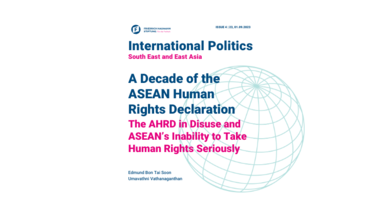
A Decade of the ASEAN Human Rights Declaration

This brief by Edmund Bon Tai Soon and Umavathni Vathanaganthan traces the development of human rights institutions in Southeast Asia and shows how limited the ASEAN Human Rights Declaration´s impact has been

migration
MIGRATION
07.09.2023 Odilia Abreu

Lebanon on the EU Migration Roadmap

The journalistic report “Migration Policy Group: Lebanon on the EU Migration Roadmap” was produced by the journalist Mónica Uriel, in the framework of the Migration visiting program to Lebanon organized by the FNF Madrid office with the support of the FNF Lebanon and Syria office. The FNF Madrid Policy Group composed by liberal policy makers and experts from across Europe, North and West Africa, and the Middle East had the opportunity to get to know the reality of migration management in Lebanon first-hand.

PU
Study
05.09.2023 Martin Vladimirov Ruslan Stefanov Marius Köppen

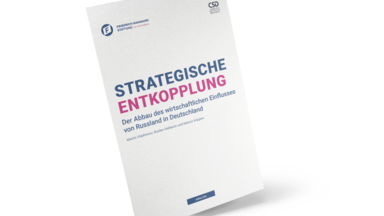
Strategic Decoupling: Phasing out russian economic influence in Germany

The study by the Center for the Study of Democracy (CSD) examines the continuing entanglement between the German and Russian despite Russia’s war of aggression in Ukraine. The Russian corporate presence in Germany is highly concentrated in around 40 larger firms, which specialize in oil refining, natural gas supply and distribution, metal and plastic products manufacturing, glass production, and transport. Russia’s war upended European peace and security and intensified global power competition. The study shows that the Kremlin's long arm extends far beyond Germany's misguided Ostpolitik.

Smart cities in Kosovo
Publication
15.08.2023

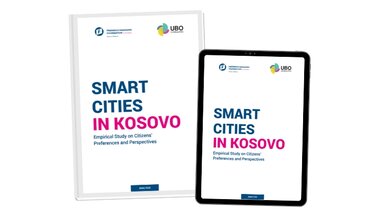
Smart Cities in Kosovo: Empirical Study on Citizens’ Preferences and Perspectives

In a follow-up study initiative aimed at bridging this chasm, the Western Balkans office of the Friedrich Naumann Foundation and UBO Consulting undertook a comprehensive study focusing on the citizens of Kosovo’s seven regions. Engaging with 1568 participants, including those of Albanian and Serb ethnicities and other ethnic minorities, the study sought to gauge the citizens’ familiarity, utilization, apprehensions, and future inclinations towards smart city services.

MApping Smart Local Communities
Publication
15.08.2023

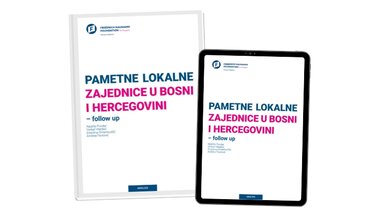
Smart Local Communites in Bosnia and Herzegovina: Follow up

The follow up study, the results of which we present below are the product of the research conducted in the period January - April 2023 and its main goal was to check how much, if at all, the development and application of solutions in the field of Smart City was influenced by the state of the pandemic and the crisis it brought with it, and whether two years after the first conducted research, interest in this topic increased.

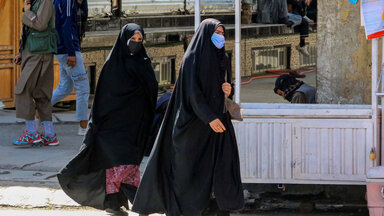
Afgan women walk on a road on the eve of the second anniversary of taking over the government in Kabul, Afghanistan, 14 August 2023.
Afghanistan
15.08.2023

The Tragic Denial of Girls and Women‘s Right to Education in Afghanistan

Two years since the Taliban's return to power in Afghanistan, the country's democratic progress has regressed significantly, particularly for women. This paper examines the erosion of women's rights and access to education under the Taliban's rule. It explores potential avenues within international law, diplomatic efforts, and targeted aid to address the situation and reintegrate women's rights as an integral aspect of international policy considerations.

Educating Africa for the Future
POLICY PAPER
10.08.2023 David Coltart

Educating Africa for the Future

Africa in many respects is at a crossroads. Decades after the end of colonial rule, much of Africa‘s great potential is unrealized. At the root of this is the crisis in the education sector. Education infrastructure is collapsing in many countries amid an increase in school enrolment, rising cost of education, high teacher shortages in both primary and secondary schools, and reduced public funding for basic and higher education.

Letters to Europe
Letters to Europe
09.08.2023 Addishiwot Dagnew

"Ukraine-Krieg hat negative Auswirkungen auf Afrika"

Sieben afrikanischen Studenten der African Leadership Academy nahmen an einem Interview über die Perspektiven afrikanischer Jugendlicher in Europa teil. Ziel war es, Meinungen zu den Herausforderungen in den Beziehungen zwischen den beiden Kontinenten zu erfahren. Addishiwot Dagnew, eine Studentin aus Äthiopien, sieht besonders ein Problem in den wirtschaftlichen Abhängigkeiten afrikanischer Staaten von Europa, welche durch den Ukraine-Krieg verstärkt wurden.

CONFLICT MINERALS
POLICY PAPER
08.08.2023

Conflict Minerals Over a Decade of Effort and Impact

Nairobi, 24 July 2023 - Over the past twelve years, international organisations and many states have endeavoured to combat the illicit trade in conflict minerals from Africa, particularly tin, tungsten, and tantalum (3T) sourced from conflict-affected and high-risk areas (CAHRAs). Despite these efforts, illegal mining and trade of conflict minerals continue to persist. To assess the progress made in tackling this issue, the Friedrich-Naumann-Foundation for Freedom (FNF) commissioned a group of experienced industry experts to conduct a comprehensive study.

Pagination

  • Previous page ‹‹
  • Page 11
  • Next page ››
Subscribe to Publication

Follow us

  • Facebook
  • X
  • Instagram
  • Youtube
  • Xing
  • Linkedin
  • Privacy Policy
  • Imprint
  • Contact
  • Accessibility
  • Jobs
  • Programm-Manager
  • Announcements
  • Code of Conduct