Women, LGBTQ+ Rights
Inclusive governance for a safer Africa

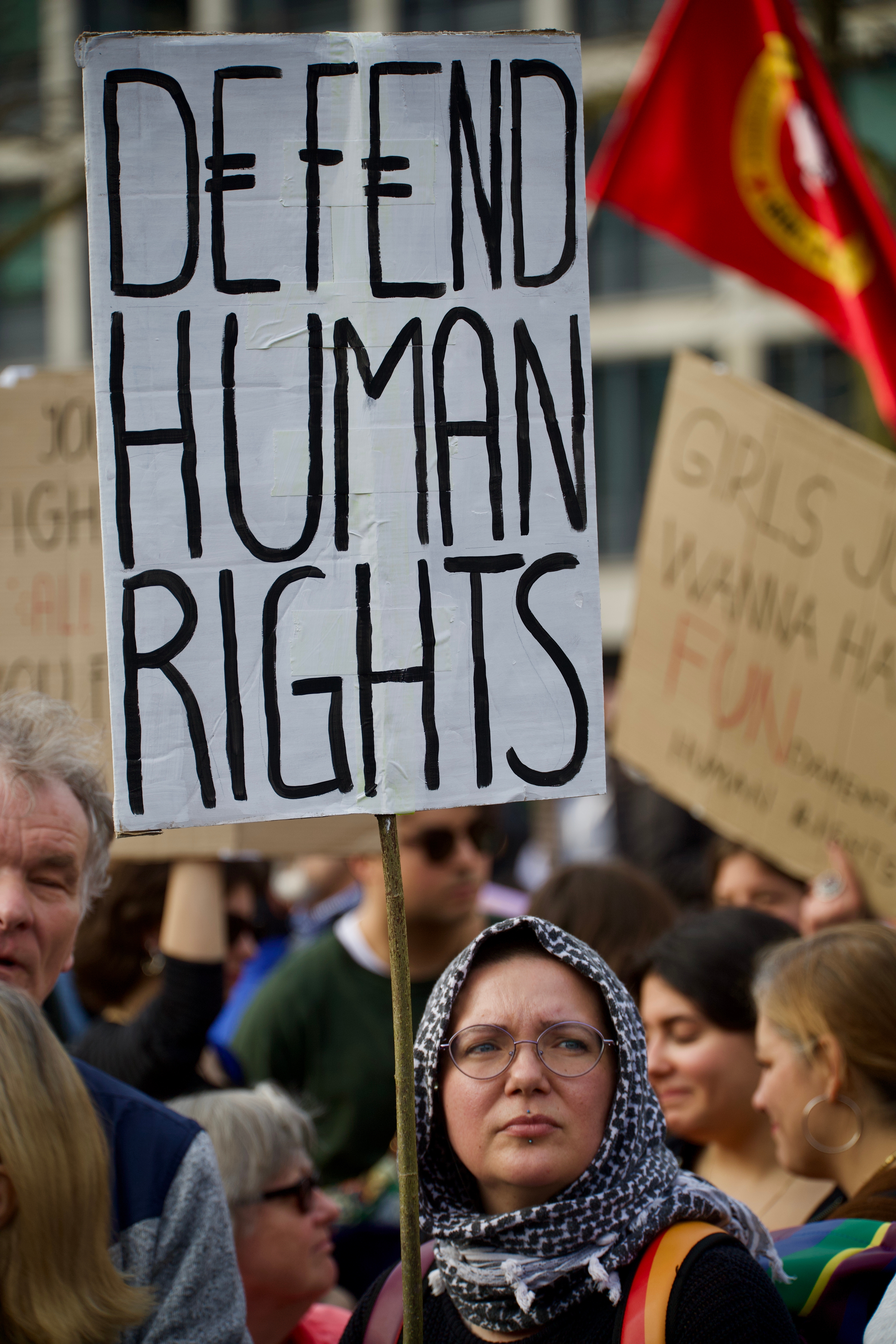
Frankfurt am Main, Germany. March 08, 2025. People participate in a mixed demo on the occasion of the International Women's Day. Defend Human Rights placard hold by a woman.
© ShutterstockLiberalism rests on the idea that all people are equal before the law and entitled to fundamental freedoms. Yet across much of the African continent, this promise remains out of reach. While democratic progress has been made in several countries, it is difficult to speak of genuine liberal governance when women and LGBTQ+ people continue to experience violence, discrimination, and exclusion. Where large sections of society live in fear, peace and human security remain fragile.
Gender-based violence (GBV) is one of the clearest examples of this reality. One in three women worldwide experiences physical or sexual violence, and in sub-Saharan Africa nearly half report having suffered abuse. South Africa, in particular, continues to record alarmingly high levels of violence, with femicide rates around five times the global average. The impact goes far beyond individual harm: widespread violence weakens communities, erodes trust in public institutions, and limits women’s ability to participate fully in social and economic life. GBV is therefore not only a women’s issue, but a serious governance and security challenge.
Phinah Kodisang, CEO of the Soul City Institute, argues that these high levels of violence are rooted in deep structural inequalities. Women and girls shaped by race, class, poverty, and geography, she notes, are often forced to choose between personal safety and economic survival. While South Africa’s declaration of GBV as a national crisis signals political recognition, Kodisang cautions that real change will require far greater urgency. She points to the Covid-19 response as an example of what is possible when the state acts decisively, with clear coordination and accountability. Without similar resolve, she warns, women’s rights risk remaining little more than words on paper.
LGBTQ+ communities face comparable challenges across the continent. Ethiopian researcher and peacebuilder Adane Dechessa Teshale describes Africa’s legal and social landscape as largely restrictive, marked by criminalisation and widespread discrimination. Such laws not only legitimise stigma and violence but are often used by political leaders to mobilise fear and division. Teshale’s research suggests that countries with more inclusive legal frameworks, including South Africa, Botswana, and Mozambique, tend to show stronger social cohesion and fairer development outcomes. Where all citizens feel protected, he argues, societies are more resilient and less prone to conflict.
South Africa remains one of the few countries on the continent offering legal protection to LGBTQ+ migrants and asylum seekers, yet the reality on the ground is far more complex. Donwell Mpofu, Director of the Trans Guardians Alliance, describes the daily struggles faced by transgender and intersex refugees who flee persecution only to encounter new forms of exclusion. Barriers within the asylum system, discrimination in shelters, and limited access to healthcare leave many exposed to ongoing harm. As Mpofu notes, when people fear the police, clinics, and shelters alike, it is a clear sign that state protection is failing those who need it most.
These risks become even more severe in conflict-affected settings, which remain widespread across Africa. Teshale highlights how LGBTQ+ people are often targeted by armed groups, excluded from humanitarian assistance, and subjected to strict social control. At the same time, he points to post-apartheid South Africa as an example of how a strong human rights framework can help manage diversity and prevent large-scale violence, even in deeply divided societies.
There is broad agreement among experts on what must change. Legal reform is essential, including the decriminalisation of same-sex relationships, the enforcement of anti-discrimination laws, and the serious treatment of GBV and hate crimes. Governments must also invest in practical support, such as shelters, legal assistance, and psychosocial services for survivors. Equally important is long-term social change, driven by education and public dialogue that challenge harmful norms and stigma.
Inclusive governance means more than protection on paper. Women, LGBTQ+ people, and other marginalised groups must be meaningfully represented in decision-making processes. As Teshale stresses, policy responses should be guided by evidence and grounded in data, while maintaining a clear separation between religious beliefs and secular law.
Ultimately, liberal values of equality, freedom, and inclusion cannot take root in Africa while violence and exclusion remain a daily reality for millions. Protecting those at the margins is not a peripheral concern, but central to peace, stability, and security. Until women and LGBTQ+ communities can live without fear, any claim to liberal governance will remain incomplete.