ACHPR
Autonomy, compliance and accountability

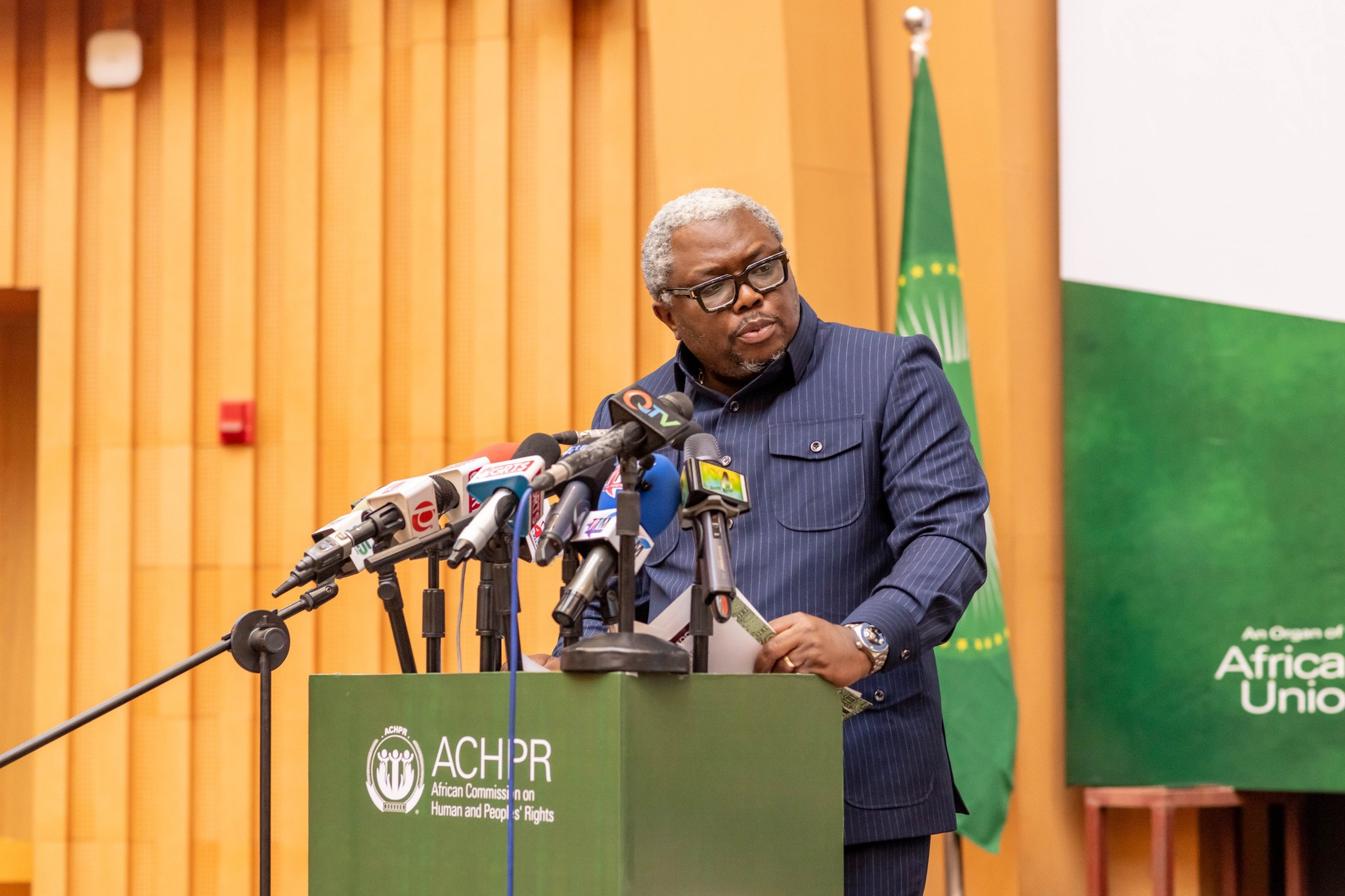
Hon. Rémy Ngoy Lumbu delivers his opening remarks at the 85th Ordinary Session of African Commission on Human and Peoples' Rights in The Gambia in October 2025
© African Commission on Human and Peoples' Rights / FacebookThe African Commission on Human and Peoples’ Rights (ACHPR) operates on a foundation built from international treaties and continental obligations. Its legitimacy and efficacy depend on its autonomy and independence, the very qualities that safeguard its objectivity and neutrality in advancing human rights across the continent.
The 85th Ordinary Session of the ACHPR, held in October 2025, offered a critical platform to address pressing human rights issues, from enforced disappearances and restrictions on expression to arbitrary arrests and extra-judicial killings. Increasingly, some governments have weaponised counterterrorism laws against human rights defenders (HRDs), blurring the line between maintaining security and respecting human dignity. These tactics, often justified as protecting state sovereignty, have led to countless arbitrary arrests and even extrajudicial killings.
Yet, amid these discussions, the Commission’s credibility came under question following its unexpected congratulatory message to Cameroon’s long-standing President, H.E. Paul Biya, on his latest electoral “victory.” For many, this was a worrying departure from the Commission’s neutrality, especially given widespread reports of electoral irregularities and dissatisfaction among Cameroonians, issues that were openly debated during the session. To legitimise such a contested result through a congratulatory statement raised serious doubts about how the Commission interprets and responds to credible concerns raised by civil society.

Masechaba Mdaka with Hon. Rémy Ngoy Lumbu at the 85th Ordinary Session of the African Commission on Human and Peoples' Rights in The Gambia.
© Friedrich Naumann Foundation for FreedomA key strength of the ACHPR sessions lies in their interactive nature, where states are called to respond directly to allegations brought by Civil Society Organisations (CSOs) and Non-Governmental Organisations (NGOs). This process is crucial for transparency and accountability. However, I observed how easily progress can stall when governments reject or sidestep allegations. Countries such as Eswatini, Uganda, Kenya, and Zimbabwe, all with pre-existing human rights concerns, pushed back against claims relating to freedoms of assembly, association, and the protection of HRDs. While the right of reply must be respected, such resistance often leads to stalemates, slowing or even halting implementation of necessary remedies.
The Commission continues to engage member states through periodic reports and follow-ups, but these processes often take years and rarely address urgent human rights crises. The gap between recommendation and implementation remains one of the ACHPR’s greatest weaknesses, a gap that advocacy alone cannot bridge.
Much has been said about the need for “African solutions to African problems.” Realising that vision requires moving beyond recommendations towards a system with genuine enforcement power. The complementarity between the ACHPR’s investigative role and the African Court on Human and Peoples’ Rights (ACtHPR) is essential. The next step lies in extending the Court’s jurisdiction under the Malabo Protocol to include criminal matters, a key step towards true accountability. Angola’s ratification is a promising sign, but fourteen more AU member states must follow before it can come into force. Its full implementation would represent a turning point for African justice, a shift from impunity to accountability.
Still, the greatest challenge lies at national level. Implementation depends heavily on the political will of member states. Without robust follow-up mechanisms, even the best recommendations risk fading into obscurity. Establishing clear focal points within governments to monitor progress is essential if the Commission’s work is to have tangible impact.
Reflecting on this, I see how crucial FNF’s ongoing engagement in sub-Saharan Africa remains. Supporting human rights defenders is not just about advocacy, it is about protecting democracy itself. Human rights work is increasingly under threat, often criminalised or misrepresented as terrorism. This makes vigilant monitoring and fair intervention all the more important. Through its initiatives, FNF continues to highlight human rights challenges and empower HRDs across the region to continue their vital work.
Ultimately, the effectiveness of the ACHPR depends on collaboration. National Human Rights Institutions (NHRIs), CSOs and regional partners must work together to ensure that commitments translate into real change on the ground. The relationships among stakeholders are not adversarial, but they require constant dialogue, trust and openness to move from rhetoric to results.
The ACHPR’s mandate is clear. Its challenge now is to ensure that autonomy and accountability do not exist in tension, but in harmony — in service of the rights and dignity of every African.