Iran
The DA’s view on human rights and foreign policy

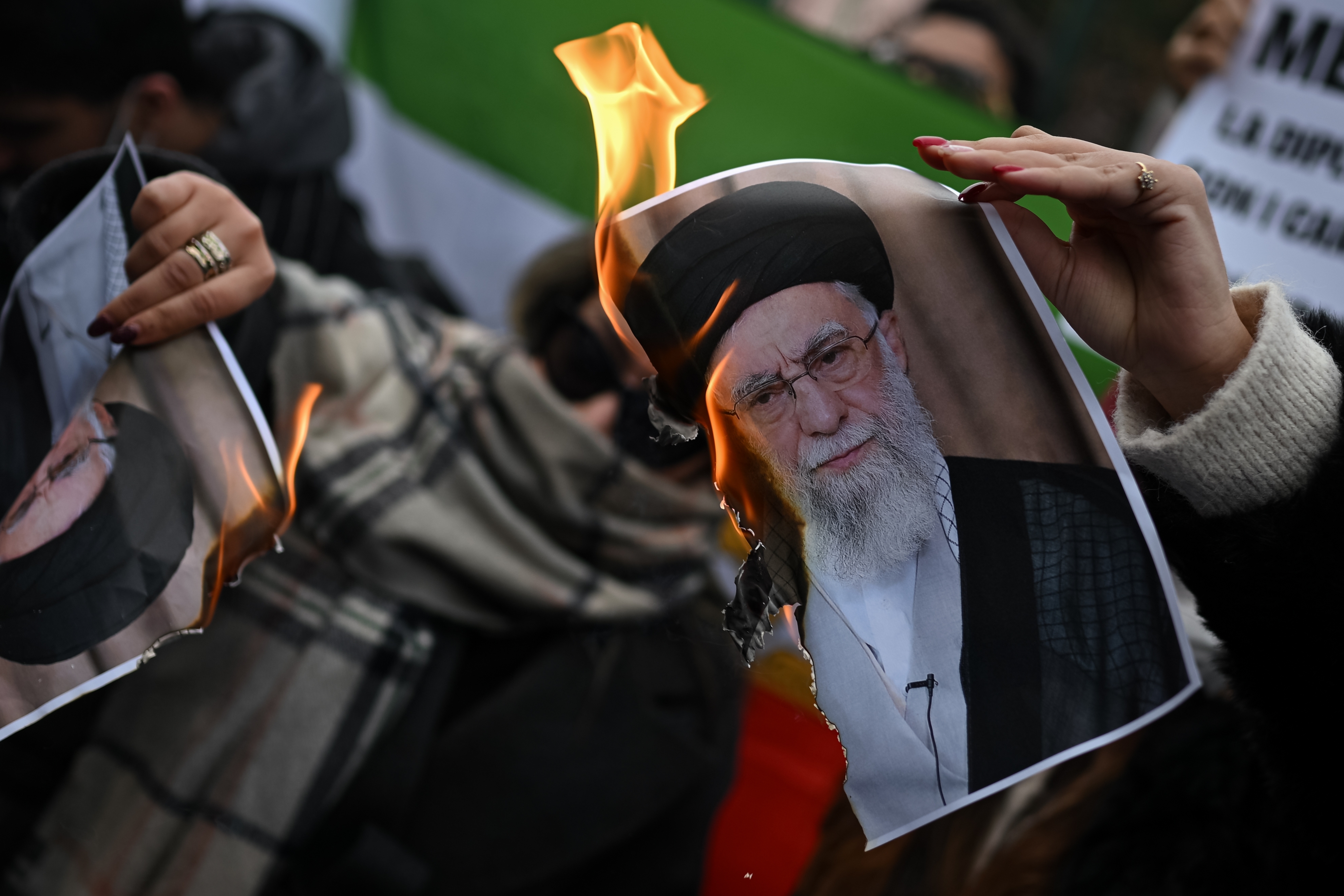
Milan, Italy - January 17, 2026: People burn a photo depicting Ali Khamenei, Supreme Leader of Iran during a demonstration in solidarity with Iranian protestors
© ShutterstockRecently, South Africa hosted a Chinese-led naval drill in its coastal waters off Cape Town. Iran’s participation in the exercise drew heavy criticism, raising questions about Pretoria’s foreign policy posture and its alignment within BRICS+. Just before the recent Israel–US air war with Iran, we posed a series of questions to the DA’s spokesperson on Foreign Affairs, Ryan Smith. Here are his responses on human rights and foreign policy:
Iran & the naval drills
What is the Democratic Alliance’s (DA) position on Iran’s participation in the recent naval exercises off the Cape coast, and does the DA believe there should be political accountability from Defence Minister Angie Motshekga for approving or allowing this?
Exercise “Will For Peace” and any joint military exercises within BRICS+ run contrary to the existence of the multilateral organisation altogether. BRICS+ is meant to be a forum for economic cooperation between emerging and developing economies, not a military and defense force to counter the West. South Africa has essentially been coopted into carrying out the will of illiberal and maligned states such as Russia and Iran, which is a violation of our constitutional principles.
The fact that exercise “Will For Peace” included sanctioned vessels belonging to the Islamic Revolutionary Guard Corps (IRGC), which is complicit in the murder of innocent civilians in recent anti-government protests in Iran, signals South Africa’s rejection of international law and support for deeply oppressive regimes. This bears serious international consequences and tarnishes our reputation abroad.
The fact that the President, the Minister of Defense, and the Minister of DIRCO (Department of International Relations and Cooperation) have claimed to be oblivious as to Iran’s participation signals two things: either these crucial components of our security cluster do not talk to each other, or they do not know what they are doing. Both are deeply worrying. South Africa cannot afford to have its foreign policy dictated by the ANC’s international political allegiance at the expense of our international reputation and trade. The commission into this debacle is not enough. The Minister of Defence should be fired for this gross negligence.
Foreign policy alignment in the GNU
Foreign policy has historically been a point of tension in South Africa. How does the DA plan to find alignment or common ground on foreign policy within the Government of National Unity?
It is very easy to find common ground on foreign policy within the GNU as long as parties embed our international approach firmly within our constitutional principles, take seriously South Africa’s role as a middle power in Africa, and take a tailor-made and pragmatic approach to economic diplomacy and trade. The ANC needs to realise that South Africa’s foreign policy cannot be an extension of the ANC’s (African National Congress) international nostalgia.
We need to determine what the national interest is outside of party-political interests to ensure that our foreign policy respects and upholds the constitution, and brokers greater prosperity and security for the South African people. Only once we have committed to that can we align domestic policy with our international objectives and build ourselves up as a principled and consistent international actor and reliable trading partner.
South Africa’s stance on Iran
Given Iran’s human rights record and its geopolitical role, should South Africa adopt a firmer and more outspoken stance against Iran, and what would that look like in practice?
Yes, absolutely. As a theocratic autocracy, Iran exists as the very antithesis of South Africa’s constitutional democracy. We have nothing in common with a country that inflicts human rights abuses on its citizens and stifles freedom while pursuing an antagonistic and destabilising international approach. South Africa should démarche the Iranian ambassador, sever diplomatic ties with Iran, and uphold global sanctions against Iran for violating international nuclear treaties, among others.
Human rights as a foreign policy principle
Why is it important for governments and political parties to consistently centre human rights protection in their foreign policy decisions, even when it comes at a diplomatic or economic cost?
I think it is more important to pick your fights accordingly on human rights concerns. If South Africa wants to uphold human rights in our foreign policy, we need to start with our own back yard where we have real influence as a middle and regional power in Africa. Until South Africa addresses human rights violations in countries such as Zimbabwe, Tanzania, and Uganda, we will never be taken seriously as a human rights broker in regions such as the Middle East. We need to uphold human rights where we have diplomatic clout and influence within our own region to build up diplomatic credibility and consistency.
US–South Africa relations
How does the DA assess the current state of relations between South Africa and the United States, and what concrete steps can be taken to repair and strengthen this relationship going forward?
Relations between South Africa and the United States are currently very strained. This is mainly due to South Africa’s increasing proximity to maligned international actors such as Russia and Iran through the ANC’s party-political influence on our foreign policy. South Africa urgently needs to reorientate itself as a principled and consistent international broker that is serious about upholding and promoting freedom and human rights. We must then address our domestic policy constraints, such as Broad-Based Black Economic Empowerment, to unlock a wave of foreign direct investment and trade. Addressing these two impediments will warm diplomatic relations with the USA and make it easier to reopen diplomatic channels for South Africa’s immense benefit.