Middle East
Argentina – A Relative “Winner” of the Middle East Crisis?

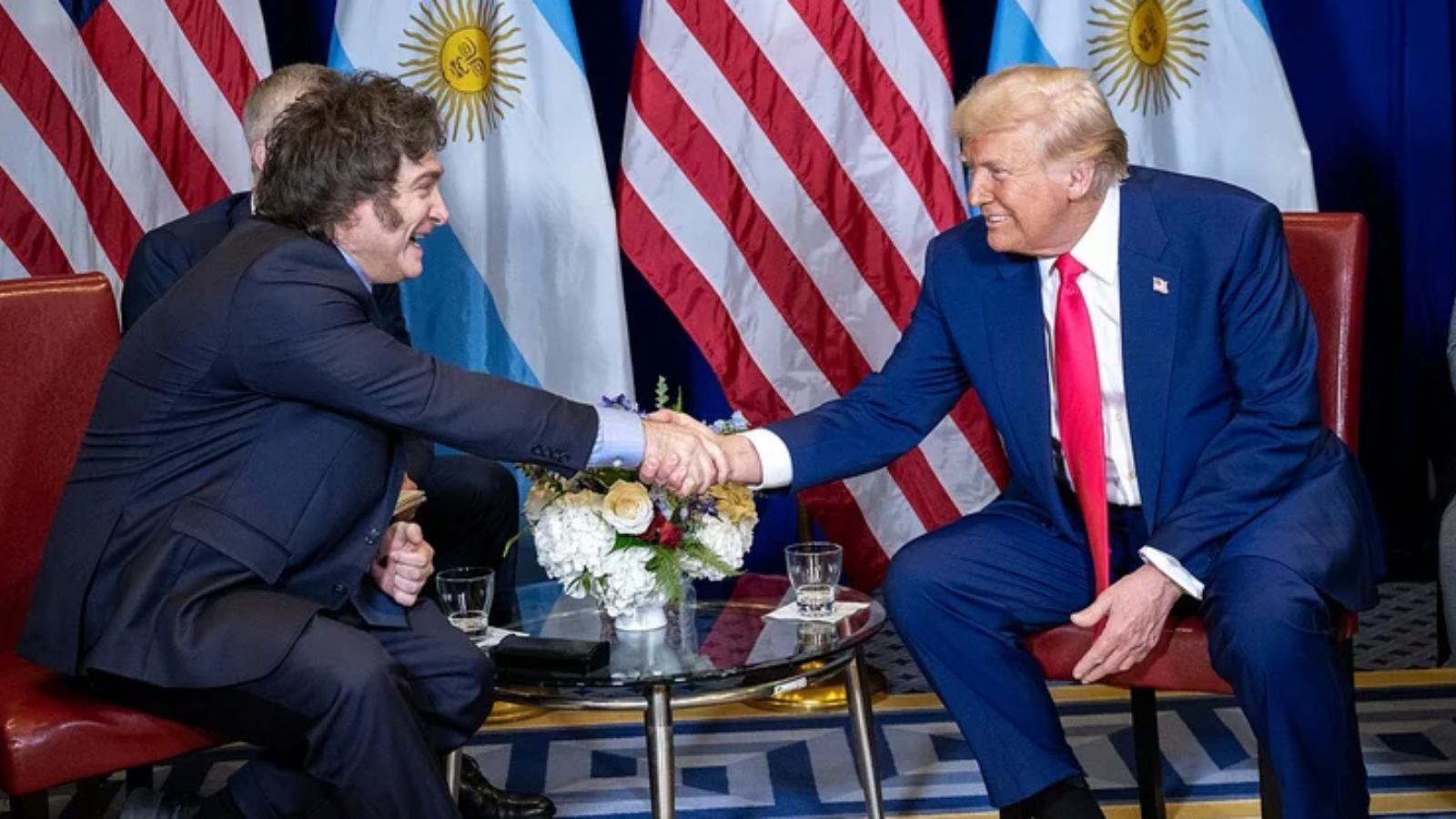
Javier Milei and Donald Trump: a strategic alignment.
Argentina’s political stance on the Middle East crisis is clear: Javier Milei’s government stands firmly alongside its strategic allies, the United States and Israel, not least because of Milei’s close personal ties to both countries and their leaders, Trump and Netanyahu. Argentina, on the other hand, views Iran as a public enemy; Iran’s role in the attacks on the Israeli embassy and the Jewish cultural center in Buenos Aires in 1992 and 1994, respectively, remains unforgotten to this day. However, it is not expected that Argentina will actively participate in the war, not least due to its military infrastructure, which has become technically obsolete due to a lack of investment over the past decades.
The short-term economic impact on Argentina is moderately negative. Higher oil and gas prices on global markets are weighing on businesses and consumers. Since the start of the war, the price of gasoline has risen by 20% (to currently around 2,000 pesos/USD 1.45 per liter). The higher energy costs will thus also negatively impact the inflation rate and thereby complicate the anti-inflation policy—where Milei has achieved significant success so far—at least in the short term. The global rise in energy costs and inflation is also leading to higher interest rates on global financial markets, which in particular increases risk premiums for emerging markets. As a result, Argentina’s country risk has risen by around 100 basis points to over 600 since the start of the war. This tends to increase financing costs for Argentine borrowers, although the effect is limited due to Milei’s strict fiscal consolidation (“zero debt”).
In the medium term, Argentina is likely to actually benefit from the crisis in the Middle East. Argentina possesses the world’s second-largest shale gas reserves and fourth-largest shale oil reserves in the “Vaca Muerta” region of Patagonia. Through a special incentive regime (“RIGI”), the Argentine government promotes major investments exceeding USD 200 million with tax and customs relief for 30 years. Further boosted by the significantly improved macroeconomic environment under Milei, foreign companies’ interest in investing in Argentina’s energy (and commodities) sector has recently risen sharply and has already led to the first project announcements and approvals. Higher oil and gas prices on global markets over an extended period due to the Iran conflict are likely to further accelerate interest in and the financial profitability of exploration in Argentina.
In this regard, Argentina is particularly counting on the renewed geopolitical and economic interest of the United States in closer cooperation with Argentina, which has risen under Trump. In February, after just six months of negotiations, the two countries signed a comprehensive bilateral trade and investment agreement.
For Germany and Europe, Argentina —a trend further amplified by the current Iran crisis— offers an opportunity to diversify energy markets. The EU-Mercosur Agreement, which is still awaiting final ratification on the European side, is of particular significance in this regard. Argentina was the first Mercosur country to ratify the agreement in February, thereby paving the way for the agreement’s at least provisional application as of May 1. The agreement includes a separate chapter on investment security to facilitate investments by European companies in Argentina.
A first step toward closer cooperation between Germany and Argentina was the signing in January of an agreement between the companies SEFE and Southern Energy regarding the supply of LNG to Germany starting in 2027.