Trade
The future of the South Africa-Germany partnership

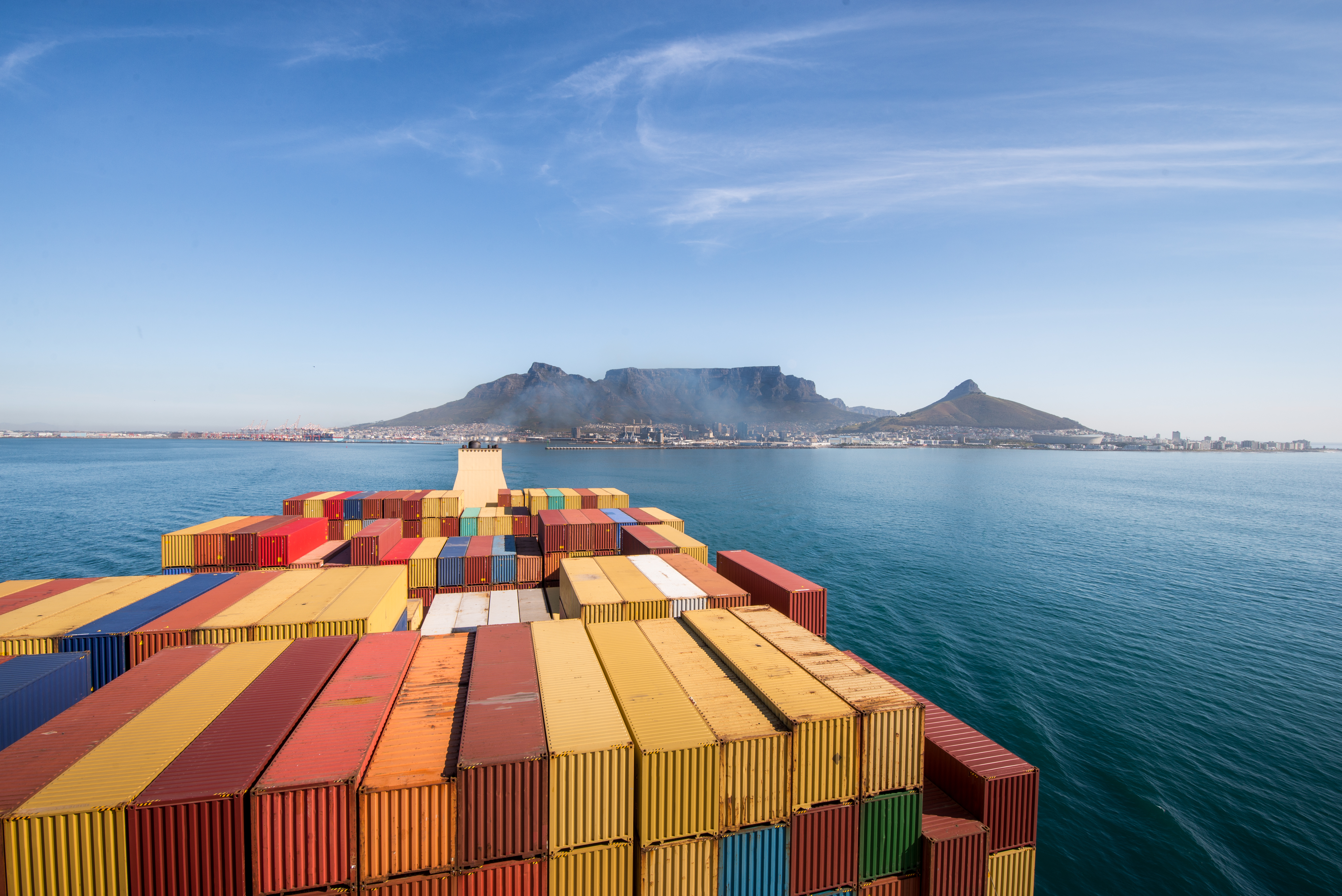
Large stacked container ship leaving the port of Cape Town with Table mountain and the city in the background, South Africa.
© ShutterstockJOHANNESBURG – "We are meeting at a pivotal moment for global trade," declared Inge Herbert, Regional Director of the Friedrich Naumann Foundation (FNF), as she opened a high-level panel discussion in Johannesburg this morning which FNF organised in partnership with the Southern African – Germany Chamber of Commerce. Against a backdrop of shifting supply chains and "geopolitical fragmentation," industry titans and policy architects gathered to dissect the findings of a new FNF report: 'The South Africa–Germany Trade Relationship.'
The consensus was clear: the era of predictable, rules-based trade has been replaced by a "New Normal" defined by carbon pricing, industrial policy, and strategic rivalry.
A Partnership Built on Shared Values
For German investors, South Africa remains a "strategic anchor" on the continent, largely due to its democratic foundations. Sabine Dall’Omo, CEO of Siemens Sub-Saharan Africa, noted that Germany is actively seeking new partners who share its core principles.
"South Africa is a working democracy, which we know every single day in the media. We have a free press—and these are all values Germans very much embrace," Dall’Omo remarked. "The partnership between South Africa and Germany on that basis is really a perfect match."
The Great Industrial Pivot: Beyond the Combustion Engine
The discussion moved quickly from values to the mechanical realities of the Just Energy Transition. With Europe phasing out internal combustion engines, South Africa’s automotive sector, a pillar of the national GDP, faces an existential crossroads.
Dall’Omo emphasised that the shift to E-mobility isn't just a "technical upgrade" but a structural overhaul. "It doesn’t help you to plug [an EV] into a power station which runs with coal," she cautioned, highlighting the need for green electricity to power new value chains.
Marika Jakas, Head of Trade and Economics for the EU Delegation, revealed that the EU has nearly tripled its commitment to the Global Gateway investment package in South Africa, now totaling almost 12 billion euro.
"Now this year is going to be a year of implementation," Jakas stated. "We want to really unlock and mobilise more EU investments... to create value here and do what you call beneficiation."
The "Elephant in the Room": Corruption and Infrastructure
While the outlook for high-tech sectors like Green Hydrogen is promising, the panel did not shy away from the domestic hurdles currently hampering growth. Boris Werner, Managing Director of KSB Pumps, provided a stark reality check.
"Right now, back at our offices, our generators are running," Werner shared. "Upliftment comes with making South Africa as competitive as it can be... money will flow where it will create profits and where a friendly investment environment is found."
Addressing a pointed question from the floor regarding corruption, Werner was blunt: "Corruption anywhere is a huge, huge burden... As a business, we suffer from that. We don't benefit from it in any way." Dall’Omo echoed this, noting that while business can provide expertise, the "rule of law" is a fundamental service that only the state can provide.
The "Butterfly Strategy" and the GNU
Representing the South African government, McKinnley Mitchell, Advisor to the Deputy Finance Minister, outlined the "Butterfly Strategy" under the Government of National Unity (GNU). The strategy aims to root South Africa’s economic "body" in the African Continental Free Trade Area (AfCFTA) while using its "wings" to maintain strong ties with the EU and Germany.
Mitchell pointed to Operation Vulindlela as the key to repairing municipal infrastructure, inviting the private sector to partner in service delivery where local government capacity has failed.