Free Speech
Banning Hate Speech: Winning the Battle But Losing the War

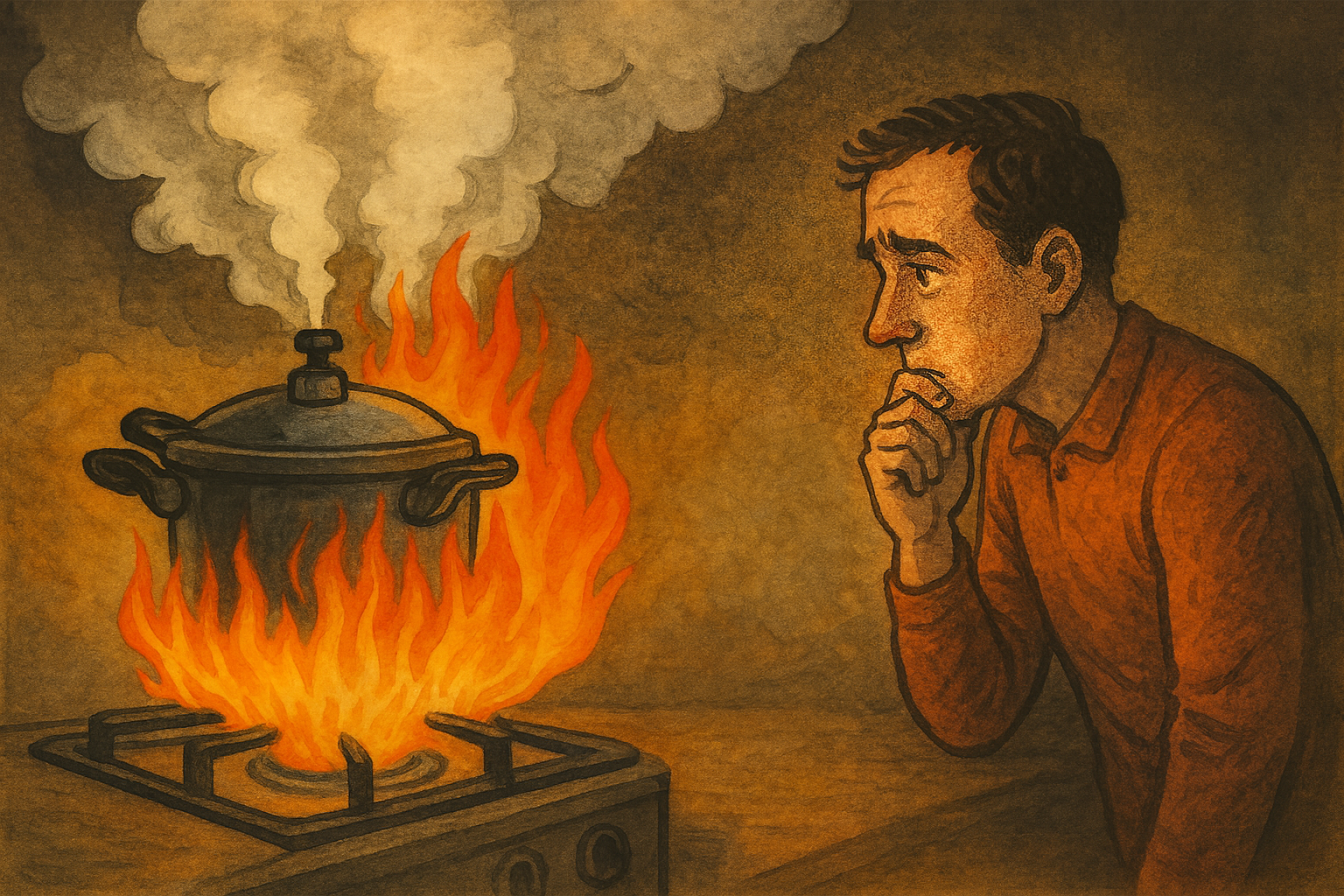
Should we ban hate speech? The liberal answer I would argue – should be no. The last decade has not been easy for liberal democracies. We are all facing very similar challenges, but the strategies with which we face them vary. This article means to tackle the different options at our disposal, when dealing with one of these challenges: Hate Speech.
A free society cannot exist without the individual having the right to free speech. However, there are instances in which free speech is also limited. This sort of illegal speech is usually referred to as “hate speech”. There are many different definitions for hate speech. A narrow definition of hate speech, as stated by the European Union, is “Public incitement to violence or hatred based on race, color, religion, descent or national or ethnic origin”. While a wider definition, as stated by the United Nations is “Offensive discourse targeting a group or an individual based on inherent characteristics such as race, religion or gender, and that may threaten social peace. Both of these share common elements: A type of dangerous speech, different victimized groups and a protected public space.
For some reason, we as liberals, feel more comfortable with the former definition, than with the latter. Why is that? Liberals, who greatly value the freedom of the individual, are painfully aware of the coercive force exerted by the state. Perhaps it is this sensitivity that triggers an almost allergic reaction to vague terms such as “a threat to social peace” that can easily be abused to oppress the individual. Unlike the relative clarity of “incitement to violence”, it is practically impossible to agree on what exactly constitutes “offensive discourse” or worse yet “a threat to social peace”.
In practice, these decisions are made by those in power, and are then enforced on the individual accordingly. Authoritarian regimes often use similarly vague phrases to justify silencing political opposition and criminalizing all sorts of public criticism. If we are to right the wrongs in our societies, we have to risk being offensive. If we want to hold our governments accountable, we must be able to offend them. If we aspire to live in a free society, then we have no choice but to allow offensive discourse. Otherwise, it becomes too easy to silence those who think differently, simply by taking offense.
To be fair, banning “public incitement to violence or hatred” is very different from banning “offensive discourse” or criminalizing “threatening social peace”. It tolerates a much wider range of controversial speech, and allows for relatively free political opposition and public criticism. The government can still abuse it, but to a more limited extent. In most free societies, it is not only accepted, it is considered necessary. If I am to make a convincing argument, I must challenge this definition, as it is a sounder definition of hate speech.
The coercive power described above is not limited to the government, and individuals as well as social organizations can abuse it as well. A great example for this would be “Cancel Culture”, a social trend in the West in which individuals who are not “politically correct”, are harassed and shamed online, or in person. In many cases, losing their jobs and titles, becoming effectively “cancelled”. This sort of coercion in the name of fighting hate speech is also dangerous. While it is not authoritarian per se, it does rely on populist sentiments, to justify a sort of normative tyranny of the masses.
So, why do we ban hate speech? How do we justify “cancelling” people? We do it because we want to protect minorities from discrimination and persecution, because we believe in inclusion, diversity and tolerance. In “The Open Society and its Enemies”, Karl Popper presents the Paradox of Tolerance. He explains that as society becomes tolerant even of intolerance, it risks an eventual dominance of intolerance, thus undermining itself. Popper justifies the suppression of intolerant ideologies, even by force when needed, for the sake of maintaining a tolerant society. But can a liberal end justify illiberal means? Can we truly claim to stand for a diverse and tolerant society, while we do not tolerate diversity of opinion?
In his book, “On Liberty”, John Stuart Mill defends unlimited free speech through three scenarios: In the first, the silenced opinion is correct, in the second, it is partially correct, and in the third, it is wholly incorrect. We all know intuitively that silencing the correct opinion is wrong; it both oppresses individuals and prevents society from improving as a whole. Silencing an opinion that is partially correct, is not so different. Individuals are oppressed and society misses out. What about the third scenario? If an opinion is completely wrong, surely, we are justified in silencing it, in sparing society from it. “According to Mill: “All silencing of discussion is an assumption of infallibility”. In other words, when we consider silencing others, we always assume that they are completely wrong. Therefore, in practice, this third scenario is the only one that matters.
When we challenge a conflicting opinion or worldview, even one we see as utterly evil, we gain a better understanding of our values and ourselves. We remember what we stand for, but more importantly, we improve our understanding of why we stand for it. Alternatively, we can choose to silence “dangerous” opinions, and make sure no real argument takes place. But in doing so, we do not win the argument, we only convert our position into dogma. And, in doing so, we yield the intellectual high ground to our rivals, who are willing to be challenged.
This is not just a question of morality. When we debate the silencing of some opinions, we should also consider an important practical question. Does silencing an opinion work? Can we really stop it from spreading? Considering Mill’s third scenario, it would seem quite the opposite. Silencing an opinion does not change the minds of those who hold it. Worse yet, since they are banned from voicing it publicly, it can never be truly challenged. This allows their opinion to spread under the surface and become further entrenched in the minds of those who hold it. Essentially, what we are doing is replacing isolated cases of hate speech with an expanding echo chamber of hate think.
With this in mind, we return to Karl Popper’s warning, that a society that tolerates the intolerant indeed risks becoming intolerant. This is of course a very real threat, but as this article demonstrates, Popper’s proposed solution does not work. Instead of silencing the intolerant, we must expose them by confronting their arguments directly. Mill is also right; we are definitely not infallible. We have blind spots. Debating the intolerant also presents a great opportunity to acknowledge flaws and address public concerns. If we don’t, they will be used to cultivate more hate and intolerance. Essentially, by debating hate think instead of banning hate speech, we can both improve our arguments and deflate the proponents of hate. And most importantly, we can do it in a way that aligns with our values.
One cannot discuss the dangers of hate speech without also addressing the rise of the far right in Europe. Conveniently, the European far right is also a great example of an expanding echo chamber of hate think. The public shift to the far-right correlates well with increased migration into Europe over the last decade. Does this mean that people are inherently anti-migration, and the very presence of migrants is enough to radicalize them? Of course not. So why is it that the anti-migration sentiment has spread at such an alarming rate? I suggest that it is exactly because it was not properly challenged.
Europeans clearly have historical reasons to fear the spread of hate and racism, and the reluctance of many to engage with Nazi reminiscent, far-right parties is more than understandable. But is it working? As the Jewish saying goes: “Don’t be Right, Be Wise”. In other words, it is more than justified to ban Nazis, but when we ban the Nazis, we also stop challenging Nazism. Hate speech is a symptom, if you silence it, the hate doesn’t disappear. On the contrary, it expands unchallenged.
Defeating hate is not easy. It requires open debate that exposes and refutes it. If we want to win the war against hate speech, we have to spend less time banning Nazis, and more time explaining why Nazism is bad.