Bulgaria
Bulgaria’s Government Has Resigned


Massenproteste in Sofia, Bulgarien - 10. Dezember 2025
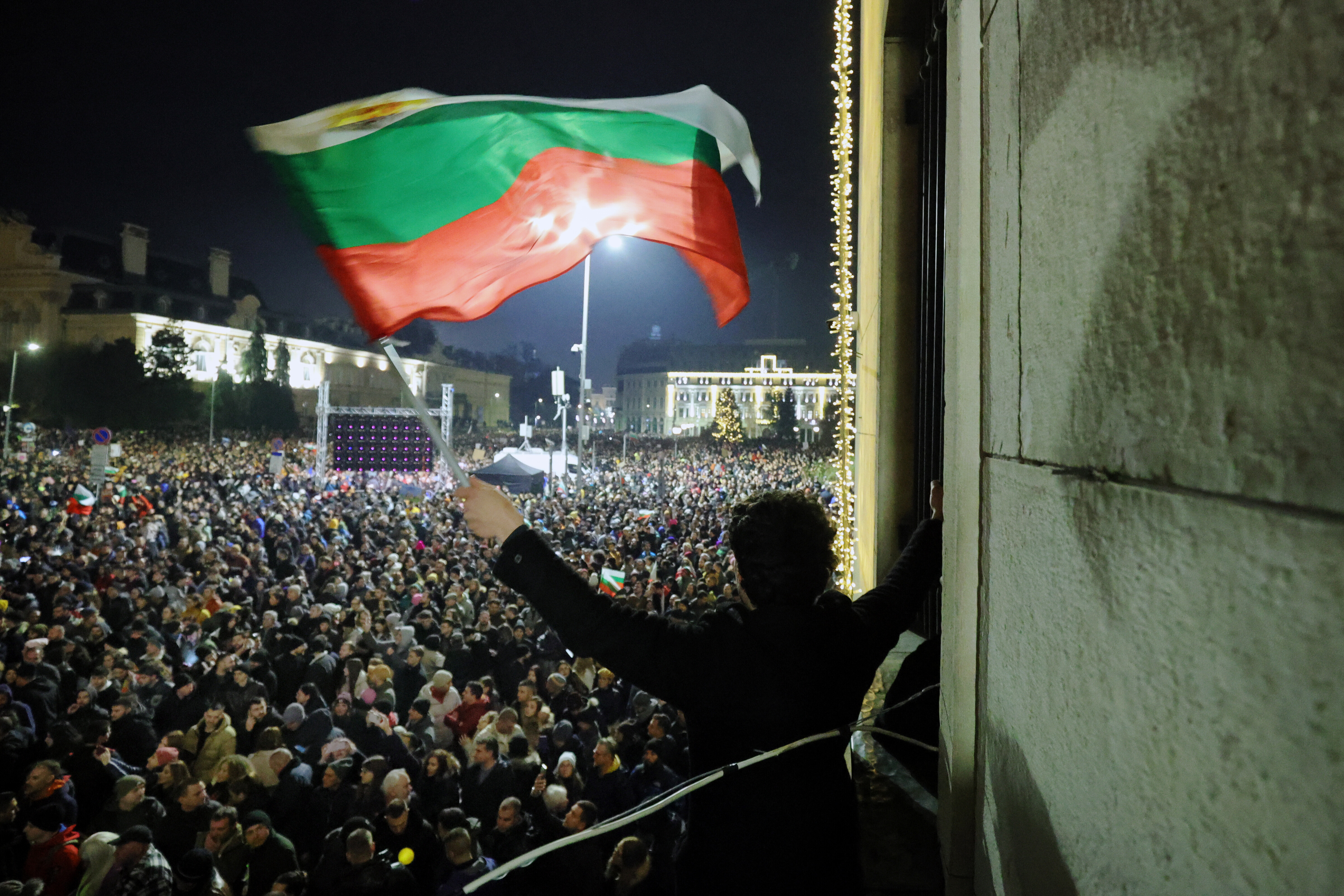
© picture alliance / ASSOCIATED PRESS | Valentina PetrovaIn recent weeks, mass protests have taken place across Bulgaria. At times, probably more than 100,000 people—primarily young—gathered in Sofia alone. The FNF partner party PP, which is part of the largest opposition alliance in the country, called for the protests. Under the pressure of these demonstrations, the government has now resigned—a sweeping success for the democratic movement. FNF employee Margarita Nikolova, who belongs to Generation Z and has herself been on the streets of Sofia in recent days, shares her assessments and hopes.
“The real work is only just beginning!” This is the prevailing mood in Bulgaria just hours after the resignation of the government led by Prime Minister Rosen Zhelyazkov (GERB). In recent weeks, time and again, tens of thousands of citizens filled Sofia’s streets. Dozens of cities across the country, as well as Bulgarian communities abroad—from Varna and Plovdiv to Vienna, Berlin, and London—joined the protests.
In contrast to the protests during the summer, which were directed against the imprisonment of Blagomir Kotsev, the mayor of Varna and a member of the opposition party PP “We Continue the Change”, these protests were particularly impressive because of their diversity. People from almost all social groups—including minorities, individuals of different ages, and people with varying political ideologies—were united by a shared goal: the pursuit of a normal, functioning state.
The protests of recent weeks demonstrated something crucial: Bulgarian society, often perceived as apathetic and fragmented, still has the potential to mobilize when the cause is compelling enough. This rapid and widespread public pressure brought down a government whose policies and public scandals—especially those concerning the 2026 state budget and the introduction of the Euro—had further undermined trust in institutions that was already low. Yet despite this political turning point, the resignation marks only the beginning. The real work is still ahead.
Gen Z Isn’t Coming — Gen Z Is Here
“Gen Z is coming” was one of the most striking protest posters seen in Sofia in recent days. This short but clear message signaled the determination of a young generation to take both the present and the future of their country into their own hands.
“You’ve pissed off the wrong generation!” was another popular slogan among young demonstrators. Their creative banners, sarcastic yet joyful chants, and distinctive language introduced an entirely new rhythm and energy into public dissent. That is why it is more accurate to say: Gen Z isn’t coming — Gen Z is here.
For many participants of this generation, these protests marked their first experience of genuine civic participation. Their emotional openness and expressive freedom stood in sharp contrast to the traditional image of young people as passive or politically disengaged. It is true that many lack basic knowledge of the political landscape, which can make them vulnerable to demagogues. But they are not naive. They are idealists who firmly believe that Bulgaria can become a better place—one where they can develop professionally, start families, and live fulfilling lives. Politicians, however, can exploit these dreams, seeking to slowly suffocate both them and their hopes. Bulgaria has already witnessed this dynamic during the mass protests of 2020.
The Energy of Protest Must Be Cultivated
This leads to a crucial question: What follows the political awakening of an entire generation? Bulgarian society has a unique opportunity—not only to politicize but to sustainably democratize this generation, on which the country’s future depends.
The memes, protest songs, and thousands of humorous as well as serious calls for participation circulating on social media for weeks are encouraging signs. Yet protest energy must translate into lasting civic engagement—not only voting, although voting is an important first step. A significant portion of these young people have only recently reached voting age and are now ready to exercise this right. They may get that opportunity very soon.
Building a Sustainable Democratic Culture Is a Shared Responsibility
In the current political and social situation, responsibility for building a sustainable democratic culture rests with all generations. Older generations must consciously overcome their long-standing exhaustion and disappointment, which often results in mistrust toward young people. They need to learn to support the younger generation through dialogue and genuine empowerment—recognizing that this new generation brings expertise, sensitivity, and perspectives that are crucial to the country’s modernization.
Generation Z, for its part, must transform the energy of the streets into long-term commitment, balance idealism with realism, and acknowledge the historic contributions of earlier generations who preserved the fundamental freedoms on which today’s activism is built.
If both generations succeed in reaching out to one another, a sustainable democratic culture can emerge—one that is not only activated in times of crisis, but functions on a daily basis. This is the key prerequisite for Bulgaria to move from cyclical upheavals toward a predictable, stable, and democratically accountable social model. It will not be easy—but it is more achievable than ever before. The real work is only just beginning.