Bosnia and Herzegovina
Dodik’s Fall: The End of an Era?

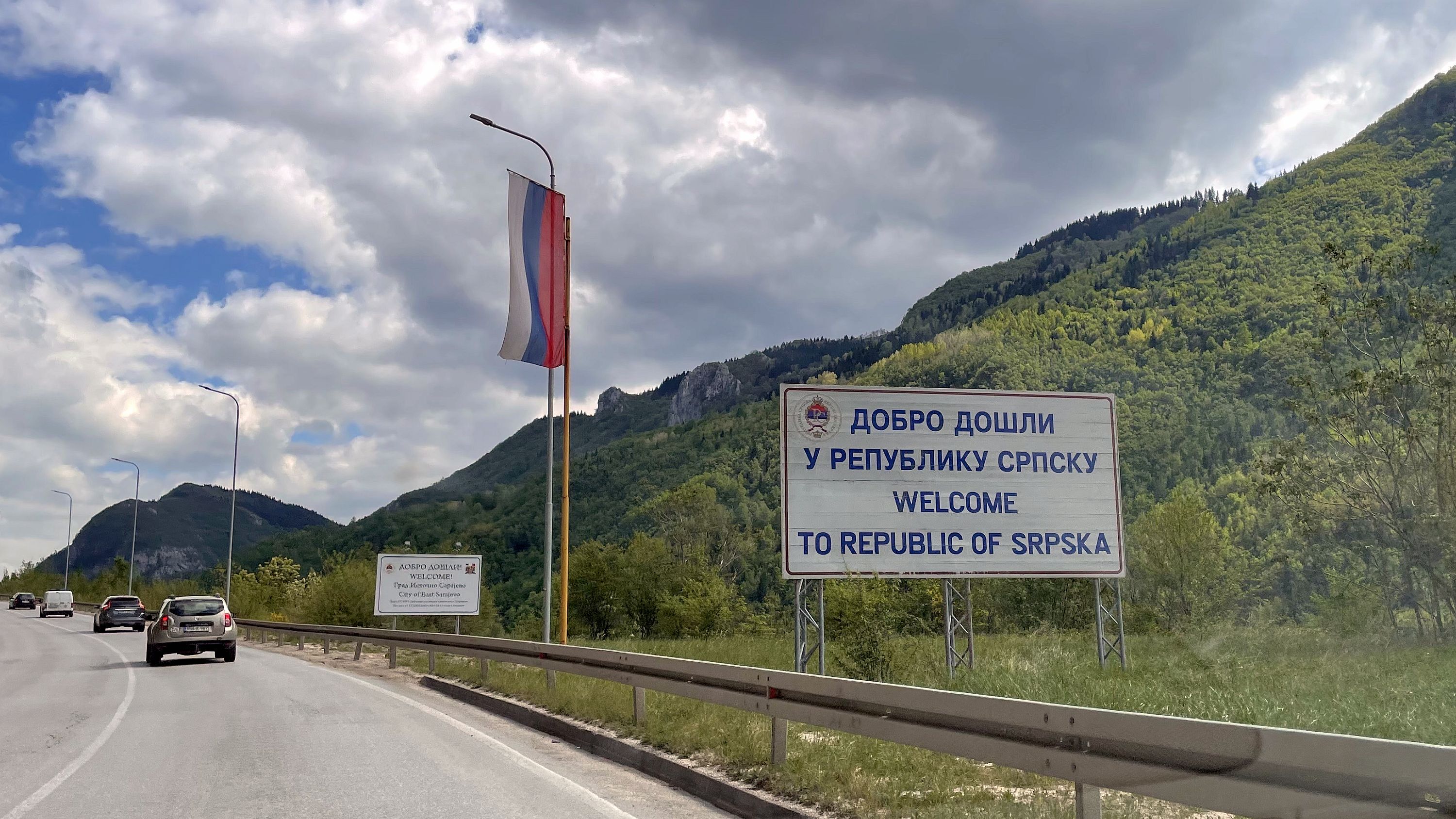
Milorad Dodik, the long-standing leader of Republika Srpska, rose to power with international backing in 1998 but has since turned away from the West, aligning himself with Russia and other illiberal regimes. His authoritarian rule, marked by nationalist rhetoric, genocide denial, and efforts to dismantle Bosnia and Herzegovina, has led to sanctions and legal battles with the international community. Following a conviction and a six-year ban from public office, Dodik’s increasing isolation, both domestically and internationally, suggests that his reign is nearing its end.
The Rise of Milorad Dodik
Milorad Dodik, uncrowned leader of the Bosnian Serbs, came to power in 1998 with the assistance of the international community, the High Representative and SFOR troops. He ascended quickly to the position of Prime Minister of Republika Srpska, one of two semi-autonomous entities in Bosnia and Herzegovina and gradually grew into the most important political figure in the Serbian-dominated Republika Srpska. In the meantime, Dodik turned away from the West, contested the Western-led international presence in BiH, forged ties with the Kremlin and became a part of the illiberal axis stretching from Budapest to Banja Luka, the so-called “capital” of Republika Srpska, and Belgrade towards Moscow.
An unwavering supporter of Russia who abused the positions he held to capture the entirety of RS apparatus and establish control over financial flows in RS and BIH, Dodik eventually became the target of US and UK sanctions due to his destructive political behaviour and corrupt dealings. Particularly US sanctions targeted the financial assets held by him and his family, his network of supporters and enablers. He turned chauvinist, genocide denier, Bosniak (whom he refers to as Muslim)-hating nationalist, who rejects the West and liberal values and seeks to dismantle Bosnia and Herzegovina.
Dodik’s Legal Struggle and Escalating Defiance
Dodik’s defiance to the international community and his destructive actions prompted the High Representative Christian Schmidt to amend the Criminal Code of BiH to include provisions criminilizing the rejection of decisions of the High Representative. For years now, Dodik has been pushing the envelope and escalating his attempts to dismantle the state and any remnants of a Western-dominated global order, such as the OHR (Office of the High Representative) itself. In this, he has enjoyed the support of Aleksandar Vučić’s regime in Serbia, Viktor Orban and the Kremlin. His constant attempts to adopt unconstitutional legal acts were subsequently annulled by the Constitutional Court of BiH. These actions prompted Dodik to focus his destructive energy to the Constitutional Court by stopping the appointments of Serb judges in the hope that this will render the Court dysfunctional. However, even without Serb judges, the Court managed to overcome this assault by amending its internal procedures, which was within its authority, to prevent the Court from becoming dysfunctional.
In addition to the Constitutional Court, the High Representative acted when it was absolutely essential to prevent the damage done by Dodik by annulling problematic laws and putting them out of force. Eventually, Dodik, now President of the RS, pressed the National Assembly of RS to adopt a law outlawing the actions of High Representative. Schmidt annulled those laws once again and amended the Criminal Code of BiH to include the provisions mentioned above. With this, the tug-of-war between the international appointee and Dodik became a legal battle. Following the process in front of the Court of BiH, Dodik was found guilty in February this year and sentenced to one year in prison and six-year ban from all public functions. After the verdict, Dodik’s supporters organised a rally in his support where a relatively small and palpably unenthusiastic crowd gathered there, much to Dodik’s disappointment. Still, he decided to double down and sent into procedure a number of laws annulling the authority of state level courts and law enforcement agencies of Bosnia and Herzegovina in the RS. The Prosecutor’s Office of BiH opened an investigation into these acts which were deemed an attack on the constitutional order of BiH and summoned Dodik along with the Speaker of RS Assembly Nenad Stevandić and RS Prime Minister Radovan Višković for questioning.
Dodik’s Path of No Return: Escalating Crisis and Rejection of the Rule of Law
What followed was by far the biggest crisis in post-war history and a stress test for the entire state. Namely, all three accused politicians openly rejected the Court’s summon and surrounded themselves with armed police and bodyguards taunting the Court and State Information and Protection Agency (SIPA – State Police Force) to apprehend them. They issued an ultimatum to Serbs employed in the Court of BiH and SIPA to transfer to RS Courts and Police forces, which only three people did, and they were apparently in the process of transfer already. Disappointed, Dodik resorted to threats of dispossessing those who reject the call, although he never acted upon it. He launched a charm offensive seeking support from the new US administration, which he never received, then went to Israel where he was asked to leave a conference he was attending, to Hungary where he was warmly welcomed and Russia, of course. The Kremlin stood by Dodik offering as usual words of support.
On 4 July, Dodik appeared in Court of BiH and gave a statement. His apprehension arrest was annulled with the obligation to report to local police station every 15 days. The same happened to the other two fugitives a couple of days later. Why they decided to backpedal on their decision to challenge the state court is probably due to non-existent relevant international support for their actions. Dodik received some stark warnings from major European capitals, and absent support in the European Council due to a Hungarian veto, some countries introduced bilateral sanctions against Dodik, most notably Germany and Austria.
On 1 August, the Court delivered a second-degree verdict in Dodik’s case confirming the first instance ruling. A couple of days later, the Central Election Commission of BiH revoked Dodik’s certificate effectively removing him from the position of President of RS. Dodik had not yet received the CEC decision, but he already announced that he is not stepping down. At the same time, his lawyers informed the BiH Court that Dodik will pay 36.500 BAM (18.500 EUR) – a sum which is the financial compensation for staying out of jail, a practice permitted by the Criminal Code of BiH for sentences up to one year.
Dodik’s Final Stand: A Destructive Legacy and the Struggle for Control
There is a general consensus that Dodik cannot come back from this. His latest escapades have made him unacceptable, and this was communicated to him from various domestic and international addresses. He was already grooming his son to take over the party, as well as Željka Cvijanović, the current Serb member of Presidency of BiH as his potential successor. Ironically, Dodik also said that he will continue the legal battle by appealing the ruling to the Constitutional Court of BiH and the European Court of Human Rights. Staying true to his destructive nature, he also announced a referendum, where he will seek support from the people of RS, and possibly another referendum which he alluded might be the one for the independence of RS. Last year, Dodik forced changes to the Law on Referendum in RS to make any referendum valid regardless of the turnout. The previous provision stipulated that at least 50% of registered voters must come out and vote for a referendum to be valid.
Dodik’s 27 years in power in the RS impoverished the entity entirely, turning it into a fiscally unsustainable, economically destroyed, autocratic black hole from which people flee in troves. The number of people currently living in RS stands at slightly over 1.1 million, but these figures seem to be overblown. A realistic number is closer to 800.000 inhabitants. Dodik’s agenda has always been personal enrichment, whereas his nationalism and attacks on state have always been instrumental in this sense. He is spending millions from RS budget lobbying in the US for the removal of financial sanctions, his and his family’s connection to numerous scandals with embezzlement of public finances are too numerous to mention. Being a member of an illiberal axis has shielded him to some extent, but his time seems to have run out. He enjoys no support in the Serbian public in RS, he is an unacceptable partner domestically and internationally, and he is becoming aware of it.
Dodik will not go down without a fight, but a method he uses to fights will always be steered by his desire to maintain control over financial flows and his family’s assets. Everything else is secondary, which makes Dodik, although weakened, still a formidable threat to BiH and the region as a whole.