Scam Economy, ASEAN
Malaysia Outlook Conference 2025: Understanding the Scam Economy and the Challenges It Poses to Democracy in ASEAN and Worldwide

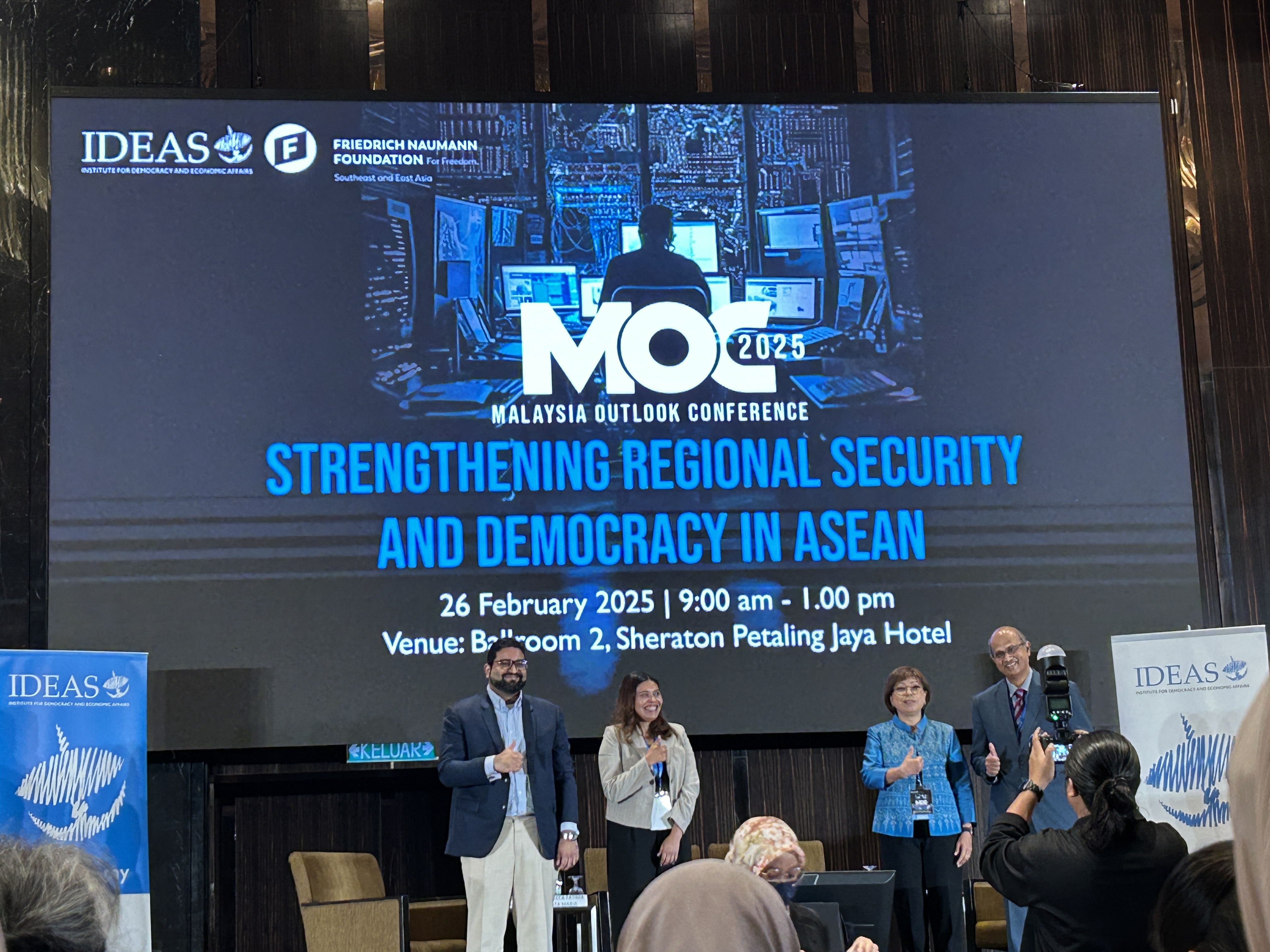
Malaysia Outlook Conference 2025, hosted on February 26th, 2025, at Sheraton Petaling Jaya Hotel.
© FNF MalaysiaThe Malaysia Outlook Conference, organised annually by IDEAS Malaysia in partnership with FNF Malaysia, continues in 2025 with a topical theme that coincides with Malaysia’s ASEAN Chairmanship. The event, which took place on February 26th, was arranged into two panels featuring distinguished speakers with expertise in both Malaysian and Southeast Asian economic and political trends and developments. The conference began with a keynote address from Tan Sri Datuk Dr. Rebecca Fatima Sta Maria that briefly touched upon several regional security issues presently surrounding ASEAN, including maritime security pressures, geoeconomic tensions among the member states, and even the 'scam economy' that is now rampaging across Asia and affecting regions beyond.

𝗣𝗮𝗻𝗲𝗹 𝟭: 𝗔𝗦𝗘𝗔𝗡 𝗖𝗵𝗮𝗶𝗿𝗺𝗮𝗻𝘀𝗵𝗶𝗽: 𝗠𝗮𝗹𝗮𝘆𝘀𝗶𝗮’𝘀 𝗟𝗲𝗮𝗱𝗲𝗿𝘀𝗵𝗶𝗽 𝗶𝗻 𝗡𝗮𝘃𝗶𝗴𝗮𝘁𝗶𝗻𝗴 𝗥𝗲𝗴𝗶𝗼𝗻𝗮𝗹 𝗦𝗲𝗰𝘂𝗿𝗶𝘁𝘆 𝗖𝗵𝗮𝗹𝗹𝗲𝗻𝗴𝗲𝘀. From left to right: Sharmila Suntherasegarun, Dr. Rebecca Fatima Sta Maria. Dato’ Dr. Ilango Karuppannan, and Thomas Benjamin Daniel.
© FNF MalaysiaIn a panel moderated by Dr. Tricia Yeoh, the challenges posed by the 'scam economy' was discussed in relations to the democracy backsliding currently happening in ASEAN. Expert Dr. Bridget Welsh highlighted how these political and economic crises actually complement each other, with traces of the scam funds even getting tracked into the accounts of the Military Junta and some of the ethnic armed groups in Myanmar. These funds are also reportedly found in the pockets of the ruling elites of of Laos and Cambodia.
Scam economy contributed to approximately half of Cambodian's GDP and two-thirds that of Laos, explained Dr. Welsh.
The scam works by two main strategies: 1) these scammers (who are also often victims of forced labour themselves) try to establish emotional bonds with their scam victims through online messaging platforms; and then 2) with enough trust, they will be able to persuade their victims to invest in cryptocurrencies on fake trading platforms and apps.

𝗣𝗮𝗻𝗲𝗹 𝟮: 𝗗𝗲𝗺𝗼𝗰𝗿𝗮𝗰𝘆 𝗶𝗻 𝗙𝗹𝘂𝘅: 𝗖𝗵𝗮𝗿𝘁𝗶𝗻𝗴 𝗣𝗼𝗹𝗶𝘁𝗶𝗰𝗮𝗹 𝗖𝗵𝗮𝗻𝗴𝗲 𝗶𝗻 𝗔𝗦𝗘𝗔𝗡. From left to right: Dr. Tricia Yeoh, Dr. Bridget Welsh, and Dr. Adinda Tenriangke Muchtar.
© FNF MalaysiaWhat is more alarming is that borders do not matter. In Bavaria, Germany, hundreds have been reported to fall victims to these online scams. With local authorities recording approximately 29 million Euros in total damage.
These scam profits become a common ground that links the scam syndicate and several dictatorships in ASEAN. The autocratic elites in Myanmar and Cambodia receive money from the syndicate. And in return, security forces affiliated with the junta government were deployed to protect these scam operations.
While there are no reports detailing how these money is spent by the autocratic elites, the concerns remain. Especially since in Cambodia, the same family has ruled over the country for around 40 years. Their tight grasp to power supported mainly by heavy crack downs on all of their political rivals and practically every free and independent media existing in the country.
Likewise, the military junta in Myanmar has also been committing unlawful and indiscriminate attacks, targeting even civilian infrastructures like schools, hospitals, and areas where internally displaced people were sheltering.
With these contexts, the scam economy in ASEAN is no longer merely about regular online scams. This is also about human trafficking and war crimes, funded by money stolen from honest citizens all over the world. ASEAN member states indeed need to tap into into its own diplomatic and foreign affairs resources to sustain conversations regarding this matter and also seek for solutions that goes beyond formal mechanisms. To put in the work to engage every stakeholder and bridge conflicting interests. However, the responsibilities do not lie with them alone. With the more globalized nature of the crisis, concerted collaboration from international actors are needed now more than ever.
Watch clips from the conference here: Malaysia Outlook Conference 2025.
*Dhea Ramadhani is the program assistant and communications officer of the Malaysia Office of the Friedrich Naumann Foundation for Freedom.