SONA
Speech(less) promises worth a skip

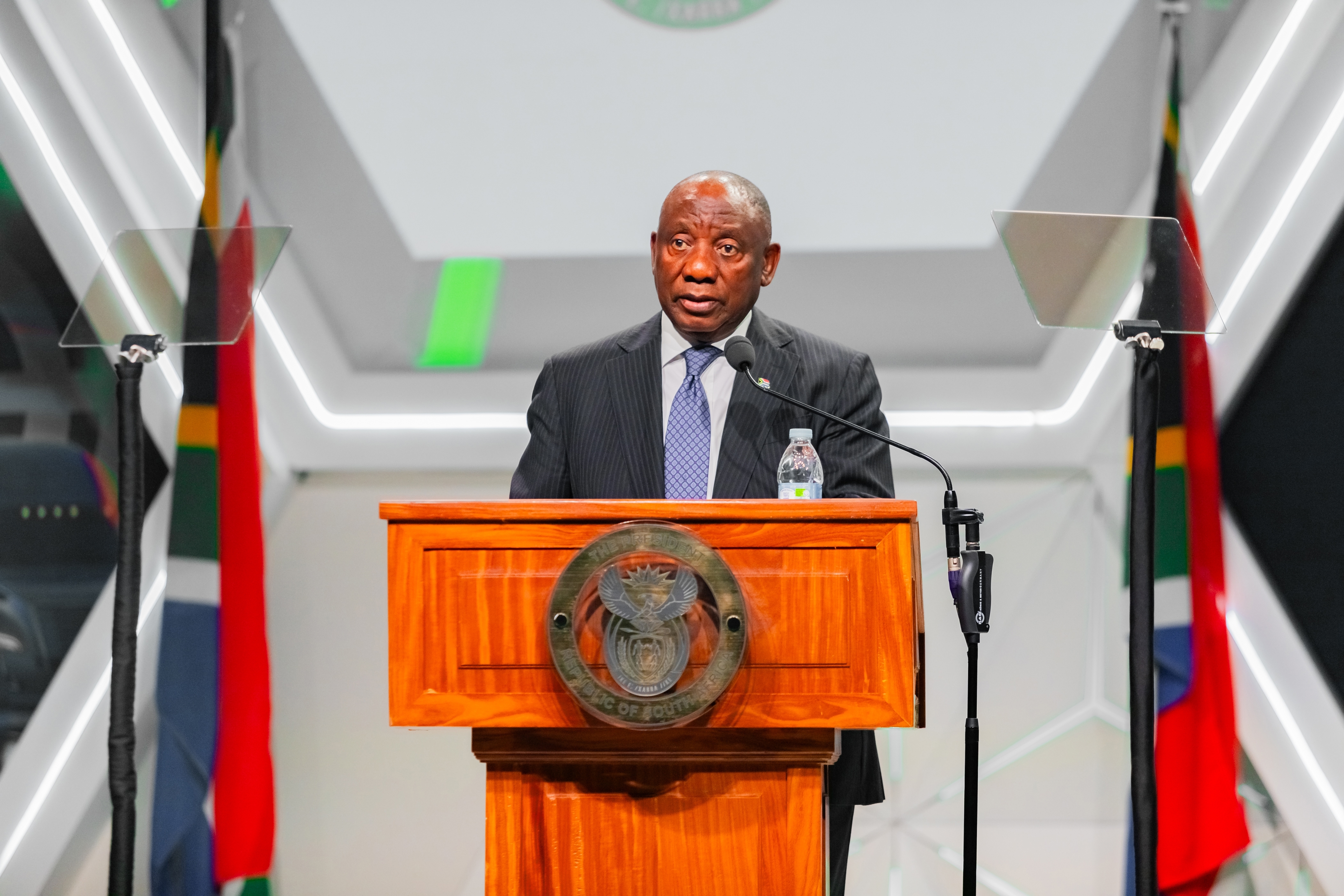
Cyril Ramaphosa President of South Africa speaking at conference event in Cape Town, South Africa.
© ShutterstockIt’s that time of the year again in South Africa, when the President sets out the country’s priorities while reflecting on where we stand.
But the story is different these days. The ANC is no longer the sole governing party since the 2024 elections. The Government of National Unity (GNU) came with renewed hope, a promise to stabilise the country, grow the economy faster, and create jobs.
The real question, however, is whether the GNU has delivered on its primary agenda.
At the core of that agenda was economic growth and job creation. Yet the reality is that the GNU remains far from achieving this mission. By the end of 2025, youth unemployment stood at 41.6%, unchanged, unmoved, and staggeringly high.
Recently, ANC chairperson and Minister of Mineral Resources Gwede Mantashe argued that young people are supposedly too lazy to apply for jobs, and that this explains unemployment. He was met with justified criticism. Because the truth is simple: many graduates are applying. Repeatedly. Relentlessly. And still, nothing.
We sit in a country where young people are frustrated and tired of being excluded from the economy. Vacancies aligned to specific degrees are either non-existent or painfully few. Medical doctors, for example, struggle to secure hospital placements due to state underfunding. Qualified professionals are left in limbo, trained, capable, but unused.
What then becomes the alternative? Many seek opportunities abroad. And so the country loses some of its brightest minds, not because they lack patriotism, but because they lack opportunity. For young people with hopes and dreams, the President’s annual address increasingly feels like a ritual of polished language. A document filled with ambitious phrasing, as expansive as the Oxford English Dictionary, but often lacking urgency, clarity, or measurable action.
Youth unemployment remains alarmingly high. There is no bold, transparent investment strategy tied to industries of the future. No clear framework to absorb graduates into a changing, digital, and competitive world.
Instead, corruption cases drag on. Politicians implicated in wrongdoing remain in office. Funds meant for development and youth empowerment disappear into networks of patronage. If you are not linked to the elite, your chances of finding employment feel slim. Merit seems secondary. Access seems political.
The poor remain poor. The excluded remain excluded.
So while the President delivers this year’s State of the Nation Address, I will not be watching. Because for many young South Africans, it no longer feels like a moment of hope. It feels like a repetition of the same-old, same-old song.