Brazil
Brazilian Elections 2026: Between the euphoria of international summits and new challenges

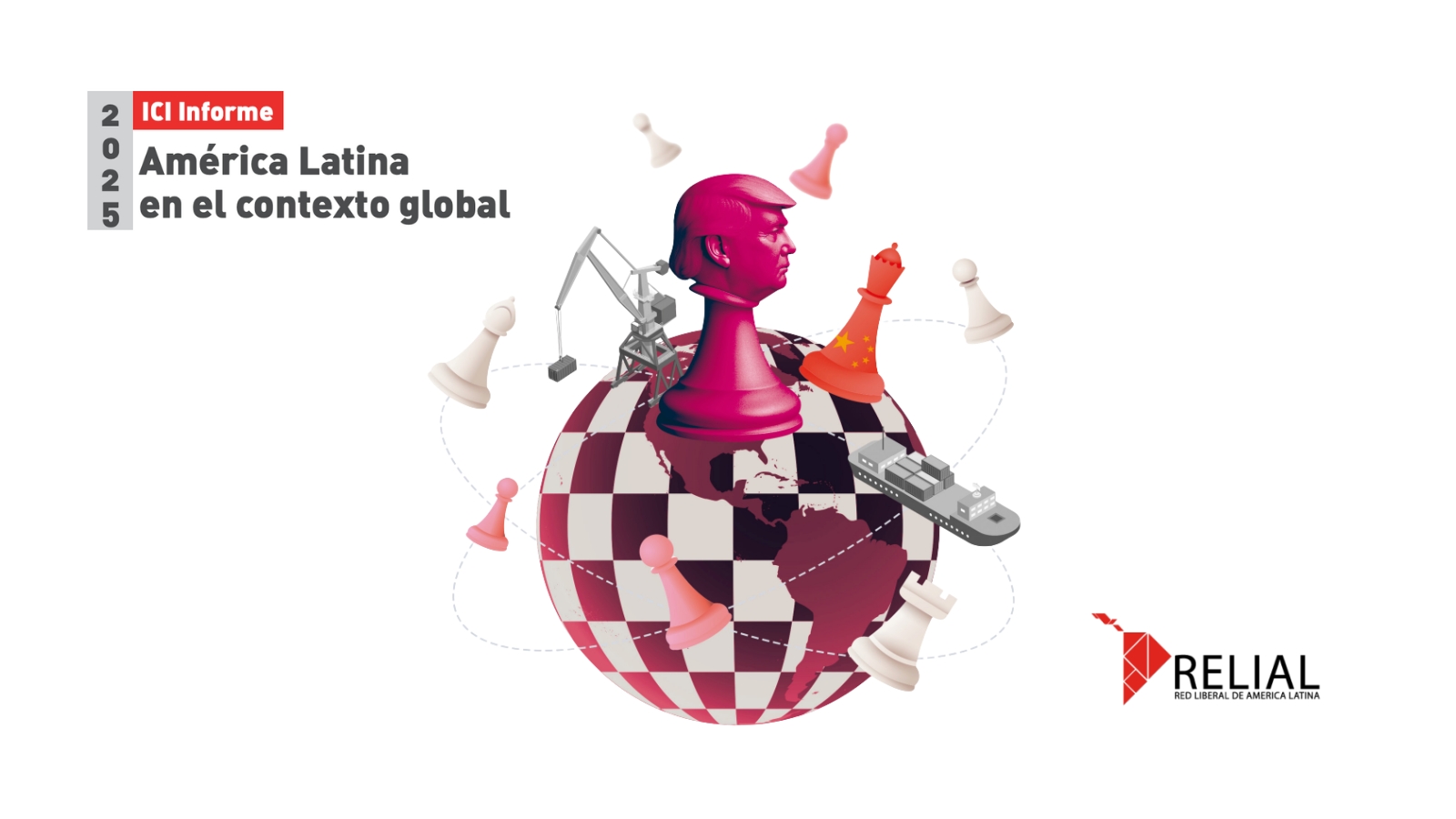
Presentation of the Institutional Quality Index (ICI) 2025 and Brazil's role in the upcoming presidential election
In recent months Brazil has hosted and will host three important international summits. Last November the G20 summit was held in Rio de Janeiro, in July the BRICS summit was held in the same city, and in November the COP30 climate change conference will be held in Belém.
The current dynamics of the summits offer Brazil a unique opportunity to present itself on the world stage as the voice of the “Global South” and Latin America. As president, Brazil sets the agenda for each of them, which are systematically complemented at the three summits.
Brazil's priorities are greater representation of the “global South” in multinational organizations such as the United Nations, the World Bank, and the IMF, as well as greater international cooperation on development policy and climate protection.
Lula managed to take advantage of the G20 and BRICS summits in his role as a statesman

Dr. Hans-Dieter Holtzmann analyzed how Latin America is positioned in a constantly changing world.
Brazilian President Lula demonstrated at the G20 and BRICS summits that he is a skilled negotiator who, as a supposedly “neutral” mediator, is able to leverage Brazil's good relations with (most) other countries in the world to achieve common results. At both summits, it was unclear whether joint final statements could be reached.
At the G20 summit, until the last moment there were fears that Lula's “intimate enemy,” Argentine President Javier Milei, would not agree to a joint statement because, first, he is critical of alliances between states and, second, he does not consider specific issues such as education, health, and diversity to be political tasks and therefore does not want binding targets imposed on him from outside. Finally, thanks to the mediation of the french President Emmanuel Macron, Lula managed to get Milei to sign and at the same time gave him the opportunity to distance himself in a verbal note from anything he did not want to implement.
The fact that the G20, despite all its heterogeneity, has managed to find common ground is not only directly relevant in the region for Brazil and Argentina. Mexico is also a member of the G20 as the third Latin American country.
At the BRICS summit Lula achieved what the bloc's foreign ministers had failed to do at their meeting in April: finding a linguistic solution on who should represent Africa in the coveted seat on the UN Security Council. Lula simply omitted the issue from the final declaration and, to everyone's surprise, on the first day of the summit he secured progress on the declaration.
Brazil is a founding member of the BRICS. Bolivia and Cuba, two Latin American countries, joined the group as associate members last year. Others, such as Venezuela, Nicaragua, and Colombia, have expressed interest in joining.
Trump has helped Lula make a comeback
Just a few weeks ago, polls seemed to indicate that Lula's popularity could only go in one direction: down. His approval rating was at a historic low of 30%, so it was not even clear whether Lula would run for president again next year, let alone whether he would have a chance of being re-elected.
And then Trump came along. A few days after the BRICS summit, he initially threatened countries that behaved in an “anti-American” manner with punitive tariffs of 10%, after having already threatened earlier in the year to impose punitive tariffs of 100% on BRICS countries that dared to try to replace the dollar with other currencies.
At the end of July, Trump specifically targeted Brazil and imposed a punitive 50% tariff, not for economic reasons, as the US has a trade surplus with Brazil, but because of what Trump considered a “witch hunt,” namely the criminal prosecution of his close ally Jair Bolsonaro by the Brazilian Supreme Court. Lula skillfully exploited this as interference in Brazil's internal affairs by a “gringo,” and his popularity ratings shot back above 40% in a very short time.
Lula has a lot of work ahead of him to ensure that COP30 is not a failure, both in terms of participants and the outcomes of the summit.

COP30 is a challenge for Brazil's image
Although the G20 and BRICS summits could not have gone better for Lula, the success of COP30, the climate conference to be held in November, is not yet assured. On the one hand, Brazil has a credibility problem when it comes to climate protection. Although illegal deforestation of the Brazilian rainforest has declined slightly under Lula's mandate compared to climate change denier Bolsonaro, Brazil still has an international image problem in demonstrating that protecting the rainforest is a political priority and that it can also be put into practice.
In addition, the oil and gas projects promoted by Lula contradict Brazil's climate balance and its credibility as a pioneer in the transition to renewable energies, which are abundant in the country.
Added to this are the difficult logistical conditions for organizing a conference with several thousand participants in Belém, in the heart of the Amazon. Western countries are particularly critical of the high hotel costs and logistical challenges posed by the trip. Lula has a lot of work ahead of him to ensure that COP30 is not a failure, both in terms of participants and the outcomes of the summit.
The 2026 elections are an important turning point for Brazil's future: the quality of institutions is essential

In Brazil, the quality of institutions is fundamental to building a freer future.
The October 2026 elections in Brazil are taking place at a time of strong polarization between Lula and Bolsonaro and their respective supporters. It is still unclear who the candidates will be in the first round, especially on Bolsonaro's side, who is under house arrest and will be tried in the coming weeks for the attempted assault on the institutions in Brasilia in 2023 after the last elections.
In mid-August, at the NOVO party convention, Romeu Zema announced his candidacy for president. Zema is currently governor of the state of Minas Gerais, where he has proven himself successful in addressing the main concerns of the population—economic recovery, security, and transparency—and is therefore a suitable candidate for the highest office at the national level.
Zema has announced that, if elected president, Brazil will withdraw from BRICS. He has pledged to normalize relations with the United States and intensify relations with Europe, including ratifying the agreement between the EU and Mercosur.
For a better future Brazil needs above all to improve the quality of its institutions. The latest edition of the Institutional Quality Index (IQI), presented by Argentine economics professor Martín Krause, highlights the need for action. Brazil ranks 95th in the index, behind countries such as Peru and Colombia, which are also known to face major challenges.
This puts Brazil in a mediocre position both in Latin America and globally. It is insufficient to take advantage of the country's great potential, but it also shows where the opportunities lie for a liberal policy in Brazil that focuses on the concrete expectations of the population.
This article is based on a short presentation given by the author at the webinar “Presentation of the Institutional Quality Index (IQI) 2025 – Latin America in the global context” on October 27, 2025, organized by the Latin American Liberal Network (RELIAL).