Western Africa
Islamism on the rise in West Africa: For the first time, even stable states are under threat

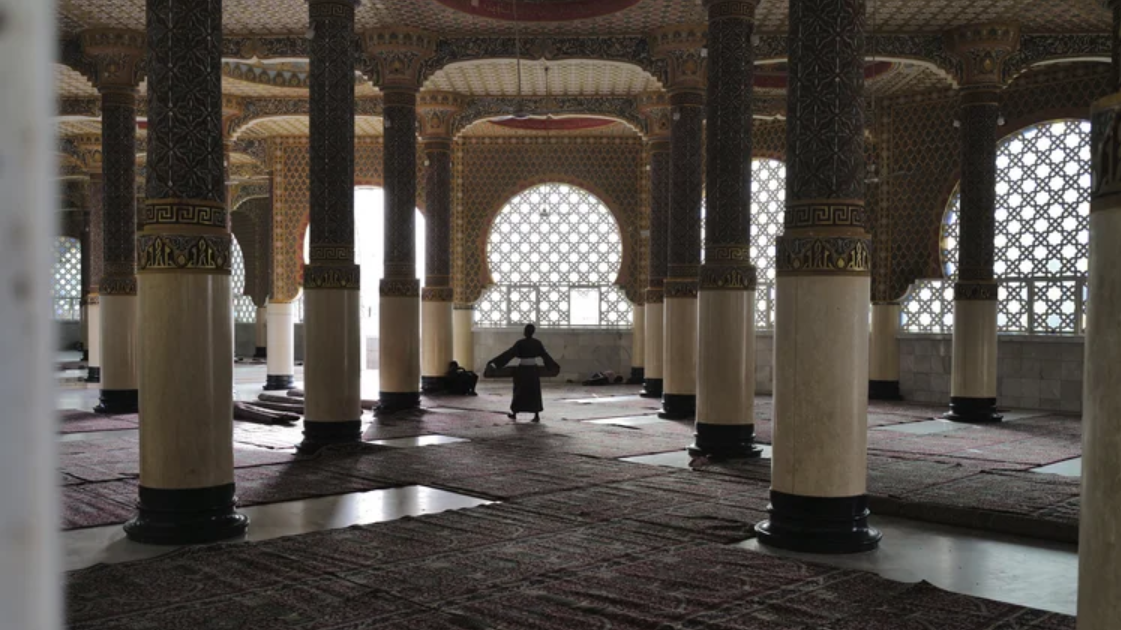
Un homme porte un tapis dans la Grande Mosquée de Touba, au Sénégal.
© picture alliance / ASSOCIATED PRESS | Jon OrbachSince the withdrawal of international missions from the Sahel, attention for the region has also declined. The West seems to have lost control of the situation.
Jihadist groups are now increasingly dominating events in the landlocked states from Chad to the three states that make up the Alliance of the Sahel (AES): Mali, Niger and Burkina Faso.
The West African coastal countries such as Senegal, Togo, Benin and Ivory Coast, democratic and relatively stable states, are now also increasingly under threat. They are desperately trying to defend themselves against instability. In its own interest, the West should take a closer look here and seek allies.
Power vacuum quickly filled
The Sahel region - the cradle of humanity, home to the legendary Mansa Musa, who achieved immense wealth through gold trading in the 14th century - is now a powder keg. The former cultural landscape, steeped in religion, philosophy and science, is sinking into chaos. Terror, Islamism, coups, hunger and displacement characterise the region.
The situation is not new. However, it is becoming increasingly threatening. The withdrawal of international missions - EU troops, UN peacekeepers, US aid - has created dangerous power vacuums. External actors quickly occupied these.
Today, the Russian Africa Corps (renamed Wagner troops, now under the command of the Russian Defence Ministry) is operating in Mali. The Malian military junta is relying on their military power against the Islamist terror that has been spreading further and further across the contingent since the collapse of Libya in 2011.
However, the mercenaries are not only serving military interests: They secure their pay in gold mines - and provide Russia with geopolitical influence deep into the continent.
Mercenaries are no substitute for a stable order. Attacks on military bases are becoming increasingly frequent - most recently with drones. Hundreds of civilians, soldiers and fighters are dying, the infrastructure is collapsing. Schools are closing, girls are losing access to education, and men are being forcibly recruited.
Loss of international aid
The civilian population is caught between the fronts. Villages are deserted, livelihoods are destroyed. For many, the only option is to flee - to overcrowded camps or towards the coast, or towards Europe.
With the loss of international aid, humanitarian supplies are also in danger of collapsing. Although some countries such as Senegal and Benin are showing a willingness to accept refugees, the lack of infrastructure, economic barriers and fear of terror are leading to growing rejection.
Retreat for terrorist groups
In addition to the Sahel states, the coastal states are now also increasingly under threat, both militarily and economically. The remote and difficult to control border regions of coastal states such as Mauritania, Senegal and Guinea offer an ideal retreat for terrorist organisations such as the ‘Group for the Support of Islam and Muslims’ (JNIM).
According to a recent study by the Dakar-based Timbuktu Institute, they have recently focussed on infiltrating Senegal and Mauritania from the south of Mali.
The population living in the border region of Senegal is affected by poverty and the discrimination of some population groups. According to the report, they respond to the radical messages packaged as ‘liberation theology’, which denounce inequalities more strongly than traditional Islam.
In addition, the terrorist groups in these areas with few income opportunities offer a certain degree of material security, especially for young people who feel left behind by their own governments.
Nomadic groups such as the Peul are coming under additional pressure. As mobile cattle breeders, they are often suspected of sympathising with Islamists - an allegation that repeatedly leads to ethnic cleansing.
Senegal's ethnic and religious mosaic
The religious extremism and Salafism propagated by the terrorists thus threaten the functioning social peace in a country like Senegal.
Up to now, a moderate doctrine of Islam and the Sufi brotherhoods have prevailed here, ensuring the political stability of the country through their moderate activities.
Now there is talk of increasing infiltration of the mosques, where foreign preachers often propagate radicalisation and violent extremism. This jeopardises the coexistence of the many ethnic and religious groups.
The West should look for partners
The West must not stand idly by and watch this development. In 2024, the then German Foreign Minister Annalena Baerbock rightly warned: ‘Wherever we as democracies, wherever we as Europe do not invest, others invest, which then create dependencies that, in case of doubt, are used against us and our security interests.’
Europe should therefore position itself and see Africa as an opportunity. This requires sustainable partnerships at eye level instead of short-term intervention policies.
Three pillars are crucial here: economic cooperation, strengthening social resilience and joint security strategies.
The security policy component in particular has a key role to play in the face of religious radicalisation and geopolitical competition. Europe does not need a new problematic ‘southern flank’. Europe needs new partners.
This article first appeared in the Tagesspiegel on 30 June.