Climate
Nature-Based Solutions from the Heart of the Dhahar Mountains
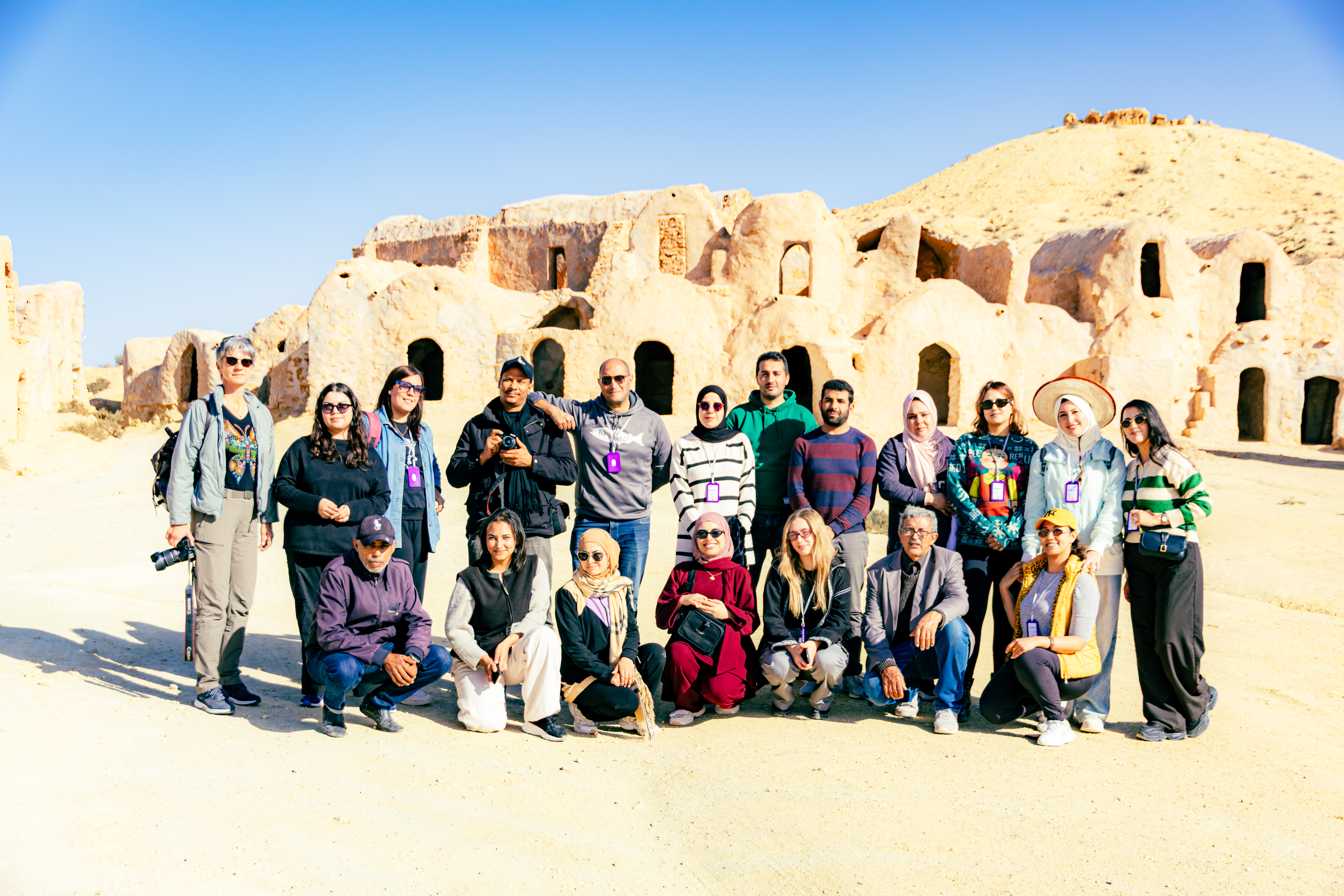
From December 12 to 17, 2025, the governorate of Medenine hosted an in-depth training program on Nature-Based Solutions (NBS) in the Dhahar Mountains, facilitated by Dr. El Hachmi El Houssine. Spanning six days, the program combined theoretical training, immersive fieldwork, and participatory learning, placing local knowledge at the core of climate adaptation strategies.

Starting in Medenine: Territory, Memory, and Meaning
The program opened with a welcoming session titled “Medenine Brings Us Together”, offering an overview of the working methodology and an introduction to the city’s historical and geographical context. A walking field visit to the ksour of Medenine followed, setting the tone for the training: understanding nature-based solutions begins with understanding people, place, and memory.

Water Harvesting: Indigenous Knowledge for Climate Resilience
The first training session focused on rainwater harvesting, highlighting local adaptation practices such as majels (traditional cisterns). Participants collectively analyzed the core challenge of the region scarce surface water and lost runoff and explored community-based solutions developed over generations. Through interactive exercises, the session examined how geology, particularly the cuesta formations, supports an integrated system of water storage and management.
Vegetation Cover: Turning Stone into Sustenance
The second session addressed vegetation conservation through the jessour system stone terraces designed to control water flow and support agriculture in arid environments. This intelligent adaptation has shaped the long-lasting mountain identity of the Dhahar region. Participants discussed how redirecting rainwater through ecological systems transforms rocky landscapes into productive fields, supported by a broader bio-ecological framework combining cisterns, terraces, fortresses, and ksour.

Learning in the Field: Nature as a Living Classroom
A full day of fieldwork immersed participants in the Dhahar Mountains, with visits to Wadi Ennaqb, El Manzla, Wadi El Hallouf, Beni Khdech, Zammour, Ain El Anba, and surrounding areas. Beyond observation, the experience fostered environmental and cultural dialogue with local communities, including women engaged in herbal distillation and food preservation. Participants also explored associative initiatives dedicated to safeguarding ksour and local heritage, reinforcing the link between environmental protection and community action.
Food Processing as a Survival Strategy
The third training session examined traditional food preservation (“Oula”) as a nature-based survival strategy that values women’s central role in sustaining local ecosystems. Through collective reflection, participants explored cooperative practices such as Twiiza (mutual aid) and solidarity-based economies. The session highlighted value chains in organic food processing and their potential to generate inclusive projects connecting agriculture, culture, environment, and sustainable tourism.

“Tghammit”: A Seasonal Ecological System
The final training session focused on the bio-ecological system of the Dhahar Mountains, conceptualized through Tghammit a traditional framework organizing production, storage, and rituals across seasons. Discussions addressed cultural tourism opportunities, including product festivals, food routes, and marketing platforms, positioning the Dhahar region as a destination where geology, biodiversity, and cultural heritage converge.
From Experience to Storytelling
The program concluded with participant-produced video presentations titled “My Eyes Have Seen, My Heart Is Full”, translating field experience into visual narratives. Certificates were awarded on the final day, marking not only the end of a training program but the beginning of renewed perspectives on how nature-based solutions rooted in ancestral knowledge can inform contemporary responses to climate change.
This training program demonstrated that nature-based solutions are not imported concepts, but deeply rooted practices embedded in local knowledge systems. When recognized and supported, these practices offer practical, sustainable responses to climate challenges and deserve a central place in environmental and development policies.
