EVENT
Taiwan Keeps Moving Forward on LGBTQ+ Rights after Legalizing Same-Sex Marriage: Our Project with Taiwan Equality Campaign


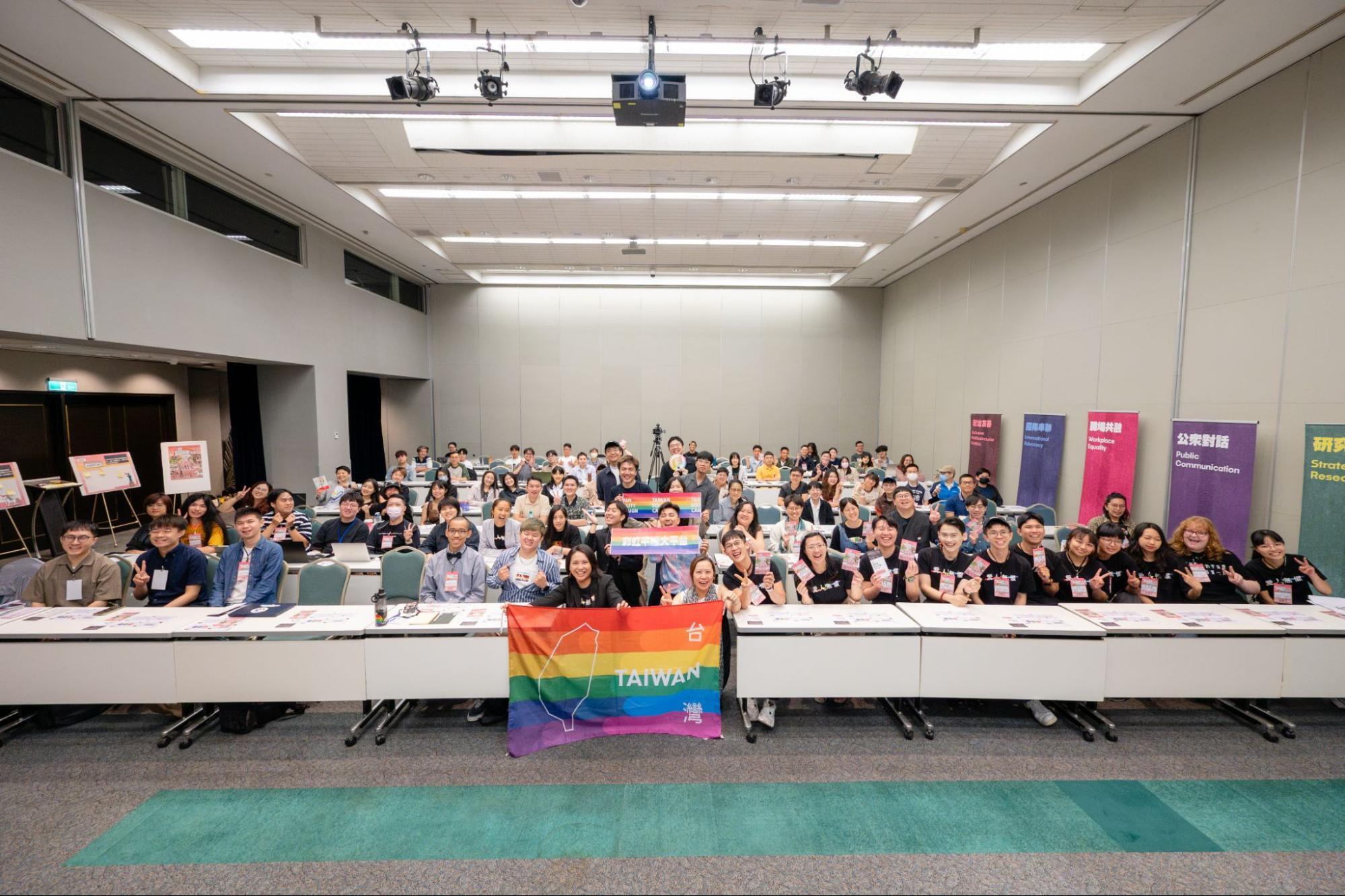
On May 24, 2019, Taiwan became the first country in Asia to legalize same-sex marriage—a historic milestone for LGBTQ+ rights. Yet challenges remain, both at home and globally. In response, the Taiwan Equality Campaign (TEC) and the FNF Taiwan Office co-hosted “The 6th Anniversary of Marriage Equality: Reimagining Advocacy for Gender Equality,” bringing together nearly 100 activists, researchers, political staffers, and citizens to reflect on Taiwan’s journey, share hard-earned lessons, and explore new strategies for advancing equality in an increasingly complex landscape.
On May 24, 2019, Taiwan became the first country in Asia to legalize same-sex marriage. While this milestone marked a historic victory for LGBTQ+ rights and drew global attention, challenges remain both in Taiwan and around the world.
For example, a survey conducted by our partner, the Taiwan Equality Campaign (TEC), found that 35.4% of respondents said they would find it difficult to accept LGBTQ+ individuals serving as major political leaders, such as presidents or mayors. Additionally, 41.2% said they would struggle to accept it if their own children were LGBTQ+. Globally, rising far-right populism has also led to shrinking support for Diversity, Equity, and Inclusion (DEI) frameworks and LGBTQ+ initiatives.
To address these challenges, TEC and the Friedrich Naumann Foundation (FNF) Taiwan Office co-hosted a forum titled “The 6th Anniversary of Marriage Equality: Reimagining Advocacy for Gender Equality.” Through three themed panel discussions and an interactive workshop, the event brought together nearly 100 activists, researchers, politicians, political staffers, and citizens. Participants shared lessons from the past six years and brainstormed action plans to meet emerging challenges. In particular, they reflected on the factors that enabled Taiwan’s successful legalization of same-sex marriage and explored how these experiences and insights can be preserved and transformed into strengths for the future..
Research and Investigation: Advocacy Powered by Data
One key lesson highlighted by TEC is the critical role of research and data in developing effective advocacy strategies. The first panel, “Research-Based Strategic Thinking,” explored how evidence-based approaches can strengthen campaigns.
Cheng Yuan-hsin, a researcher at TEC, explained that systematic monitoring and analysis help advocates develop more pragmatic strategies by comparing public expectations with activists’ goals. Another panelist, Tong Jia-shuo, Research Manager at the Open Culture Foundation (OCF), emphasized the importance to find out how to connect the “strategic triangle” of advocates’ core values, data collection, and actionable solutions.
However, data alone does not move hearts. Fang Chun-chu, a video producer at The Reporter, stressed the importance of interpreting research in accessible ways. In an era dominated by short-form digital content, advocates must act as bridges—translating complex data into clear, engaging stories that communicate evidence-based messages without overwhelming audiences

The Art of Teaming Up: Politics and LGBTQ+ Rights
Building political alliances emerged as another crucial takeaway. The second panel focused on strategic allyship across political parties and civil society coalitions, and how these alliances can be leveraged to create impact within existing political systems—especially when facing strong opposition.
Taipei City Councillor Yen Juo-fang shared an example from the Taipei City Council: when gender-friendly bills sometimes encounter resistance from conservative forces, the cross-party Gender Equality Caucus, composed of 23 members, will work collectively to defend these bills by providing solid research and coordinating floor speeches, ensuring that the voice of equality remains strong and fact-based.
International alliances are equally important. TEC Project Consultant Shao Min-yi emphasized that Taiwan’s struggle is not isolated. By connecting with partners across East Asia and beyond, Taiwan’s challenges and successes gain global visibility and contribute to a transnational support network. Integrating gender advocacy with digital rights, labor rights, and regional geopolitics helps make the movement more resilient against global “anti-gender” backlash.

Advancing LGBTQ+ Rights by Incentivizing Different Actors
The final panel, “Innovative Methods to Empower Allies and Take Action,” highlighted how incentive-based approaches can encourage diverse actors—such as policymakers, business leaders, and human rights advocates—to advance LGBTQ+ rights. When designed well, positive reinforcement can benefit both allies and the LGBTQ+ community.
In the political sphere, Democratic Progressive Party (DPP) Legislator Su Chiao-hui introduced TEC’s “Pride Watch” voting guide website. By publicly recognizing gender-friendly politicians, the platform serves as a “carrot,” encouraging candidates to remain committed to equality rather than relying solely on criticism as a “stick.”
From the business perspective, Kevin Liao, CEO of Glass Gallery Group—the first glass manufacturer in Taiwan to receive TEC’s LGBTQ+ Workplace Friendliness Certification—explained why DEI is a business necessity. He noted that diversity fuels innovation and global competitiveness, particularly in traditional industries like glass manufacturing. For companies like his, inclusion is not just a moral choice but a catalyst for long-term success in a fast-evolving global market.
Your Turn to Act
The forum also aimed to empower participants to develop their own action plans. A “Strategy Lab” was held, during which participants were divided into groups to tackle six scenarios designed by TEC based on real-world challenges faced by LGBTQ+ communities. The groups produced creative and highly practical proposals.
For example, one group was presented with a scenario in which LGBTQ+ political participation in a country was less than 0.004%, and some political parties and candidates feared losing votes and resources from conservative groups. To respond it, the group proposed redesigning election polling questions to better capture LGBTQ+ voices and influence, as well as strengthening collaboration between congressional watchdog organizations and LGBTQ+ advocacy groups to monitor candidates’ policy platforms during elections.
Another group tackled housing discrimination faced by LGBTQ+ tenants. They proposed creating an “Inclusive Rental Map” and an “LGBTQ+ Friendly Landlord” certification system. They also suggested forming a broader Rental Alliance with other marginalized communities to jointly advocate for stronger housing protections and tax incentives for inclusive landlords.
Building Bigger and Wider Alliances
One of TEC’s core goals for the forum was to build broader and more inclusive alliances—especially by engaging people who may not have previously participated in LGBTQ+ movements but are open to learning and offering support. This approach is crucial, as advancing LGBTQ+ rights clearly requires continued effort even after the legalization of same-sex marriage.
During the forum, TEC successfully brought together participants from diverse disciplines and backgrounds, not limited to the LGBTQ+ community. This cross-sector learning and collaboration represents an important step forward—not only for Taiwan, but for the global movement toward equality.