G20 South Africa
Unlocking democracy through youth-centred financing and innovation

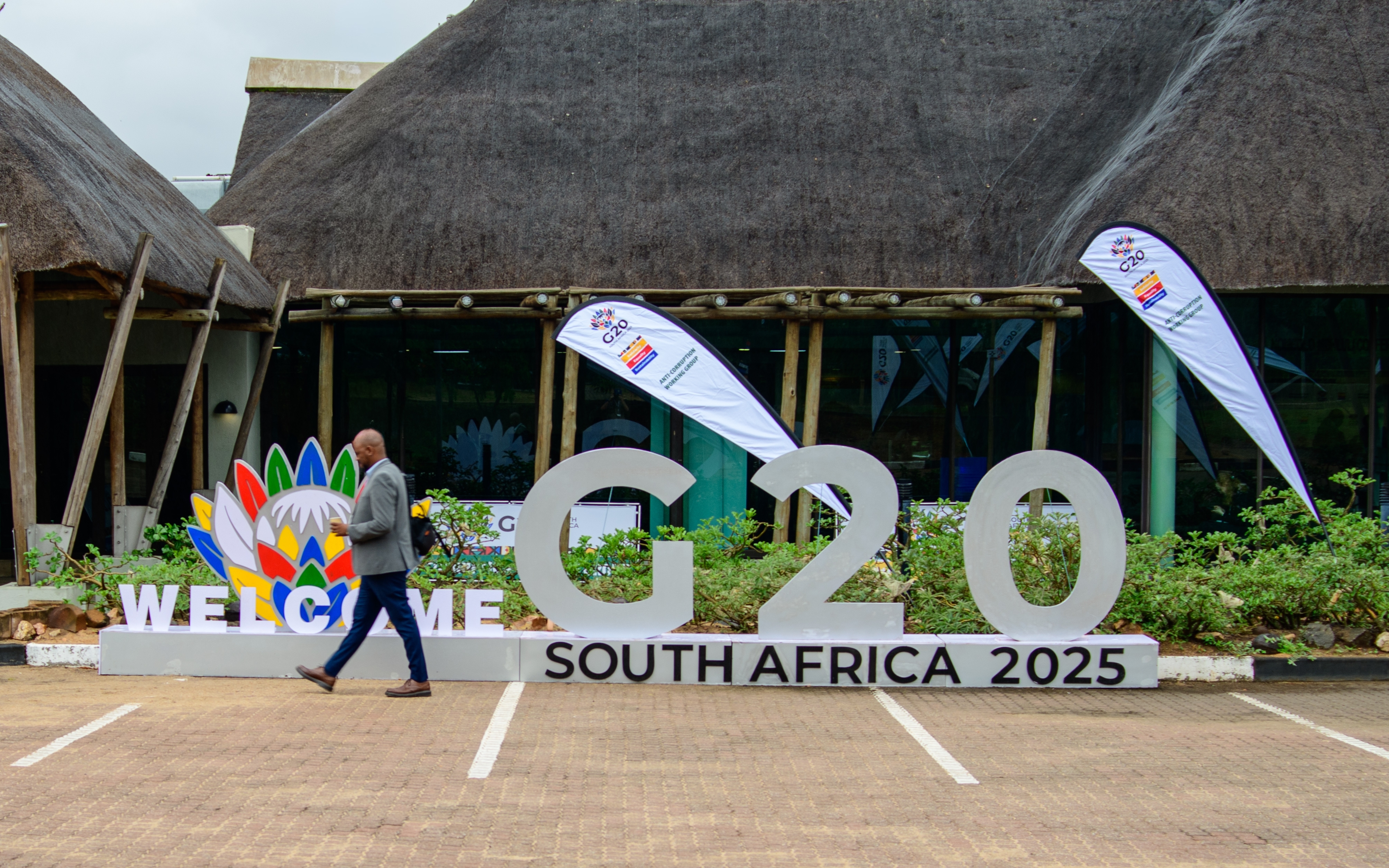
Delegate walking in front of the G20 Conference centre at Skukuza in the Kruger National Park - Mpumalanga province South Africa during October 2025.
© ShutterstockThere’s a simple, stubborn fact at the heart of conversations about Africa’s future: young people are ready, and the systems that should support them are not. In Johannesburg, more than 60 young leaders, policymakers and practitioners met to ask a practical question with far-reaching implications, how do we pay for a democratic future that actually includes the people who will inherit it?
The answers that emerged were pragmatic rather than ideological. Delegates were frank about the scale of the problem: a US$1.7 trillion annual financing gap, heavy reliance on donor funding and domestic systems that too often fail to capture the money and creativity already circulating in communities. But the mood was not defeatist. Instead, it felt like a briefing from the frontline, people showing how ordinary tools and fresh thinking can be repurposed to build stronger institutions and deeper public trust.
A recurring point was that financing and democracy are two sides of the same coin. If young people cannot access capital, jobs or meaningful ways to influence policy, they become spectators in the political life of their countries. That economic exclusion quickly becomes political exclusion. Several speakers put it bluntly: you cannot ask citizens to invest in democracy if they lack the means to live with dignity. Shifting resources closer to citizens, through better domestic revenue systems, local investment platforms and smarter public–private partnerships, was presented not as technocratic tinkering but as a democratic imperative.
Practical examples punctuated the conversation. Fintech entrepreneurs described how mobile-based credit and payment systems are unlocking finance for people without traditional collateral. Community crowdfunding initiatives were shown to do more than raise money; they build ownership and accountability. And in a number of countries, youth-led organisations are already partnering with local authorities to pilot service delivery and civic education programmes. These were not abstract pilot projects but working models that could be scaled with political will and modest investment.
A clear strand through the day was a rejection of one-size-fits-all solutions. Delegates insisted that African countries should stop borrowing templates wholesale from elsewhere and instead invest in systems that reflect local realities: strong community networks, informal economies, and a growing digital layer that connects millions. That means designing financing tools that meet young people where they are, in markets, in apps, in community groups, rather than forcing them into outdated banking or grant-making models.
There was also a strong argument for recognising youth as active political actors. Too often they are treated as beneficiaries of programmes instead of partners in policy-making. The young people in the room wanted influence, seats at the table where budgets are set and laws are shaped, and the access to capital that would let them translate ideas into impact. That combination, they argued, is the most reliable route to a resilient democracy: economic agency paired with political voice.
Technology and civic innovation featured heavily, but not as panaceas. Instead, digital tools were discussed as amplifiers, they can broaden access to information, make government more transparent and open new channels for citizen participation. Yet speakers were cautious about over-reliance on tech: it should complement, not replace, investments in education, local governance capacity and institutional reform.
The conversations also turned to diaspora capital and South–South cooperation. Delegates highlighted the enormous potential of Africans abroad to invest in local projects, lend expertise and create market connections. Likewise, partnerships with other countries in the Global South were favoured for their practical experience in industrial policy and value-chain development, lessons that often fit better with African priorities than distant models.
What made the meeting different from many policy events was its focus on implementation. Young participants pitched concrete financing ideas, from community bonds and youth-targeted blended finance to platforms linking entrepreneurs with municipal problems, and received feedback from practitioners who have built similar instruments. The tone was immediate: these are ideas that can be tried next quarter, not in some distant policy cycle.
Why should this matter to a reader? Because the way a country finances its public goods shapes who gets a say. When financing is external, short-term or centrally controlled, it narrows the range of voices that can participate. When financing is local, long-term and designed to include young people, it widens the field for innovation, accountability and democratic renewal. That’s not abstract theory; it’s a practical way to make governance more responsive and societies more stable.
What the gathering made clear is that Africa has the resources to begin this work, human capital, mobile infrastructure, community finance practices and a growing appetite for partnership. What remains is the political choice to trust citizens, to decentralise power, and to invest in systems that give young people both the means and the voice to help run their countries.
If those choices are made, the payoff will be more than economic. It will be a deeper, more inclusive democracy, one in which young people are not waiting for permission to act, but are actively shaping the rules and financing the institutions that will govern their lives.