Freedom Dialogue
South Africa’s foreign policy in a turbulent world

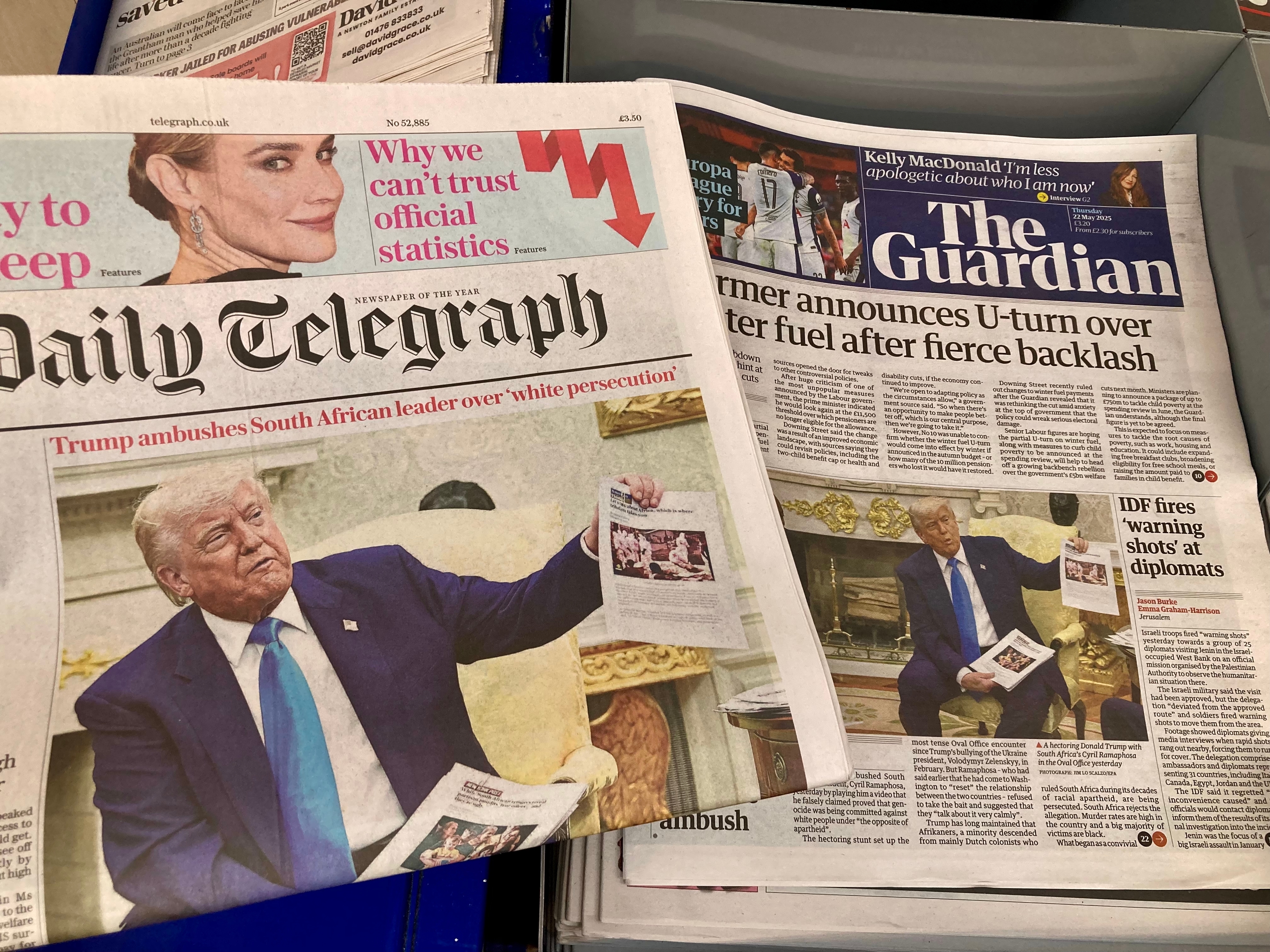
Cover picture of newspaper concern Trump claim white farmers being targeted in South African over persecution
© Shutterstock
FNF Africa, represented by Regional Director Ms Inge Herbert and Kwezi Sogoni, was joined by South Africa’s Deputy Finance Minister, Ashor Sarupen, in welcoming Minister Ronald Lamola to the FNF Africa Regional Office.
© Friedrich Naumann Foundation for Freedom
Freedom Dialogue session with Minister Ronald Lamolo is moderated by Clement Manyathela.
© Friedrich Naumann Foundation for Freedom
Guests at the Freedom Dialogue listening to the engaging discussion.
© Friedrich Naumann Foundation for Freedom
Questions are posed to Minister Lamola by guests at the Freedom Dialogue.
© Friedrich Naumann Foundation for Freedom
SABC News interviews Minister Lamola on the 30% tariff issue by America on South Africa.
© Friedrich Naumann Foundation for FreedomJohannesburg – Against a backdrop of geopolitical uncertainty, global power shifts, and domestic political change, the Friedrich Naumann Foundation for Freedom hosted a thought-provoking Freedom Dialogue with Minister of International Relations and Cooperation Ronald Lamola. The discussion, titled In the Eye of the Storm, explored South Africa’s foreign policy challenges and opportunities as the country assumes the G20 presidency in 2025.
With diplomats from over 20 countries in attendance, the Minister addressed topics ranging from US tariffs and multilateralism to African peacebuilding and domestic policy sovereignty.
US Tariffs: Negotiation Amid Uncertainty
Minister Lamola acknowledged the unpredictable nature of the US’s geopolitical and trade stance. South Africa is still in talks with Washington over the newly imposed 30% tariffs, which threaten key export sectors. While the Minister remains hopeful for a resolution, he stressed that the country must prepare for volatility by diversifying trade partners across the EU, China, the Middle East, and the African continent. The US has also raised concerns about South Africa’s B-BBEE legislation and Expropriation Act, which Lamola described as non-negotiable sovereign issues, rooted in the constitutional imperative to address historic inequality.
GNU and Policy Coherence
On questions of coherence within the Government of National Unity, Lamola emphasised that South Africa’s foreign policy remains anchored in the Constitution, the Foreign Services Act, and the National Development Plan. While GNU members may express differing party positions, only the President and designated ministers represent the country’s official stance. The Minister reminded attendees that the Statement of Intent signed by GNU partners affirms these guiding principles, and any policy changes would require formal parliamentary processes.
Geopolitical Positioning and BRICS
South Africa’s foreign policy continues to champion multilateralism, with the United Nations as the primary platform. The country maintains a non-aligned stance to preserve flexibility in trade and diplomacy, working with partners across the Global North and South.
Membership in BRICS, Lamola said, is a strategic tool to balance national interests, access development finance, and advance Africa’s agenda on the global stage.
Role in Africa
Framing its continental engagement through Agenda 2063, South Africa focuses on peace, development, and prosperity. It participates in multilateral peace missions, such as the SADC mission in the eastern DRC, and continues to advocate for African solutions to African problems, while acknowledging that external mediation sometimes plays a role.
G20 Presidency: A Platform for Africa
As the first African host of the G20, South Africa sees 2025 as an opportunity to spotlight African priorities, including development financing, debt relief, and climate change. The Minister expressed concern over the potential absence of senior US officials at the summit but affirmed that South Africa will proceed, with or without full participation from all G20 members.
Non-Alignment in Conflict
Addressing the Ukraine-Russia war, Lamola reaffirmed South Africa’s non-aligned position, highlighting President Ramaphosa’s personal engagement with both Ukrainian and Russian leaders to encourage dialogue. On the ICJ genocide case against Israel, he said South Africa seeks a ruling on the merits to uphold international law, rejecting reports of US pressure to withdraw.
Human Rights and Domestic Challenges
The Minister condemned attacks on foreign nationals, calling for law enforcement to address xenophobic violence while tackling the resource pressures that often fuel tensions. On the US’s push for changes to South Africa’s economic empowerment and land reform laws, Lamola reiterated: “These are sovereign issues that must be determined by the South African people, not foreign governments.”
Conclusion
The Freedom Dialogue underscored the complexity of South Africa’s role in a fragmented world, balancing principled independence with pragmatic diplomacy. As G20 host, BRICS member, and a key African voice in multilateral forums, South Africa faces the task of defending its domestic priorities while navigating global turbulence.