Seychelles
The liberal edge – Can LDS continue to chart the way forward?

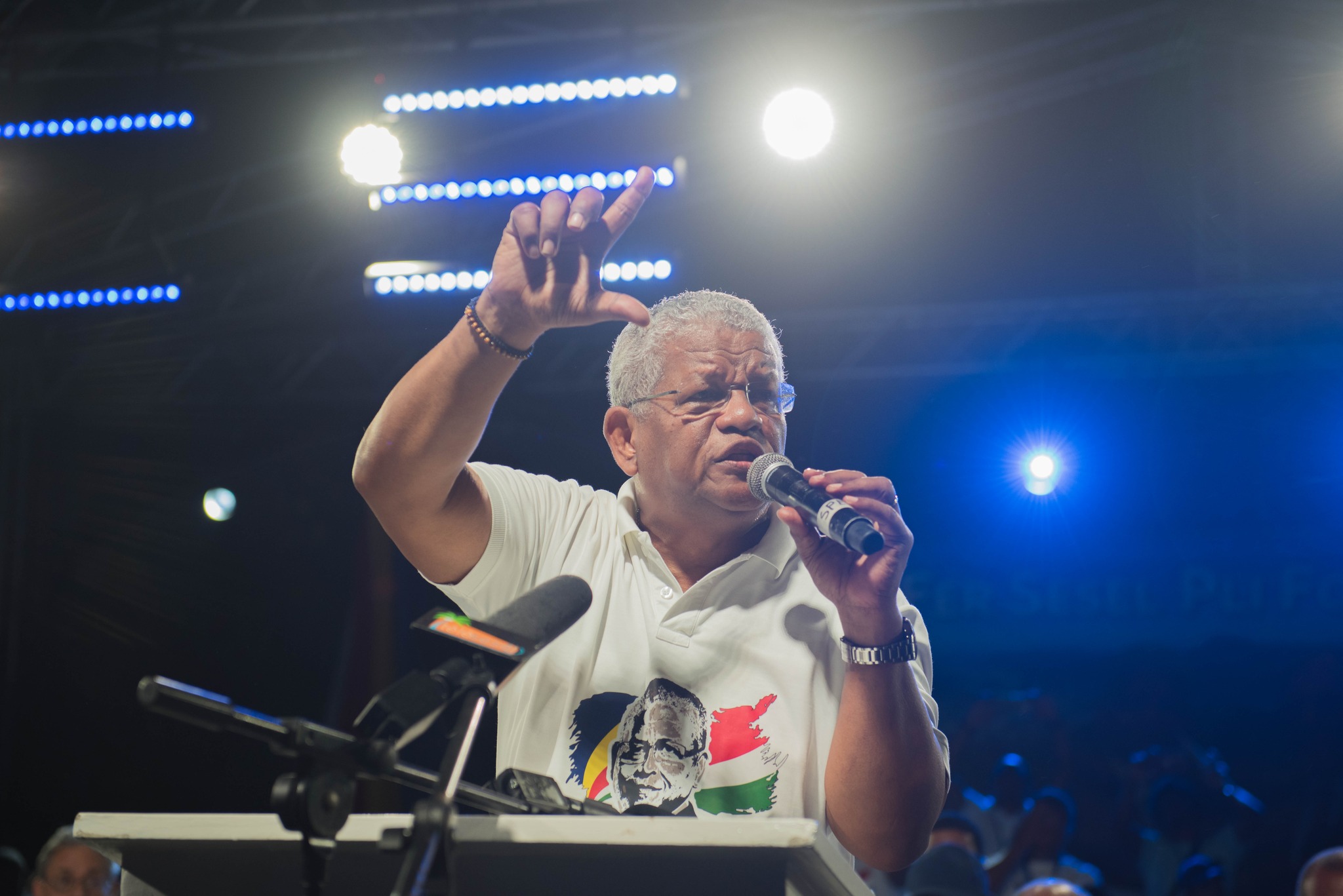
President Wavel Ramkalawan addresses LDS members at a rally in September 2025.
© Linyon Demokratik Seselwa / FacebookThe run-off presidential election in Seychelles (9–11 October 2025) is shaping up to be one of the most competitive in the country’s history. Incumbent President Wavel Ramkalawan of Linyon Demokratik Seselwa (LDS) faces a strong challenge from United Seychelles (US) leader Dr Patrick Herminie, whom he defeated in 2020 after more than four decades of one-party rule. With no outright winner in the first round, Herminie leads with 48.8% of the vote against Ramkalawan’s 46.4%. The outcome will be determined by voter perceptions of youth empowerment, cost-of-living pressures, and the management of social, economic, and environmental challenges.
Converging manifestos, subtle differences
A review of the LDS and US manifestos shows striking similarities. Both promise stronger social protection, improved healthcare and pensions, and continued economic development through tourism, fisheries, and private-sector growth. Both also emphasise protecting marine ecosystems and adapting to climate change.
This convergence reflects broad agreement on national priorities but leaves voters to distinguish between the candidates based on leadership style, credibility, and track record. In this context, political positioning, messaging, and voter engagement become critical.

President Wavel Ramkalawan receives the Africa Freedom Prize in 2024 from the Friedrich Naumann Foundation for Freedom.
© Friedrich Naumann Foundation for FreedomLDS: A reform record and youth support, shadowed by cost-of-living concerns
President Ramkalawan presents himself as a reformer. His strongest asset is his appeal to young people, symbolically reinforced in 2024 when he received the Friedrich Naumann Foundation’s Africa Freedom Prize for championing youth empowerment. LDS claims credit for creating space for a new generation of entrepreneurs and civic leaders.
Yet this record is overshadowed by growing frustration over the cost of living. Reforms, such as subsidy cuts, new taxes, and measures to stabilise public finances, have been painful for households. Inflation on imported food and fuel has further reduced purchasing power. The World Bank notes Seychelles’ structural vulnerabilities: dependence on tourism, small domestic markets, exposure to climate risks, and limited diversification. While LDS argues its reforms were necessary after decades of mismanagement, many voters remain unconvinced.
United Seychelles: Amplifying discontent and playing to nostalgia
The US party’s strategy is to capitalise on frustration. It highlights rising costs and contrasts them with memories of a more generous welfare system. For many voters, the gap between LDS’s promises of prosperity and the reality of higher household expenses is decisive.
Recent controversies have also provided ammunition. Public anger erupted over the government’s lease of Assomption Island to a Qatari company for luxury tourism development near the Aldabra Atoll, a UNESCO World Heritage Site. Critics argue the deal undermines national sovereignty and prioritises foreign investors over citizens. Ramkalawan’s growing reliance on investment from the UAE and Qatar has sparked questions about accountability, environmental protection, and economic balance.
Ramkalawan’s strained relationship with the media has further eroded trust. His comments telling journalists to “be more mature” and the closure of the Seychelles National Agency newspaper have drawn widespread criticism. In addition, a constitutional amendment granting immunity to members of the National Assembly, in addition to presidential immunity, has raised concerns about accountability in governance.
What will decide the run-off?
The run-off is more than a contest between two leaders; it is a test of Seychelles’ first democratic transition of power. Voters are weighing two choices: perseverance with LDS’s reforms in the hope of long-term stability, or a return to US governance framed as a path to economic relief and social protection.
Ramkalawan, currently trailing, can still secure victory if he rallies the coalition that supported him in 2020, particularly young voters and those who believe painful reforms were necessary for a healthier future. His challenge is to convince the silent majority that short-term sacrifices are justified.
For LDS, the campaign’s final days are crucial. The party must demonstrate that one term, marked by global crises and the pandemic, is insufficient to judge its record fully. If LDS can shift the conversation from past disappointments to future potential, it may regain the decisive edge.
Conclusion
The October run-off will not just determine Seychelles’ next president; it will test the resilience of its democratic transition. The result will reflect whether voters prioritise stability, empathy, or reform. For LDS, introspection and sharper messaging are essential. For US, the ability to turn public discontent into broad electoral support will decide its future. The outcome will shape not only the country’s economic and social trajectory but also the credibility of liberal democracy in one of Africa’s smallest yet most politically symbolic nations.