Mozambique
Safeguarding humanity in the age of unpredictability

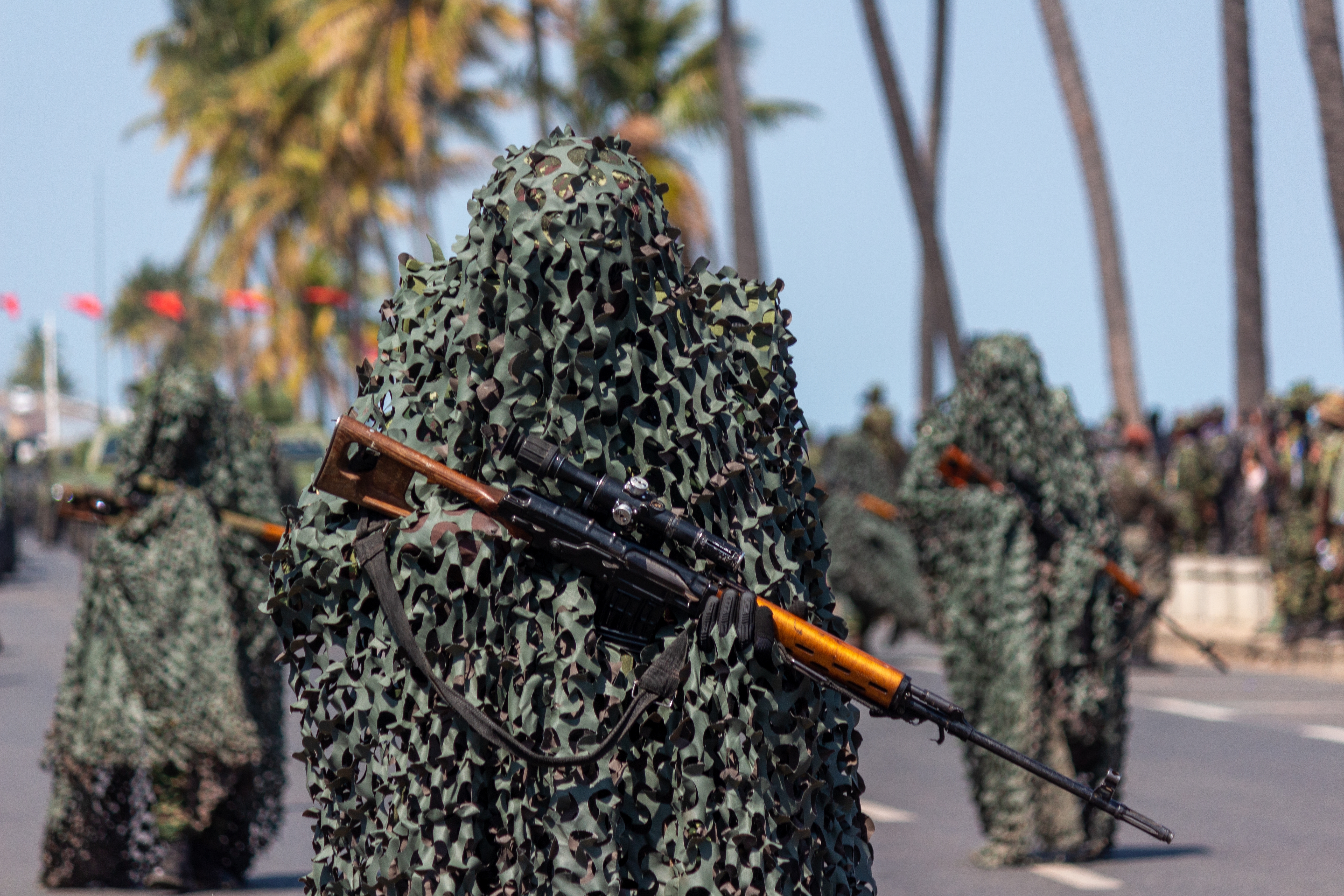
Maputo, Mozambique - September 25, 2025: Sniper Unit in Full Ghillie Suit, Armed with Rifles, Ready for Anti-Terrorism Operations
© ShutterstockA new publication, A Collection of Studies on International Humanitarian Law (IHL), comes at a time when the rules of war are under growing strain. As conflicts become more complex and diplomacy struggles to keep pace, IHL remains the last line of protection for civilians and the foundation for future peace. Focusing on Mozambique’s Cabo Delgado insurgency, the collection offers practical guidance for lawyers, policymakers and practitioners seeking to uphold humanitarian standards in a volatile security environment.
International Humanitarian Law, often called the “laws of war”, exists to limit human suffering during armed conflict. It sets rules on how wars may be fought and how civilians, prisoners and the wounded must be treated. Today, these rules matter more than ever. Conflicts increasingly involve non-state armed groups, take place in populated areas and unfold in a world of rising geopolitical tension. Although almost every country has accepted IHL, respect for it is weakening and enforcement is increasingly uncertain.
One reason is the paralysis of global bodies that once helped uphold these standards. The United Nations Security Council has the power to demand civilian protection and hold perpetrators accountable, but political divisions and vetoes often prevent decisive action. When major powers disagree, violations may go unpunished. This undermines the credibility of the law itself and contributes to a dangerous sense that rules apply only when convenient.
At the same time, funding for peacekeeping and humanitarian work is shrinking. Budget cuts and staff reductions mean fewer observers on the ground, making abuses harder to monitor and deter. Donor fatigue and domestic pressures in wealthier countries have reduced foreign assistance, leaving fragile states with limited support. Regional efforts can help, but they also face constraints. In Southern Africa, the mission supporting Mozambique in Cabo Delgado struggled with chronic underfunding, illustrating the gap between urgent needs and available resources.
The conflict in Cabo Delgado makes these challenges starkly clear. Since 2017, an insurgency by armed groups linked to extremist networks has devastated the province, displacing large numbers of people and destroying livelihoods. Legally, the conflict is classified as a Non-International Armed Conflict, meaning it is fought mainly between government forces and organised armed groups within a state. This technical label has real consequences for civilian protection.
In such conflicts, fighters often blend into the population. Distinguishing between combatants and civilians becomes extremely difficult, increasing the risk of wrongful detention, excessive force and civilian casualties. Government forces must conduct counter insurgency operations while respecting legal obligations to treat detainees humanely. Insurgent groups, meanwhile, frequently ignore these rules altogether, targeting civilians, infrastructure and aid workers.
Mozambique also faces a legal dilemma. Domestically, insurgents are treated as criminals or terrorists who must be prosecuted. International law, however, requires humane treatment even for those accused of serious offences. Managing the transition from military operations to criminal justice is therefore complex but essential. If abuses by state forces occur, they can fuel resentment and prolong instability.
Experiences from other regions show what happens when humanitarian norms collapse: mass displacement, destroyed infrastructure and cycles of violence that endure for decades. For Mozambique, failure to uphold IHL risks undermining public trust, destabilising the region and making future reconciliation far harder.
This is where the new publication seeks to contribute. Rather than offering abstract theory, it applies international legal standards directly to Cabo Delgado. It explains how IHL operates in this type of conflict, clarifies obligations for all parties and identifies where violations are most likely. In this sense, it serves as a practical tool for legal practitioners, policymakers, security officials and civil society actors working to protect civilians and strengthen accountability.
Ultimately, safeguarding IHL is not only a legal obligation but a strategic necessity. Wars eventually end, but the way they are fought shapes the peace that follows. Respect for humanitarian rules reduces long-term grievances and preserves the possibility of reconciliation. In an increasingly uncertain world, reaffirming these norms is essential to ensure that even in war, a basic standard of humanity endures.