Philippines
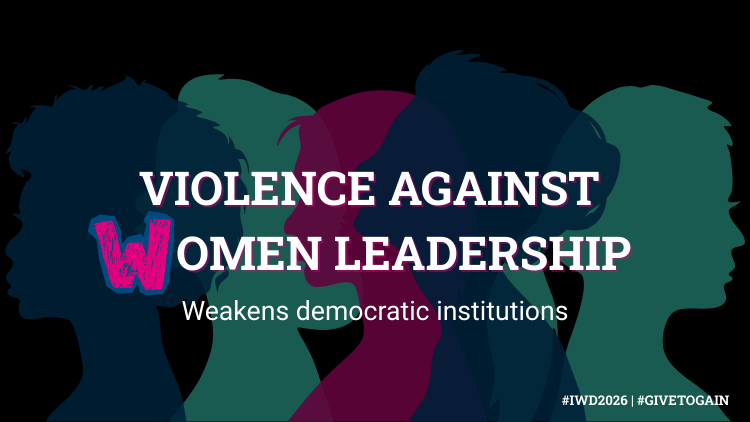
Violence Against Women Leadership

“Women need safer digital space to participate more in public discourse and governance,” a recent study commissioned by the Friedrich Naumann Foundation for Freedom in the Philippines highlights. “Reinforcing established laws and creating new ones specifically to prevent online violence against them will form safer environments in politics, and most importantly, mitigate the weakening of democratic institutions.”
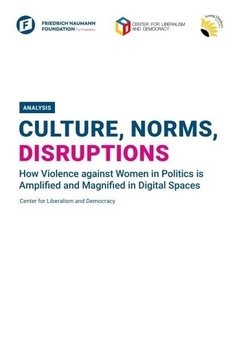
The study, conducted by the Center for Liberalism and Democracy, examines digital violence against women in politics (VAWP) and how it becomes an effective tool to preserve the conservative and patriarchal status quo. The research, part of a global series on gendered disinformation released in time for International Women’s Day, explores the experiences of five prominent Filipina politicians and analyzes how gender-based attacks and disinformation distort political debate and weaken democratic representation.
Personal stories of five women
Three common forms of digital violence are identified: non-consensual production and/or dissemination of intimate images or videos, threats of violence and/or blackmail, and cyberpornography or prostitution. Despite the Philippines’ progressive legal framework for women’s rights, none of these laws directly protect against the coordinated online harassment that often targets women leaders. Instead, the study recalls the personal stories of women who have encountered digital attacks while serving in public office. Former senator and now representative Leila de Lima, former vice president Leni Robredo, now mayor of Naga City, Vice President Sara Duterte, former representative Sarah Elago and Senator Risa Hontiveros all experienced explicit and vicious gendered insults, defamatory accusations, online mockery, threats and false claims. In many cases, their personal life and stories became the focus of public attentions rather than their policy initiatives. They were labeled for their appearance and sexuality based upon social constructs how women are highly emotional, vulnerable, and unfit to become leaders of society. These narratives intensified when they challenged prominent male politicians in power. Their male counterparts rarely, if not never, found themselves targets of attacks.
These patterns reflect deeper social dynamics. In many societies especially in Southeast Asia, political leadership remains associated with masculinity. Since women taking on positions of power are seen as deviations from societal norms, women often are at the receiving end of gendered backlash that normally takes the form of digital violence. Social media platforms amplify these dynamics by enhancing dissemination of harassment and disinformation within a short period. A single defamatory post can circulate widely within minutes, magnifying hostility and shaping public perceptions before facts can intervene. Such experiences have deterred many women from entering what remains a male-dominated field.
Women are systematically harassed
The study concludes that addressing digital violence against women in politics requires more than prosecuting individual imposers. It calls for stronger legal protections tailored specifically to women in political life, greater accountability for social media platforms that allow harassment to flourish, and increased public awareness to challenge norms that tolerate online misogyny. Equally critical is the need for citizens to develop stronger digital literacy and gender sensitivity. As political conversations increasingly move online, democratic societies must cultivate the ability to recognize disinformation and reject narratives rooted in prejudice.
Ultimately, the issue extends beyond the safety of individual politicians. When women are systematically harassed and silenced in digital spaces, the diversity of voices in democratic debate is diminished. Protecting women in politics from digital violence is therefore not only about gender equality, it is about safeguarding democracy itself.
Please download the study “Culture, Norms, and Disruptions: How Violence against Women in Politics is Amplified and Magnified in Digital Spaces” here.
*Hnin Wint Naing is the Regional Communications Officer of the Friedrich Naumann Foundation for Freedom´s Regional Office Asia in Bangkok/Thailand.