Regional Crisis Simulation
Taiwan Blockade: Lessons from a Crisis Simulation

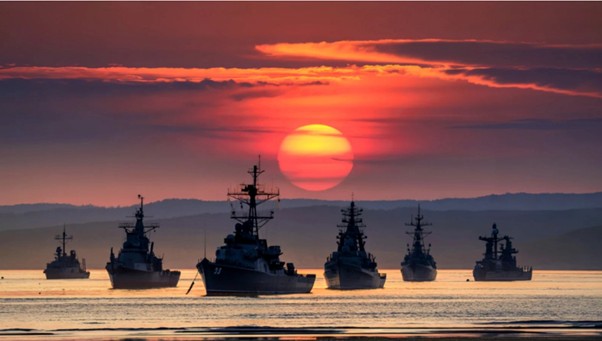
For years, China has steadily increased pressure on Taiwan, and tensions in the region continue to rise. Against this backdrop, the European Values Center for Security Policy (EVC) simulated an escalating crisis in East Asia. The aim of the simulation was to analyze how states might respond if the People’s Republic of China were to block all maritime access to Taiwan, and what political, economic, and security challenges this would entail. The Naumann Foundation and the EVC summarize the key findings of the simulation in a report.
For China, a blockade of Taiwan would likely be a highly effective means of placing Taiwan and its allies under substantial pressure. Such a blockade would function as an instrument below the threshold of conventional warfare. Taiwan and its international supporters would face serious dilemmas.
In the simulation, participants assumed the roles of various states, including EU member states and NATO allies, as well as selected Indo-Pacific countries such as the Republic of Korea (ROK), the Democratic People’s Republic of Korea (DPRK), Taiwan, Japan, and Singapore. Experts from politics, diplomacy, security agencies, business, and think tanks stepped into the roles of government officials.
A total of 50 people took part, including 17 active players and 33 observers. The scenario consisted of two rounds. In the first round, China exerted pressure on Taiwan and U.S. allies through cyberattacks, disruptions to green energy infrastructure, and a coordinated information campaign. Chinese acts of sabotage at sea endangered Taiwan’s energy supply and supply chains. In the second round, the People’s Republic officially imposed a naval blockade and launched massive military exercises. China threatened nuclear escalation if the so-called ‘quarantine’ were breached, deployed armed escort vessels through the Taiwan Strait, and caused significant disruptions to maritime traffic. In addition, Russia provoked tensions by mobilizing forces near the Baltic states.
In the simulation, the United States and Japan acted relatively cohesively, while South Korea responded cautiously. The EU also remained hesitant; its member states were divided. The simulation highlighted the strong dependence of many countries on foreign energy and trade relationships. Many countries are only limitedly prepared to withstand sustained political and economic pressure over an extended period.
Based on these findings, the paper formulates concrete policy recommendations to strengthen resilience, deterrence capabilities, and crisis response mechanisms. These include contingency plans, sufficient stockpiles, clear lines of responsibility, and coordinated political decision-making. Only in this way can dependencies and a lack of preparedness be prevented from leading to serious political and economic damage in a Taiwan crisis.
Aurelia Schlosser studies Korean Studies and Law at the University of Tübingen and is completing an internship at the Foundation’s office in Seoul.