G20 in South Africa
A focus on German and SA relations

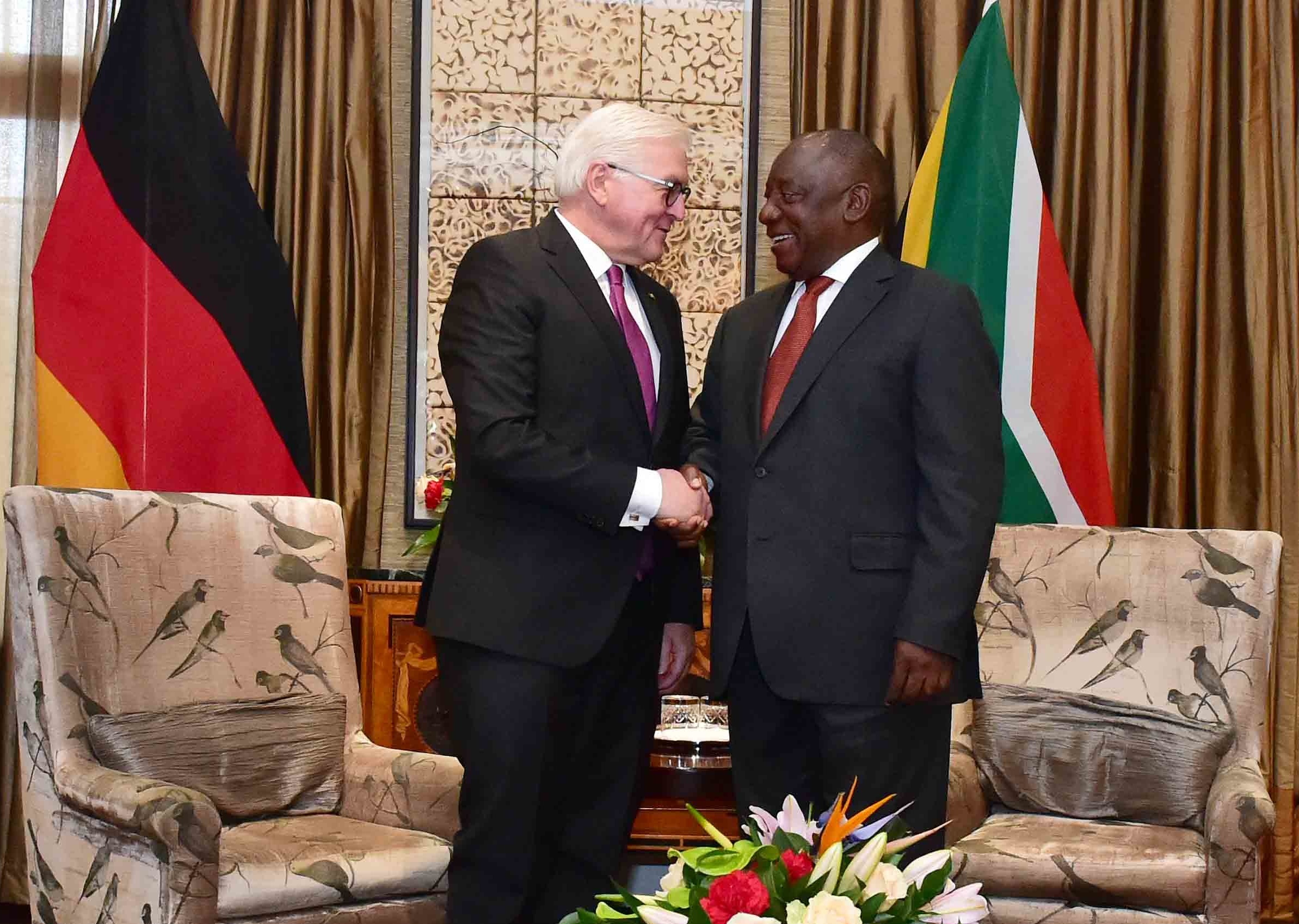
President Cyril Ramaphosa having bilateral meeting with German President Frank-Walter Steinmeier at the Tuynhuys, Cape Town on the occasion of President Steinmeier’s State Visit to South Africa.
© GCISSouth Africa, the only African country represented in the G20, will welcome global leaders this November as it hosts the annual G20 Summit. On 1 December 2024, South Africa assumed the G20 Presidency from Brazil for a one-year term under the theme “Solidarity, Equality, Sustainability.” This presidency places a strong emphasis on advancing the 2030 Agenda for Sustainable Development and accelerating progress toward the UN Sustainable Development Goals (SDGs).
In the lead-up to the summit, numerous bilateral discussions have taken place, setting the stage for strengthened global partnerships. Among these, the relationship between Germany and South Africa stands out as particularly significant. In this series, we will explore various dimensions of this partnership - through insights from political leaders, experts, and industry representatives – to better understand the evolving ties between the two nations.
Trade and economic relations
Germany is South Africa’s second-largest bilateral trading partner, with trade between the two nations valued at over €20 billion annually. Within Sub-Saharan Africa, South Africa remains Germany’s most important economic partner.
Currently, more than 600 German companies operate in South Africa, providing employment to nearly 100,000 people. These companies contribute to a wide range of industries – from automotive manufacturing and renewable energy to finance and digital technology – underscoring the mutual economic benefit of this partnership.
Energy and climate cooperation
Beyond trade, the two countries share a strong commitment to addressing the global climate crisis. Since 2013, Germany and South Africa have maintained a formal Energy Partnership, which coordinates a broad spectrum of bilateral cooperation in sustainable energy development.
At the 2021 UN Climate Change Conference (COP26) in Glasgow, both nations joined other international partners to launch the Just Energy Transition Partnership (JETP) – a long-term initiative between South Africa, Germany, the EU, and others. This partnership supports South Africa’s transition toward a low-carbon economy while ensuring social and economic equity during the shift away from coal dependency.
A growing partnership
Earlier this year, Katja Keul, Germany’s Minister of State at the Federal Foreign Office, reaffirmed the strength of the relationship, noting:
“South Africa is one of Germany’s most important partners – whether in tackling the climate crisis or in reforming the United Nations. We will further deepen this partnership during South Africa’s G20 Presidency in 2025.”
As South Africa prepares to host one of the most influential gatherings in global governance, its partnership with Germany illustrates how cooperation between nations can advance not only national interests but also collective global goals.