Elections in Côte d'Ivoire
Why generational conflict has not yet erupted

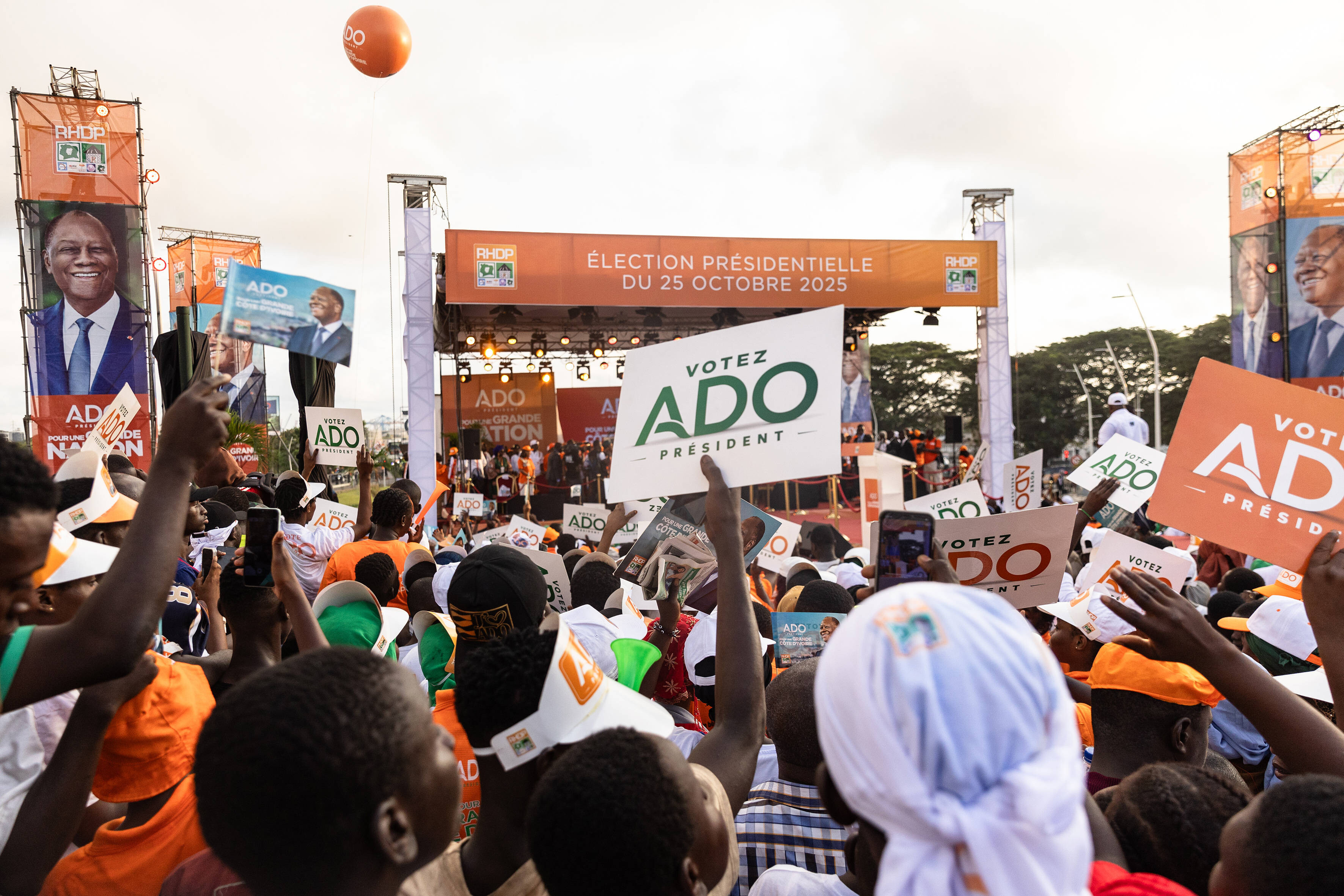
Der 83-jährige Alassane Dramane Ouattara stellt sich zur Wiederwahl auf.
© picture alliance / SIPA | Sophie GarciaAfrica has the youngest population in the world, yet many of its countries are still governed by men who have been in power for decades. Just two weeks ago, 92-year-old Paul Biya was re-elected president of Cameroon. The opposition has refused to recognise the result, calling it “flagrant fraud”.
This Saturday, Côte d'Ivoire’s 83-year-old president, Alassane Dramane Ouattara, will run for re-election, and is widely expected to secure a fourth term. The only youthful thing about him is his nickname, “Ado”, a short form of his name that ironically happens to be the French word for “teenager”.
At first glance, everything appears tightly controlled. Unpopular candidates have been disqualified, and a controversial ruling by the Constitutional Court has cleared the way for Ouattara’s fourth term.
A generational clash
Across Africa, a growing divide is emerging between an ageing political elite and a younger, restless generation, Generation Z, that is increasingly unwilling to accept the status quo. In Madagascar, young protesters recently forced the government to resign. In Morocco, youth movements have been calling for better healthcare and education instead of expensive new football stadiums for the 2030 World Cup.
Until recently, young Ivorians had remained relatively quiet in the run-up to the polls. But in recent days, their frustration has begun to surface. Côte d'Ivoire, once a French colony, is best known internationally for its coffee, cocoa and timber exports. With its modern port, a key trade hub linking the Atlantic coast to landlocked Niger, Mali and Burkina Faso, and close economic ties with France, the country is better off than many of its neighbours.
Politically, however, the past two decades have been turbulent. Civil conflict in 2010–2011 left some 3,000 people dead, and more violence in 2020 claimed another 85 lives and injured over 400. The scars of these events run deep, and fears of renewed unrest remain strong.
Economic growth, unequal gains
Despite political instability, the economy has shown impressive growth. Since 2012, the World Bank and the IMF have reported GDP growth rates of six to seven per cent annually, and a middle class has begun to emerge.
Abidjan, the country’s economic capital, is sometimes called the “Manhattan of West Africa”, a city of gleaming towers, new bridges and bustling construction sites. It has become a magnet for banks and investors. In 2023, Germany opened its first chamber of commerce in French-speaking West Africa there.
Yet the boom hides deep inequality. Most Ivorians are under 18 and struggle in precarious jobs, with little access to quality education or healthcare.
No space for new leaders
Many voters, still traumatised by past violence, appear resigned to political stagnation. Ouattara’s calls for ethnic reconciliation have calmed tensions, but his dominance leaves little room for new leaders. The political renewal Côte d'Ivoire desperately needs remains elusive.
A new generation of aspiring politicians is waiting in the wings, supported by programmes from European political foundations promoting democracy, good governance and liberal values.
But many Ivorians lament a missed opportunity for genuine democratic competition. Critics accuse Ouattara of suppressing dissent, banning protests, arresting opponents and intimidating opposition parties.
Others blame the opposition itself for failing to present a credible alternative. Tidjane Thiam, candidate of the PDCI party, might have posed a serious challenge had his dual citizenship issue been resolved. Ivorian law prohibits presidential candidates from holding another nationality, and Thiam’s delay in renouncing his French citizenship led to his disqualification.
Western support, domestic division
In Western capitals, Ouattara is seen as a reliable ally, a key figure in the West African Economic Community (ECOWAS) and a bulwark against Islamist extremism, which increasingly threatens the region. He is viewed as a stabilising force amid a wave of military coups across West Africa.
At home, however, opinion is divided. The 2016 constitution, passed under Ouattara’s leadership, limited presidents to two terms, but also reset the count to zero. By his interpretation, this is only his second term under the new rules. Many young Ivorians, however, see this as a constitutional sleight of hand, and view his fourth run as one too many.
Eyes on December
Discontent may spill over into the parliamentary elections due in December. These contests, shaped by regional and religious loyalties, often offer a more accurate picture of African democracy in action.
With half the population under 18, millions of first-time voters are expected to head to the polls, a generation unburdened by the trauma of past wars, digitally connected and outspoken, eager for change and for a say in their country’s future.
This article first appeared on 24 October 2025 in the Tagesspiegel.