Suppression of Opposition under Orbán
Orbán's path to eternal power

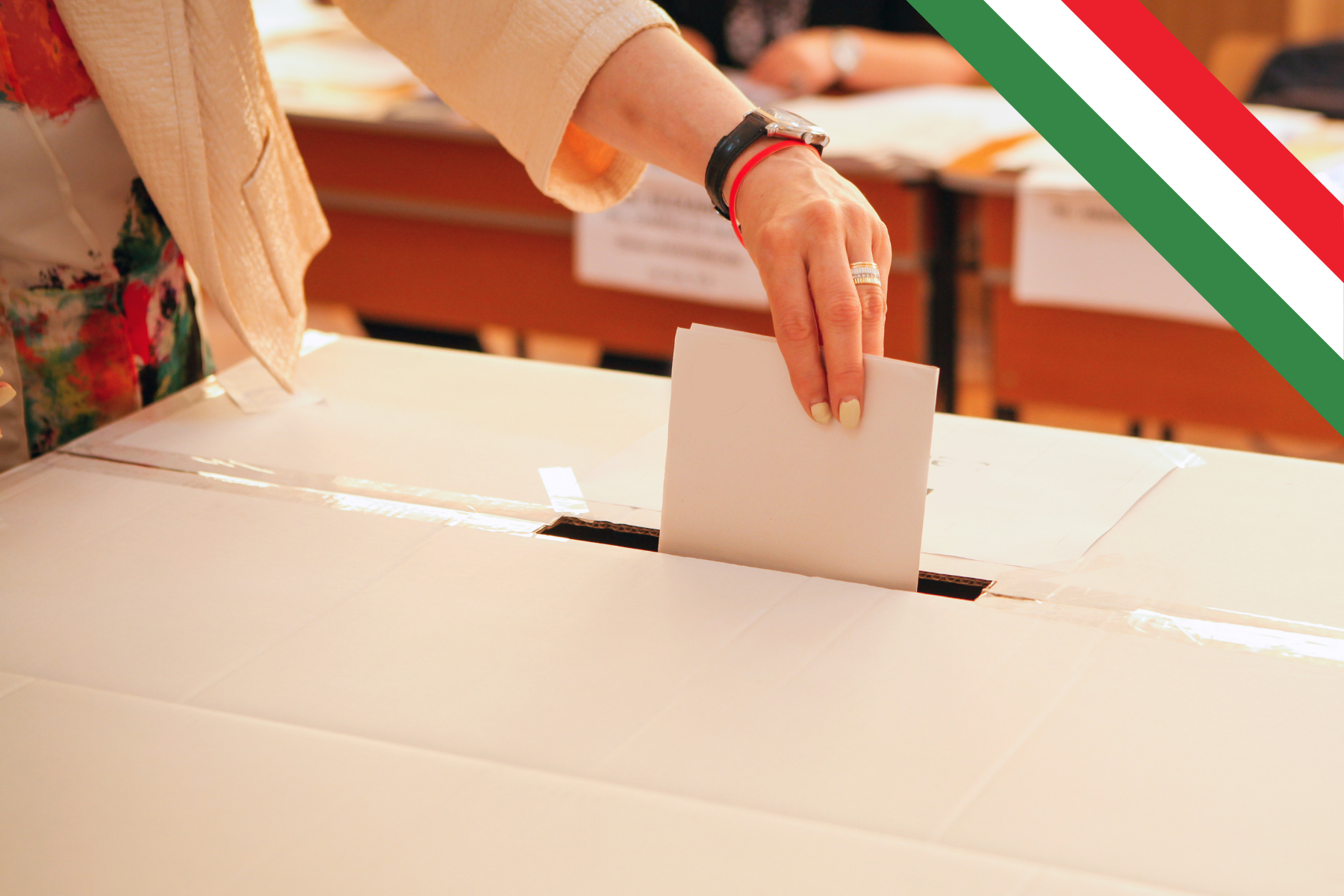
In April 2026, Hungary will elect a new parliament. This could be a pivotal election for the increasingly authoritarian country. Since 2010, Prime Minister Viktor Orbán has governed the country with a clearly illiberal agenda. During his term in office, fundamental rights were restricted, and the media landscape was brought under state control. Democracy and the rule of law are being systematically dismantled. In doing so, he is not only calling into question the democratic rights of Hungarian citizens, but also the fundamental principles of the European Union. In 2022, the European Parliament declared Hungary's status as a democracy. With numerous legislative initiatives, Orbán is attempting to restructure the political system in such a way that he can hope to eliminate political opponents. But for the past year, there has been a serious rival, a challenger who could undermine Orbán's hold on power. Will he, this opponent, succeed in threatening Orbán's power structure? This short series of articles aims to demonstrate how Orbán is systematically working to secure his permanent hold on power.
Restructuring of a state
Viktor Orbán is not only the longest-serving head of government in the EU, he is also the most controversial. He already led Hungary in 1998. After an election defeat in 2002, he disappeared from office, but not from the public eye. On the contrary: He used his years in opposition to reinvent himself. During this time, he experienced a massive political crisis, suffering greatly from no longer being in power. After his re-election in 2010, he wasted no time in beginning a radical restructuring of the state. Wherever he could, he replaced key personnel. The media landscape was brought into line, the administration centralized, and the independence of the judiciary curtailed. He filled the Constitutional Court with lawyers loyal to the government. Anyone who does not fit the religious-nationalist image of the state, family, and politics—queer people, opposition members, and journalists—is discriminated against by law. Orbán is deliberately undermining liberal values, such as equality, individual freedoms, and the protection of minorities, essential values of a pluralistic society. Critics accuse Orbán of dismantling democratic and constitutional elements. The EU stopped distributing European funding. But Orbán remained unfazed. Without any qualms, he announced in a speech 2014 his goal of transforming Hungary into an illiberal state that would align itself with Russia and China, but no longer with the EU.
Orbán has always been concerned with gaining and maintaining power. Even early in his political career, he pushed unwanted rivals out of the party, thus securing his influence.
He also amended the electoral law to ensure that he would not lose his prime ministership so quickly. The success of this change was evident in the last election in 2022. Independent observers complained that it discriminated against the opposition. For example, voters had little opportunity to learn about Orbán's opponents because the candidates were not allowed to project their campaign posters on billboards. The media is largely in the hands of Orbán's allies, so reporting on the opposition consists largely of false claims. Independent journalists critical of the government have been spied on in the past, including using the Pegasus spy system.
The last independent radio station was shut down in 2021. The coordination of the media is an important step towards state restructuring. Democracy, free opinion formation, and media freedom are being systematically undermined. There have also been various changes to the electoral system in the past that may have influenced the election outcome. Allegations of ballot manipulation abroad in favor of Fidesz have been raised. There are doubts about the independence of the members of the electoral authorities, as they are appointed by Parliament without proper debate. Voting by Hungarians living abroad is made more difficult. Manipulation and active interference in elections not only undermine the rule of law in Hungary but also endanger the democratic integrity of the European Union. This was most recently demonstrated in the European Parliament elections in June 2024.
All of this is only possible because Orbán and his Fidesz-KDNP (right-wing populist Christian Democratic People's Party) coalition have enjoyed a two-thirds majority in parliament since 2010, allowing legislative changes like these. The two parties had participated in elections as an alliance since 2006.
Hungary uses the so-called "trench electoral system," in which two electoral systems exist in parallel without offsetting one against the other. Voters have two votes: with their first vote, they choose a direct candidate from their constituency, and with their second vote, they choose a party. Hungarians living abroad can only cast the second vote. With Orbán's re-election in 2010, he changed the electoral system. The first step was to reduce the size of parliament and redraw the constituencies. Registration for parties and candidates was also changed, making it more difficult, especially for smaller parties. The electoral reform was supported exclusively by the governing parties, Fidesz and KDNP. All other parties voted against or boycotted the parliamentary session.
Orbán's Fear of the Opposition
For over a decade, Orbán seemed untouchable. But since 2024, the power structure has been faltering. At the beginning of 2024, Péter Magyar, Orbán's long-time right-hand man, left the Fidesz-party and joined the Tisza-Party. A few months later, he and Tisza won almost 30 percent of the vote in the European Parliament elections. Fidesz, in turn, achieved its worst result in 20 years.
Magyar's break with Orbán's party has several reasons. His ex-wife, Judit Varga, former Minister of Justice, was forced to resign in February 2024 because she had pardoned a man who had covered up pedophile activities. After the divorce and the break with Fidesz, Magyar openly criticized corruption and abuse of power within Orbán's party and government. Politically, Magyar also distanced himself from the head of government, at least in his stance toward NATO and the EU. He upholds Western ties, sharply distances himself from Russia's war against Ukraine, and pledged his loyalty to NATO. On other points, however, he agrees with Fidesz: He opposes Ukraine's rapid accession to the EU, wants to continue Orbán's migration policy, and is also unlikely to liberalize LGBTIQ+ rights. A radical change of course from current policies is unlikely, only a more moderate approach – not a good prospect for the Western community of values.
It's not just the renegade Magyar who's causing Orbán headaches, but also the system Orbán himself has built for himself. It's beginning to crumble because it's based not on ideological convictions, but on financial handouts. Since the EU stopped its payments, this system has no longer worked.
Orbán's reaction to this threat was not long in coming. In March 2025, he spoke of wanting to rid his country of "vermin"—journalists, NGOs, opposition figures, and all political activists who supposedly act on behalf of a foreign power and want to harm Hungary. This claim is blatantly duplicitous, as Orbán, for his part, maintains his power through mafia-like policies.
On this basis, a law was passed in June 2025 that makes it possible to revoke dual citizenship. Classifying individuals as "threats to the state" could, in extreme cases, lead to their expulsion from Hungary. This particularly affects government critics who are accused of working for another government and are therefore supposedly a threat to public security. Employees of NGOs or opposition figures, such as members of the liberal Momentum-party, would also be affected, as many hold dual citizenship. The law represents an important cornerstone in Orbán's strategy to silence critics.
What's next?
Orbán is deeply concerned about potentially losing power to his former party colleague in the next parliamentary election in spring 2026. This concern is evident in the various laws passed since the end of 2023 that primarily restrict the opposition's work. Years earlier, Orbán had already begun to restructure the electoral system in his favor. Some of the most striking examples are presented in the next article.