THAILAND
Thailand has a new prime minister – but not for long

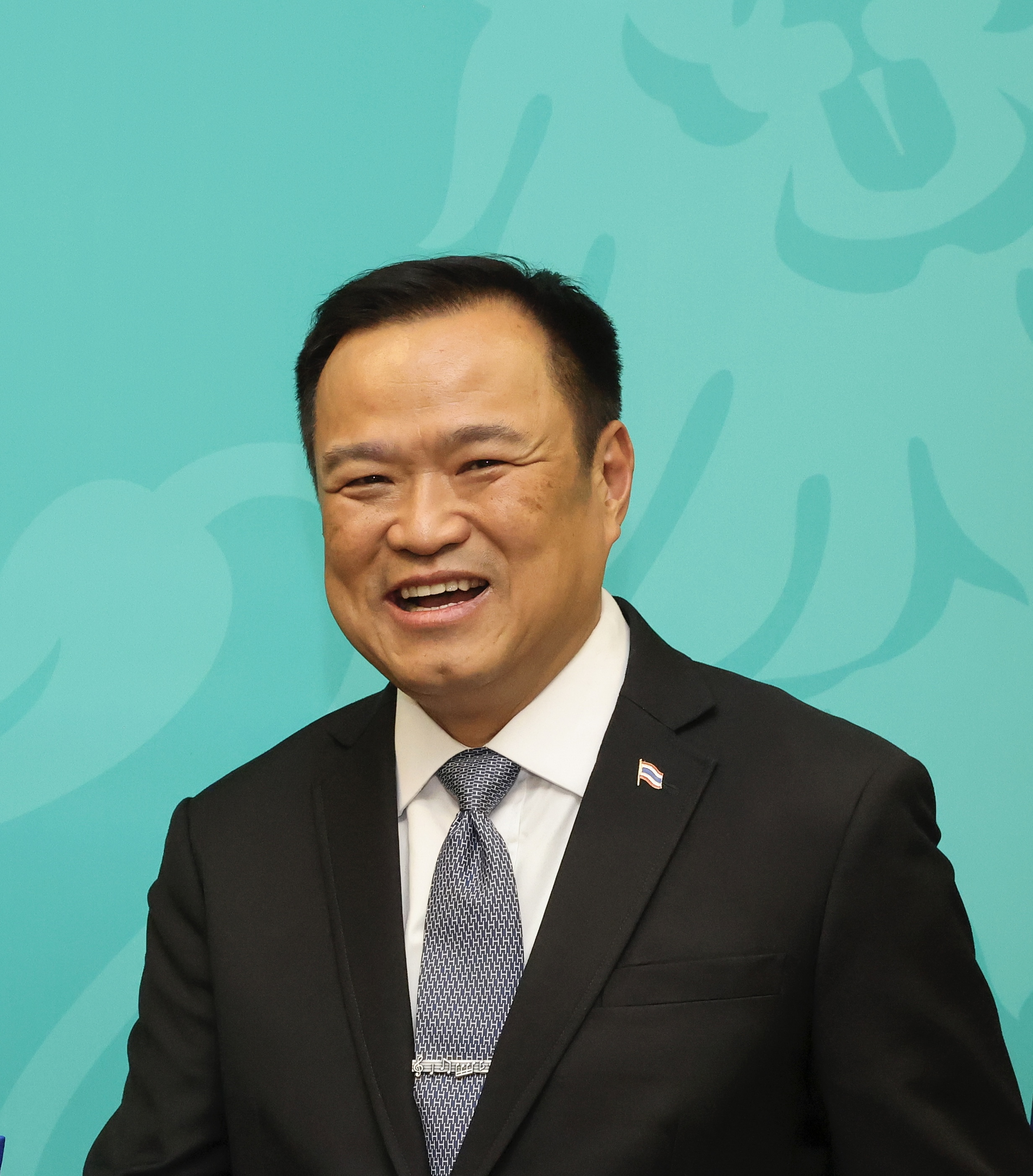
Cropped photo from MOU Signing with Lord Nick Markham in London
© Rory Arnold| No. 10 Downing Street- UK governmentAfter the ousting of Prime Minister Paetongtarn Shinawatra, parliament has chosen her successor: Anutin Charnvirakul from the conservative Bhumjaithai Party. To secure his election, he had to accept the conditions of the progressive People’s Party – which is pushing for new elections within just a few months. The key questions and answers about the latest political twist in the kingdom.
Who is Anutin Charnvirakul and what does his party stand for?
Born in 1966, Anutin Charnvirakul is a construction tycoon, multimillionaire and head of the Bhumjaithai Party (BJT) since 2012. He is seen as a pragmatic yet populist politician. His family owns Sino-Thai Engineering, one of the country’s largest infrastructure companies. Anutin studied in the United States and Thailand before entering politics. Most recently, in the Pheu Thai-led government under Paetongtarn Shinawatra, he served as interior minister and deputy prime minister. On June 18, 2025, however, BJT left the coalition – triggering the current crisis.
Anutin first rose to prominence as health minister (2019–2023), where he spearheaded the legalization of medical cannabis – a pioneering decision in Asia that earned him the nickname “Cannabis King.” BJT’s power base lies in northeastern Thailand. The party mixes monarchist conservatism with pro-business liberalism and populist schemes such as farmer subsidies.
Anutin was already nominated as BJT’s prime ministerial candidate in 2023. Under the constitution, only those nominated at the last election could stand again now. For the ruling Pheu Thai, the only eligible candidate left was 77-year-old Chaikasem Nitisiri – widely seen as frail and in poor health.
What role did the progressive People’s Party play in his election?
As the largest bloc in parliament, the People’s Party (PP) suddenly found itself in the role of kingmaker. The PP is the successor to the Move Forward Party (MFP), which stunned the establishment by winning the most votes in the 2023 election. Yet it was blocked from forming a government, primarily by the military-appointed Senate. In May 2024, the Constitutional Court dissolved the MFP for advocating reform of the draconian lèse-majesté laws. The PP has since carried its progressive legacy forward: pro-democracy, reformist, with a focus on transparency, social justice and curbing the power of military and monarchist institutions.
For the September 5, 2025 prime ministerial vote, both Chaikasem and Anutin needed parliamentary majorities. That put the PP in the driver’s seat. The party set five conditions for both contenders: among them the dissolution of parliament within four months, a sweeping constitutional reform via a constituent assembly or referendum, and a pledge to stay out of cabinet posts. The PP made clear it would not join a government but push reforms from the opposition benches.
Why were new elections necessary in the first place?
Former prime minister Paetongtarn Shinawatra was removed by the Constitutional Court on August 29, 2025. The case centered on a leaked phone call with former Cambodian premier Hun Sen, in which she addressed him as “uncle,” criticized the Thai military and promised support. For many, it was a diplomatic faux pas. For her opponents, it was a breach of the dignity of her office. Already on July 1 she had been suspended, and the August 29 ruling dissolved her entire cabinet.
Paetongtarn said she had called Hun Sen – a long-standing family friend – to ease border tensions. But Hun Sen reportedly recorded the call and later made it public. In its verdict, the court said her conduct had “eroded trust and faith in the Thai premiership” and inflicted “grave damage” on her work.
Her popularity and her party’s poll numbers plummeted after the leak. By late August, her approval rating had sunk to below ten percent.
What happens next?
Whether BJT will honor the PP’s conditions – and hold new elections within four months rather than clinging to power – remains an open question. The PP itself expressed skepticism, stressing that it did not fully trust either major party. Should BJT or Pheu Thai renege on their promises, the PP warned, they would face consequences.
The PP, meanwhile, has reason to be confident. With Pheu Thai weakened, it now polls above 40 percent and could again emerge as the strongest party in new elections. But the question remains: would it actually be allowed to govern this time, or blocked once more by political maneuvering or the courts?
The future of the Shinawatra dynasty also hangs in the balance. Ex-premier Thaksin Shinawatra, Paetongtarn’s father, left Thailand for Dubai on September 4, 2025 – just days before a critical court hearing. On September 9, the Supreme Court is due to rule in the so-called “14th Floor case,” which will decide whether Thaksin’s lengthy hospital stay in 2023 legally counted as serving his prison sentence. Many observers expect the proceedings to trigger fresh political upheaval.
*Vanessa Steinmetz heads the FNF offices in Thailand and Vietnam.