Moldova
Transnistria, the Thorn in Moldova’s Side
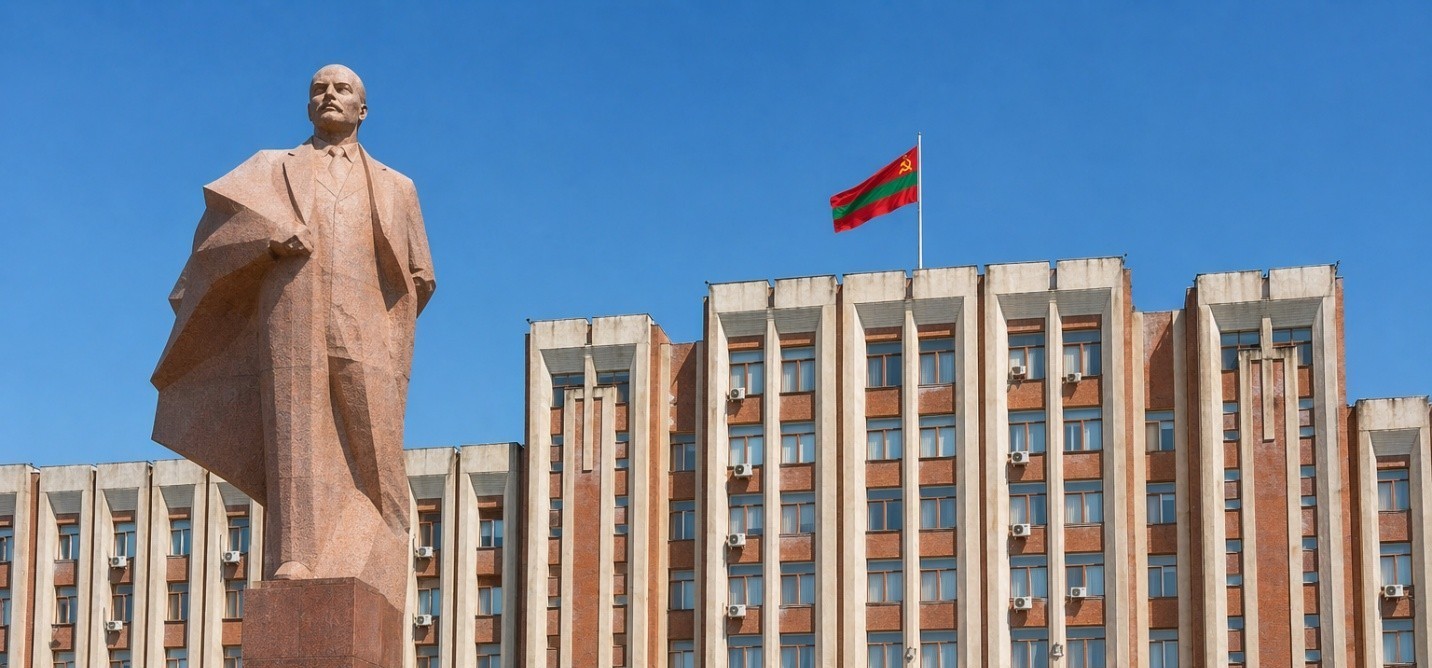
Tiraspol
© AITransnistria is an autonomous region in the Republic of Moldova that effectively seceded from Chisinau in 1992 following a war. Since the war and the Russian military intervention of 1992, which led to the permanent stationing of Russian troops in Transnistria, the region has referred to itself as the Pridnestrovian Moldavian Republic (PMR) and has declared its independence. However, Transnistria is not recognized by any country in the world, not even by the Russian Federation, which is responsible for its establishment and ensures its continued existence. An administration acting on behalf of Chisinau exists for this autonomous region, known as the “autonomous territorial units on the left bank of the Dniester.”

Republic of Moldova and Transnistria
The Republic of Moldova submitted an application for accession to the European Union in 2022, and in 2023, the chapters for negotiations were officially opened, just as they were for Ukraine. The goal of the Moldovan authorities in recent months has been to “decouple” their EU accession process from that of their neighbors, similar to Montenegro or Albania in the Western Balkans, because, for various reasons, it is likely to proceed more slowly. In the case of Ukraine, one of the problematic issues is that of territorial integrity, which is tragically ironic, since the Republic of Moldova has already determined that sovereignty over its entire territory would not be required for EU accession. In recent weeks, however, the publication of a document sent from Chisinau to Brussels has raised the question of whether the reintegration of Transnistria is necessary for EU accession. This question now appears to be back on the agenda, and Chisinau is even speaking of a plan for “peaceful reintegration.” The Republic of Moldova is in the process of introducing a national tax and customs system in the breakaway region, which affects Transnistria’s exports to the EU. At the same time, it has allocated funds to promote the region’s economic integration as a step towards accession to the European Union.
Since Maia Sandu’s first election in 2020 and the victory of her party, “Action and Solidarity” (PAS) in the following year, Moldova has been pushing forward with its European integration more resolutely than ever before. For a long time, the country was torn internally between post-communists who wanted to keep Moldova within Russia’s sphere of influence, and pro-Europeans who were aware of the reality of trade relations with the EU. The recent elections and the referendum have confirmed Moldova’s orientation—or rather, that of the majority of its population—toward closer ties with Europe. However, one must not overlook the existence of deeply entrenched Euroscepticism. Sandu’s vision even goes beyond integration into the EU, as she recently stated that she herself is in favor of a union with Romania.
This enthusiasm is shared in many ways by the European institutions, which are supporting this process. On the Transnistria issue, the EU finds itself in a particularly delicate position: it does not recognize the de facto authorities in Tiraspol, but responds pragmatically to acute emergencies, such as by providing support to the population during the winter of 2024-2025, which was marked by a drastic reduction in gas supplies from Russia. Transnistria also maintains trade relations with the EU today. But how should this issue be handled in the long term, for example in the event of Moldova’s accession to the EU?
The EU could refer to the case of Cyprus, which has been a member state since 2004 but remains divided following the Turkish invasion of its northern third in 1974 and the establishment of the Turkish Republic of Northern Cyprus, which is recognized only by Turkey. Since this similarly intractable conflict predates the one in Transnistria, the EU was aware of the geopolitical complexities at the time of the Republic of Cyprus’s accession to the EU. Specifically, the EU regards Nicosia as the capital of the entire island and refers to the government in the north of the island as the “Turkish Cypriot community” and its president, currently the moderate Tufan Erhürman, who advocates for reunification, as the “Leader of the Turkish Cypriot community.” These designations may seem somewhat odd, but they allow for the maintenance of a connection to the entire island, which appears normal in light of EU law and international law.
Thus, Turkish Cypriots who hold a passport from the Republic of Cyprus are considered full EU citizens, and certain European aid programs apply to the Turkish community, not to mention all the so-called interim measures pending reunification. It should also be recalled that Cyprus’s accession to the EU in 2004 coincided with the UN proposal (the so-called Annan Plan), that is, at a time when reunification was conceivable. Be that as it may, the Cypriot example is an important precedent for the Transnistria issue:
- The EU is capable of admitting a member state even if it does not exercise sovereignty over 100% of its territory;
- The EU is capable of performing a balancing act to regard the separated part of a state as part of the Union while simultaneously maintaining contact with the de facto leaders;
- Finally, the consent of the governing majority in an EU region serves as a model for the other side and signals positive developments originating from the population, a trend that can be observed in both Northern Cyprus and Transnistria.
In the event of Moldova’s accession to the EU, it would also undoubtedly be excluded from the Schengen Area. For, referring to the Cypriot precedent, freedom of movement would be impossible, since Chisinau has no control over who resides in Transnistria. Establishing controls on the Dniester would mean recognizing the 1992 demarcation line as a genuine border and thus the PMR as a genuine state.
But what does Transnistria actually look like today? For a long time, it was regarded as an indispensable engine of industry in the Republic of Moldova and as a more “Sovietized” region (with a higher proportion of Russian-speaking residents than in the rest of Moldova), yet the economic situation in the so-called PMR appears to be deteriorating rapidly. In this status quo, Russia supported the breakaway republic not only militarily but also through free gas supplies. These supplied the Cuciurgan power plant, which accounted for up to 80% of Moldova’s energy mix, thereby making Chisinau heavily dependent on costly imports while simultaneously supporting the economy of the so-called PMR.
In the winter of 2024–2025, however, the PMR was abandoned by Russia. Having been severely weakened overall since 2022, its border with Ukraine was closed (despite the fact that this geographical location was crucial from a political and economic perspective), while its border with de facto Moldovan territory remains open and Russian control there is waning. A decisive moment was the halting of Gazprom’s supplies to the Republic of Moldova. Russia, which does not officially recognize Transnistria’s independence, therefore held the Republic of Moldova responsible for Transnistria’s outstanding energy payments. For Chisinau, making these payments is out of the question; since then, the Republic of Moldova has been purchasing electricity from Romania.
Economically, Transnistria appears to be in dire straits: GDP fell by 18% in 2025 (compared to a 2.7% increase in the Republic of Moldova), and industrial production has contracted by 30%, a direct result of the cessation of Russian gas supplies. This means that Transnistria’s industrial output is now only 75% of its 1989 level. Per capita GDP there is half that of the rest of the country (and the gap widened further in 2025). In the so-called PMR, wages (7,800 MDL, i.e., 387 EUR) and pensions (1,900 MDL, i.e., 94 EUR) are on average half those of the Republic of Moldova, and inflation is twice as high (14.7%).
The Russian “peacekeeping forces” of the CIS (Commonwealth of Independent States) are increasingly recruited from the Russian-speaking population of Transnistria. At the same time, they are operating more and more in an isolated area. As Ukraine retains control over the Odessa Oblast, connections between Tiraspol and Moscow have been severed. Today, Transnistria has become an attraction for tourists who wish to experience the everyday life of the USSR of the 1980s on such trips. Its economic model, which was based on Ukraine’s former openness, Moldova’s state neutrality, and the presence of the CIS, appears to be gradually collapsing, primarily due to the war and the prospect of Moldova’s accession to the EU. Although reintegration is difficult to predict in the short term, it can be said that Tiraspol is pressing to learn more about a possible ceasefire between Moscow and Kyiv, and that it is paying a high price for its dependence on Russia over the past decades. Several hypotheses can therefore be put forward:
- Hypothesis 1: A Russian-Ukrainian peace agreement is reached. Presumably, the Russian army will not reach the Dniester, so Russia would attempt to include the Transnistria issue in the negotiations in order to preserve its ambiguous status. This is undoubtedly the only chance for the so-called government of the PMR to remain active in this constellation.
- Hypothesis 2: Even before the end of the war in Ukraine, the Republic of Moldova joins the EU following a decoupling accepted by all sides. Transnistria belongs de jure to the EU but remains de facto independent. However, given the region’s economic needs, trade will continue. On the Moldovan and European sides, there is hope for a shift in public opinion toward Moscow and the post-Soviet authorities, which could alter the situation in the long term.
- Hypothesis 3: Moldova joins the EU, as does Ukraine. If the authorities in Tiraspol wish to remain loyal to Russia, they risk the region’s economic collapse, which could lead to further tensions between the EU and Russia. The Kremlin could, for example, make good on its threats and officially recognize Transnistria, as it did with Abkhazia and South Ossetia.
- Hypothesis 4: The status quo in the war becomes even more entrenched, with Moldova’s EU candidacy stalling. In Moldova, disappointment and resentment lead to major internal tensions and reinforce the ambiguous stance in Transnistria. This would be a step backward by twenty years and is likely Russia’s preferred scenario.
In each of these scenarios, a certain reality must be taken into account: Moldova is increasingly gaining a voice and respect in Europe and is making it ever clearer that it intends to gradually reclaim its territories beyond the Dniester, which shows that the status quo is no longer sufficient for the population. This determination is, incidentally, reflected in the tensions between Chisinau and Tiraspol, for example in the legal dispute following President Sandu’s revocation of Moldovan citizenship of the so-called Transnistrian Interior Minister Ruslan Mova. Furthermore, he is barred from entering Transnistria via Ukraine, as he no longer holds Moldovan citizenship, which is the only form of citizenship recognized at the border. Following this announcement, Mr. Mova filed a lawsuit against the Republic of Moldova in Moldovan courts. This case highlights the weakening of this ambivalent political order in Transnistria.
About the author: Martin de La Garanderie is a specialist in European affairs and international relations. He is a graduate of the College of Europe in Natolin, Poland; the Faculty of Political Science at the University of Münster in Germany; and Sciences Po Lille in France. He has worked at the European External Action Service (EEAS) in Brussels and with several think tanks. He is currently an intern at the Friedrich Naumann Foundation for Freedom in Romania and the Republic of Moldova.