Policy Paper
Decoding the United States on Tariffs and Trade

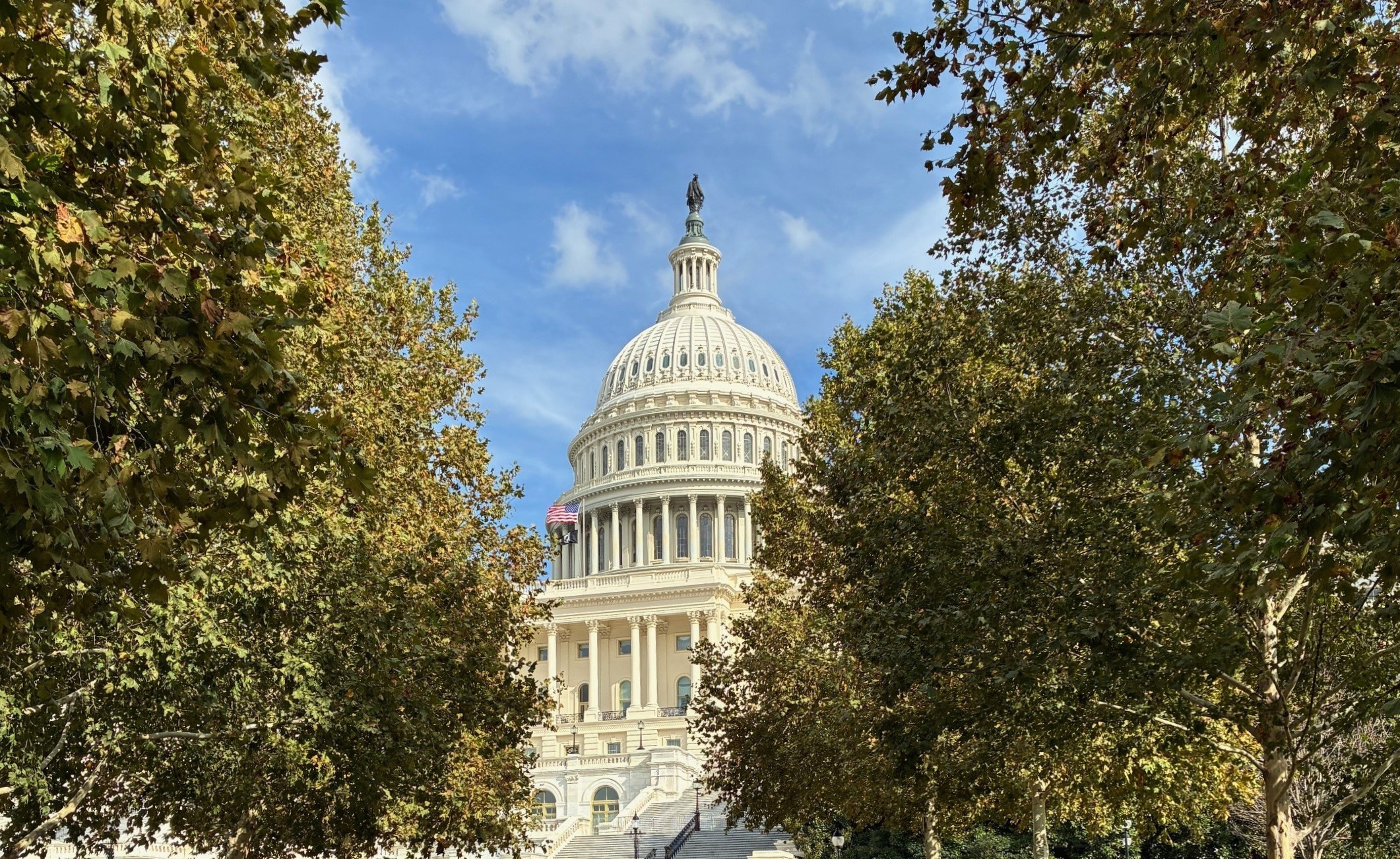
With the generous support of FNF Washington, I joined six curious economists from four continents on a weeklong global trade study tour of Washington D.C. and New York City. The tour included a commendable diversity of expert interlocutors with varying perspectives on the United States and its much-changed approach to tariffs and trade under the Trump administration. The impetus for the tour was at least threefold. Free and open trade remains a critical source of economic development globally, despite slowing trade growth. The United States remains a significant participant in global trade, including as the world’s largest consumer market and a major provider of services and technology exports. And Trump administration trade (and related economic) policies are dramatically reshaping global trade governance in a highly unorthodox and disruptive fashion. Understanding what the United States is doing, why, what it means, and how long it will last are critical questions for all the countries represented on the tour and many more.
Understanding America
At the outset of the tour, I viewed the meeting schedule with learning front of mind. As a student principally of Australia and Asia, it was an opportunity to understand America from the inside, having long viewed it from afar. There is no one ‘America’ but many representations or groups. An early lesson was to gather and differentiate the many perspectives on tariffs and trade, shedding any preconceived singularity that comes from an external vantage point. There is Trump and his inner circle, whose beliefs directly shape policy. There is the stark difference between D.C. and New York interlocutors, with the former fervently interpreting and analysing policy developments and the latter best summed up by the quote: “governments have very little to do with how trade happens.” Then there are businesses and households who themselves can be divided politically and geographically, but who mostly appear to oppose tariffs. It was also clear that American experts had a lot to learn from our wider worldview. As the tour progressed, discussions became increasingly reciprocal as our confidence to share alternative views grew alongside our familiarity with American perspectives. I return to these perspectives later.
Deciphering tariffs and perceptions of them
The obvious starting point for codifying the United States’ tariff agenda is President Trump and his team. In January, D.C. experts expected a repeat of the first Trump administration under which tariffs were less ‘anti-trade’ and more ‘anti-China’. Trump’s second term appears more consistent with his formative beliefs as articulated some 40 years ago, in which America is a victim of foreign trade exploitation, bilateral trade deficits the manifestation, and tariffs — both threatened and implemented — the countervailing ‘revenge’ mechanism. Where many economists see open trade and America’s transition to a services-intensive economy as having brought tremendous wealth gains, Trump sees a hollowing out of manufacturing that must be reversed. Egged on by a trade team that shares his beliefs, Trump waves his tariff stick at friends and foes alike until they kowtow (in his mind at least). Success can only come from foreign subservience and not ‘win-win’ outcomes. One expert described his interest in restoring an ‘External Revenue Service’ as his wanting to revive a system of imperial tribute. Trump disbelieves mainstream economists on the inflationary impact of tariffs, asserting he can make foreigners pay. The tariffs are not being pursued for political popularity. Trump’s polling numbers have fallen significantly and tariffs are contributing to this. American households are acutely aware of the relationship between tariffs and prices to the point of ‘obsession’ according to one expert. Voters on both sides of the political divide blame Trump and his tariffs for not delivering promised lower prices. Republican politicians either endorse the tariffs or are afraid to speak out, though this may change if sentiment continues worsening. The election calculus is finely balanced as swing states are more open to constraining trade. The US business stance on tariffs is also one of quiet opposition. Experts perceive businesses oppose the tariffs, especially the constantly shifting goalposts, but are silent because they are benefiting more from Trump’s tax cuts and deregulation agenda. Businesses also benefit from having displaced business associations in having a direct line to the White House, able to negotiate preferential deals at the expense of their competitors. But there are cracks in the facade. Trump’s continued flipflopping is bad for business, as are attacks on vital economic institutions, an aggressive anti-immigration agenda, and the government taking golden shares in businesses. Businesses also see Trump as having reneged on his first term deal, having shifted production from China to third countries and now facing tariffs on these investments. There is a collective hope among experts committed to free trade that the tariffs will either be overturned, curtailed, or circumvented. Opinions vary on both the trigger for and the extent of change, other than agreeing tariffs will not go back to 2017 levels. Some are counting on legal overrule, contending the IEEPA tariffs are clearly illegal and will be ruled so by the Supreme Court. They contend however that the administration will draw out legal proceedings and is already pivoting to alternative laws (‘section 232 and 301’ tariffs). Others argue that when import prices eventually create inflation, unpopularity will force Trump’s hand. A poor showing at the 2026 mid-term elections could make his presidency and pursuit of tariffs a lot harder. But for now, Trump’s way goes and tariff rates remain in constant flux.
The impact of tariffs on the US and global economies
Trump’s steep tariff hikes and coercive tactics are without precedent. Models simply are not equipped to predict the impact of a large and widespread increase in tariffs by a major economy at a time of unparalleled global integration. Economists using traditional trade modelling appear almost disappointed that measured impacts are more benign than predicted. I have argued since April that a better approach would be to calibrate the shock against Russia’s invasion of Ukraine, for which the pain came later. The impact on the global economy has thus far been muted. Global economic growth is resilient at a forecast rate of 3.2% in 2025. Trade is slowing but volumes are still expected to grow 2.4% this year despite a negative contribution from North America. Trade is holding up amid unprecedented policy uncertainty and Trump’s recidivist agenda has not shattered global belief in trade’s development benefits. Trade between developing countries is now on par with that between developed countries, which together with Asia’s dominant contribution to growth, helps explain trade resilience. Analysing the impact on America is complicated by tariff policy instability and data compromise (both because of the government shutdown and the administration’s interference in the Bureau of Labor Statistics). But the headline numbers are relatively benign, with inflation creeping up and employment slightly down. Experts offered many reasons for the muted impact, including that traded goods are a small share of consumption, that losses may be reflected in consumption choices not prices, the frontloading of imports before tariffs began, American businesses absorbing the tariff cost, delays in tariff implementation, and the exploitation of tariff loopholes. Yale’s The Budget Lab calculates the average tariff rate at 17.9% and estimates a 0.5% reduction in US gross domestic product (GDP) this and next year. The tariff rate has been in constant flux since January and a sizeable gap between estimated rates and tariff collections suggests businesses are exploiting loopholes. International organisation experts believe this to be a temporary feature until tariffs settle down, whereas I see this as a structural trend that will only worsen as more businesses familiarise themselves with circumvention practices. And the impact on inflation will come when American importers can no longer absorb around two-thirds of the cost, with exporters so far paying very little. Several experts noted that exporters have negotiating leverage as they hold specific intellectual property and production specifications, making it costly for importers to switch suppliers. The tariffs appear to be having an opposite than intended effect on America’s manufacturing sector. Manufacturing production indices are in prolonged decline, with headline activity contracting in eight consecutive months to October and employment and new export orders deeper in negative territory. Prices are the only metric increasing, as imported input costs weigh on business competitiveness. As several experts lamented, the tariffs mainly target intermediate and capital goods, and trade negotiators have failed to account for complex supply chains — for example higher tariffs on Canada and Mexico compared to Japan actually increase American car makers’ input costs relative to their primary competitors. The tour also heard many anecdotes around factory closures and trade adjustments that have harmed US manufacturing. A concerning development that receives less attention is the curious behaviour of the US dollar and bonds. Traditionally a safe haven in times of economic uncertainty, investors have been selling rather than accumulating dollars. US bond markets experienced some worrying fluctuations after the April 4 tariff announcement. While yields have stabilised and are arguably lower than they should be with record government debt and amid the longest shutdown in US history, another oddity is that big companies like Microsoft can now borrow at lower cost than the US government. The erosion of safe haven assets is a worry, noting that one expert described another safe staple gold as riskier than US stocks at the moment. There is no consensus on what this means for the global economy, with some experts noting a high risk of something breaking and others seeing US dollar depreciation as little more than an overdue correction for investor portfolios. Related to this, investment and finance are a neglected part of the tariff conversation. This partly reflects “mass confusion” on capital flows and a lack of credible evidence, as the one financial economist we met described it. As more of an investment specialist myself, two critical but neglected impacts of tariffs are the crippling effect of uncertainty on long-term investment decisions globally and that unlike trade, capital comes in stocks as well as flows. Consequently, the potential economic damage from an investment (or financial) shock is orders of magnitude greater than that from trade flows directly.
Trade weaponisation and economics meets security
President Trump is unapologetic and transparent in his weaponisation of tariffs for political ends. A centrepiece of his trade deals has been to threaten countries with extraordinarily high tariffs to get them to the negotiating table, an ‘anchor’ strategy straight from ‘The Art of the Deal’. He also uses tariffs to punish non-trade actions he does not like, including drug smuggling, imprisoning his political friends, or running advertisements that hurt his image. Some distinctions need to be made from his predecessor President Biden and global discussions on economic resilience and security. Trump is much more anti-trade and much less anti-China than Biden was. Trump valorises Chinese President Xi Jinping and despite occasional frictions is more concerned with doing a deal with China than suppressing its rise or de-risking supply chains. Indeed, China hawks in Washington are more concerned that he will restore China’s access to advanced semiconductors and other technology, just as he has acquiesced on TikTok. Trade weaponisation and the use of national security laws to invoke tariffs should not be read as being national security policy as previously understood, with the oft mentioned example of ‘national security tariffs’ on upholstered furniture a case in point. On the broader conversation of economic security, the injection of Trump has confused an already challenging landscape. As a veteran of these conversations myself, the tour reinforced that this remains an infant industry even in the country with the most resources and experience. Genuinely integrating economics and security (and geopolitics and social policies) requires more than just bringing together economists and strategists but equipping each with the other’s language. A pertinent example is that they each have very different conceptions of risk and different tools for analysing it. Achieving the integrated advice necessary to support policy decisionmakers requires long-term investment in capability and systems. This is an area I hope the tour has forged future collaborations to help fill this space for a global audience.
Tariffs threats and trade deals
A central tenet of Trump’s trade approach is to threaten steep restrictions (tariffs) on access to the US market that encourage countries to negotiate deals on his terms. While I was in the President’s backyard, he was in mine attending the ASEAN Summit in Kuala Lumpur and signing deals including with Malaysia, Cambodia and South Korea. At least in Malaysia, the Agreement on Reciprocal Trade has stoked considerable controversy around its lopsidedness and its explicitly linking Malaysia’s trade policy to US national security and geopolitical competition. There are 48 provisions imposing unilateral requirements on Malaysia and 3 provisions involving US commitments. Government backbenchers have called for a Royal Commission of Inquiry to investigate the deal and its negotiation. The view from America is equally bleak, with the experts we met concluding that nobody wins economically from these deals. Agreements forged to appease Trump and avoid steeper tariffs lack the basic foundations of relationship reciprocity and trust essential to secure economic gains from trade. Negotiations have been skewed in Trump’s favour, especially in Asia where he has successfully divided the region into individual negotiations. Experts are nevertheless sceptical that the deals provide benefits for the US. Agreements that reduce the revenue of exporters lessen the purchasing power of overseas consumers, negating the modest market access gains for US exporters under the deals. The agreements also lack the legal standing and sophistication of modern treaties — they do not bind the US or the partner country to the agreement terms and lack facilitation and mediation arrangements that support closer political and commercial integration. It can be challenging to encourage business utilisation of trade agreements at the best of times, let alone agreements pursued under coercive pressure to reduce US trade deficits. The regressive impacts of Trump trade deals were also discussed. Only the countries with the negotiating resources and political capital get an audience with Trump and the opportunity to reduce tariffs. Likewise big businesses can do deals with Trump, while small businesses have thinner profit margins and lesser capacity to comply with tariff regulations. Small businesses provide the lion’s share of employment and poorer households will be hit hardest by the effect of tariffs on goods prices. The tour heard some pro-trade experts lament that other countries had not applied reciprocal pressure on the US, believing that the economic pain of retaliatory tariffs would have forced Trump into backing down. I disagree and argue that both retaliating and negotiating succumb to his bullying tactics. Trump exploited the fragility of international cooperation, but had countries collectively resisted negotiating with Trump and worked to accelerate closer trade partnerships, Trump would have been embarrassed into conceding. Most countries and traders want trade to remain within existing international governance frameworks. Over 90% of trade continues to proceed within the World Trade Organisation architecture, despite the Trump administration’s efforts to undermine it. We heard how businesses are responding to tariffs through greater use of international treaties, including a steep increase in Canadian exports to the US coming under the United States-Mexico-Canada agreement. However, the position of American business associations is becoming concerningly reflective of the administration’s stance, to the detriment of their global image. In what appear to be rent-seeking efforts to compensate for the costs of Trump’s tariffs, US companies and their representatives are stoking fears abroad of investment and trade withdrawal. Yet investors globally face unprecedented uncertainty because of Trump administration policies and many have frozen major investment decisions, with few seriously contemplating dramatic shifts until things settle.
Assault on institutions and aid
Engagements with international institutions highlighted their grappling with the uncertainty that comes with abrupt and disruptive changes in US policies. The US is only funding activities seen as in its sovereign interests. Within the UN ecosystem it has withdrawn from efforts to manage developing country debt and has threatened to veto any negotiated debt relief. The UN has been forced to reprioritise and reduce its global footprint. Despite ‘development’ activities having been quarantined from funding cuts, cuts to adjacent activities including support for refugees and civil societies are having significant impacts. Discussion of cuts to foreign aid was limited but is important to the wider conversation on Trump impacts. Trump’s ‘trade not aid’ approach and his gutting of USAID casts the US as the key protagonist in global cuts to aid spending, estimated to decline by 20% this year. Abroad, America’s image is increasingly ‘not trade nor aid’.
Eroding businesses perceptions and soft power
America’s image is also diminishing in the eyes of longstanding partners. German and American businesses have deeply entrenched partnerships that have delivered substantial economic returns over many decades. That this relationship is on noticeably shakier ground highlights the uncertainty Trump’s tariff and economic policies are creating. America’s reliability as a trade partner and investment destination is coming under serious question for the first time in decades. Questioning its reliability is not unique to Germany but cuts across the countries of all tour participants. American soft power is taking a significant hit, though not all experts engaged on this agree. Most recognise that tariffs and coercive deals damage America’s reputation abroad, exploiting power asymmetries and eroding longearned trust built on more equitable engagement. But parts of D.C. are blind to this, believing instead that America is seen as saving the world from the distortionary and predatory policies of China. While many countries worry about Chinese competition, few if any see US tariffs through a saviour lens.
(Mis)understanding China and the world
China came up in many conversations throughout the tour, reflecting its deeply entrenched position in US trade narratives. But mentions of the rest of Asia and the world were few and far between except from tour participants. It is hard not to conclude that the US has a principally selfcentred perspective and perhaps lacks an understanding of wider views. China literacy was not a highlight, including among those entrusted to understand it. My travelling companions raised many pertinent questions on China and few answers hit the mark. I do not pretend to be the authority on China, but having worked and studied its economy, history, politics and culture for about 15 years I have a pretty keen radar for superficial China arguments. This matters because those entrusted to advise upon China engagement and containment need genuine expertise. Expertise that comes from learning in and from China itself and from engaging the many overseas Chinese experts scattered around the world. There is no singular ‘China’ just as there is no singular ‘America’, and without deeper understanding US trade and economic policies justified with China arguments risk being hypocritical, hollow, hypersensitive, and ineffectual. America’s anti-China crusade is not without audiences in Asia and elsewhere, but few countries want to make binary choices between the US and China. Coercive US trade agreements that demand such choices paint China in a friendlier light. Parts of D.C. appear to misunderstand the reality in my region — that most of Southeast Asia wants a strong and constructive US presence for both economic and security reasons, but relationships are increasingly defined by diverging not shared interests. Beyond the backlash against trade deals, America’s support for Israel’s continuing assault on Gaza and its hardening visa policies are also causing tremendous reputational damage.
Further opportunities to forge understanding
Having traversed these takeaways and identified areas of further need, an overarching lesson from the tour is how important conversation is to forging understanding. While the tour participants and the majority of those we met are united by a belief in free trade, the tour illustrates the benefits of collecting diverse perspectives on the policies, systems and people that enable or disable it. It is through sharing perspectives and walking a mile in each other’s shoes that we find the path to mutual prosperity — a path paved with open and trusted trade.