News
FNF Arab League Simulation empowers Young Leaders

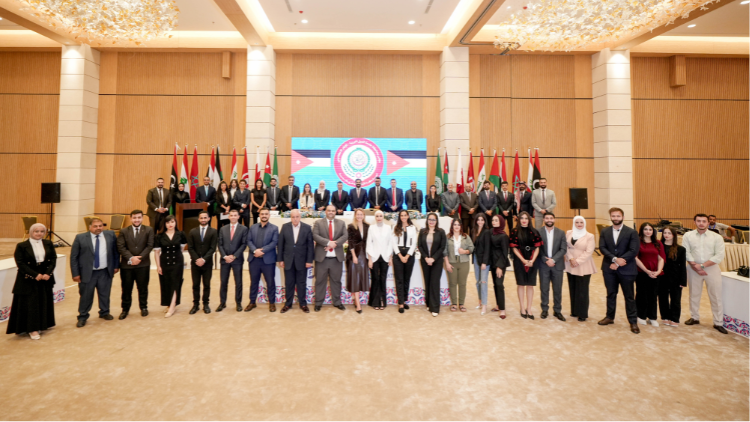
For the first time in Jordan, the Simulation of the Arab League “MENA LEAGUE” took place in Amman from 9–13 September, bringing together young political activists from across the region. Organised by the Friedrich Naumann Foundation for Freedom (FNF) in collaboration with the Operations Training Center (OTC), the initiative aimed to provide participants with an authentic experience of regional diplomacy, negotiation skills, and policymaking within the structures of the Arab League.
Over five days, around 26 participants from different Arab countries stepped into the roles of diplomats, engaging in debates, drafting resolutions, and negotiating policies. The event combined training on speechwriting, diplomacy, and media engagement with the practical experience of multilateral negotiations.

Conducting such simulations is crucial because it helps young leaders understand the complexities of international relations, the dynamics of consensus-building, and the weight of political responsibility. By practicing these processes in a safe but realistic environment, participants not only sharpen their leadership skills but also prepare themselves for future roles in shaping regional policies. Exercises like these are critical in fostering a new generation of leaders who are capable of addressing regional challenges with creativity, openness, and responsibility.
Isabel Kreifels, Regional Project Manager at FNF MENA, stresses that the simulation is valuable because it offers young talents from across the region the unique opportunity to engage in a real experiment. “By stepping into the roles of decision-makers, they gain first-hand experience of political processes, develop essential negotiation and communication skills, and discover how regional cooperation can be shaped in practice.” Her colleague, Yasmeen Alnajdawi added “This kind of immersive learning empowers the next generation of leaders to better understand complex dynamics and to actively contribute to the future of the region”.

For Mohamed Dhaoui from Tunisia, the experience was equally transformative:
Taking part in this FNF simulation has been an invaluable experience, offering profound insight into the processes and structures of the Arab League. With this knowledge, my goal is to return to Tunisia, raise awareness, and act as an ambassador of the project to inspire others.”

“This simulation changed the way I see politics in the region,” Elma Chaaya expressed, who is a member of the National Bloc in Lebanon. “This model has left a deep impact on my political work in my home country, Lebanon. I’m glad I can represent Lebanon here this week, and understand the complexities of the country’s goals and expectations in the context of the Arab League. In the future, I hope we can make a true difference in the real Arab League through this experience.”

Sara Kareem from Iraq emphasised the personal impact:
“This was not just about debating policies, it was about learning to listen, compromise, and find common ground – even during difficult circumstances. These are skills I will use every day, not only in politics but in life.”
The simulation closed with a certificate ceremony attended by senior officials and representatives of the Jordanian Parliament. Many participants highlighted that beyond the formal sessions, the most valuable outcome was the network they built with peers from across the Arab nations.
FNF MENA announced that this first edition of the MENA LEAGUE marks the beginning of a long-term effort to strengthen critical thinking and regional dialogue through future regional simulations.