Coalitions
Inside South Africa’s Democratic Alliance, its democratic rise and lessons for Kenya

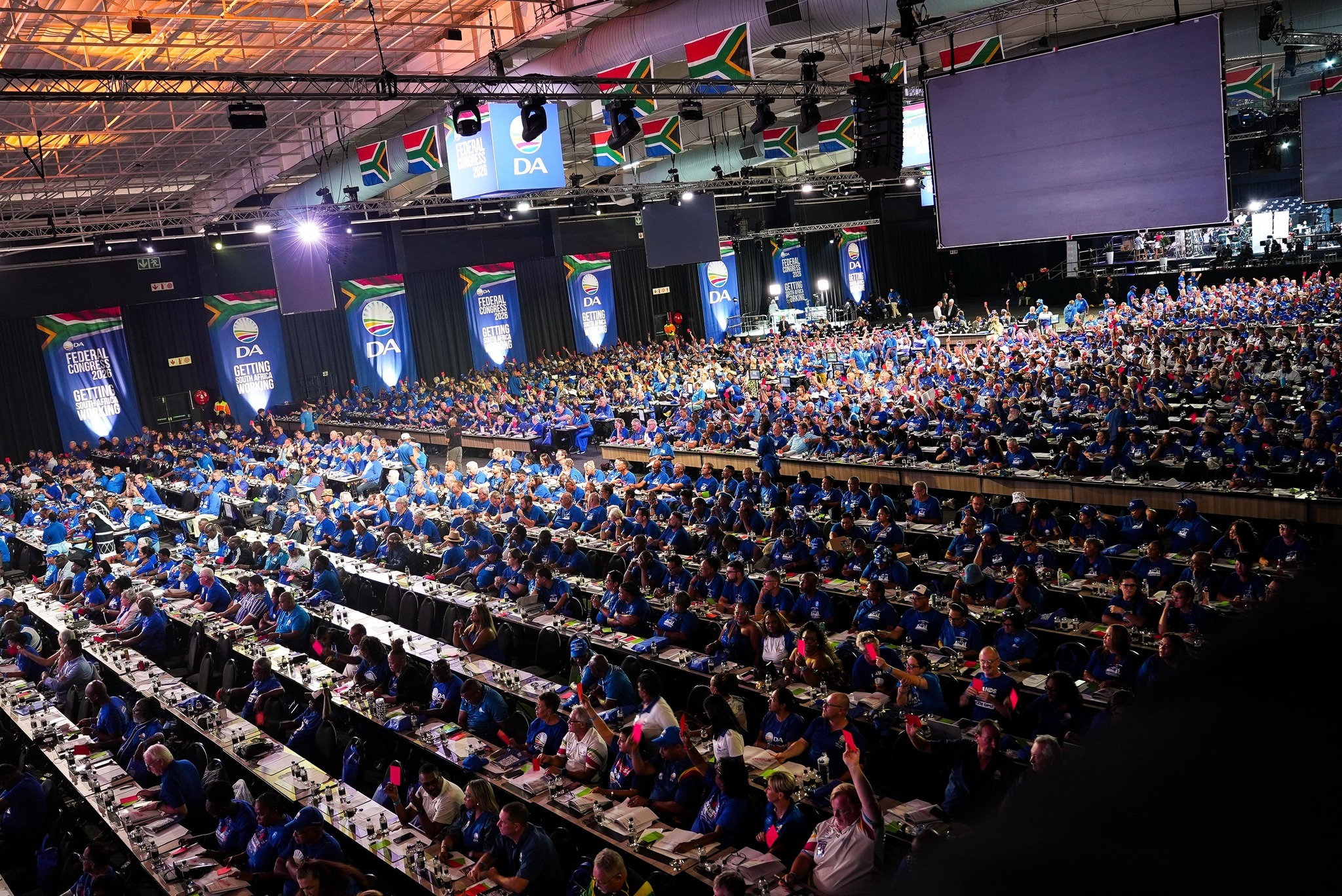
The liberal "blue machine", officially known as the Democratic Alliance gather for their elective Congress in Johannesburg on 11-12 April 2026.
© Democratic Alliance / FacebookLearning from a democratic crossroads
At a time when democracy around the world is under pressure, the need to learn from one another has never been more urgent. That is what brought political actors from Kenya, Germany and Ghana to South Africa for a week-long exchange organised by the Friedrich Naumann Foundation for Freedom, alongside the federal congress of the Democratic Alliance in Johannesburg. From Kenya, representatives of the Orange Democratic Movement and the People’s Liberation Party joined the delegation, bringing real questions about coalition politics, party organisation and how to sustain democratic credibility. South Africa’s current political moment offered a timely case study. With the emergence of the Government of National Unity, parties such as the DA are navigating a delicate balance: participating in government while holding on to a clear ideological identity. For Kenyan participants, this felt familiar. The Orange Democratic Movement under Raila Odinga has also been navigating a nuanced space, where some members have taken up roles in government as technical experts without the party formally joining the ruling coalition.
This raised a central question: how do political parties engage in governance without losing public trust or political identity?
What strong institutions look like in practice
Inside the DA’s Federal Congress, one thing stood out immediately order. With over 2,000 delegates, the process was structured, calm and disciplined. There were no theatrics or hostility, just clear rules, competitive leadership elections and focused political messaging. It was a strong example of how internal systems shape not only party stability, but also public confidence. That lesson extended beyond party structures during a visit to Parliament in Cape Town. Guided by a DA Member of Parliament, the delegation observed not just how the institution works, but how it is trusted. In South Africa, Parliament still commands a level of public confidence that is increasingly fragile in many democracies, including Kenya. The difference is visible in how Members of Parliament engage, how institutions assert their role, and how seriously accountability is taken. For the Kenyan delegation, this was a reminder that rebuilding trust in democratic institutions is as important as winning political office.

An international delegation from Europe and Africa at Parliament in Cape Town on the sidelines of the Democratic Alliance elective congress in April 2026.
© Friedrich Naumann Foundation for Freedom
An international delegation from Europe and Africa at Constitution Hill in Johannesburg on the sidelines of the Democratic Alliance elective congress in April 2026.
© Friedrich Naumann Foundation for Freedom
Delegates from Kenya, including PLP leader Martha Karua, together with FNF regional director Inge Herbert in Cape Town on the sidelines of the Democratic Alliance elective congress in April 2026.
© Friedrich Naumann Foundation for Freedom
PLP leader Martha Karua features in a panel discussion at the FNF Africa office in Johannesburg on the sidelines of the Democratic Alliance elective congress in April 2026.
© Friedrich Naumann Foundation for FreedomBeyond politics, the work of making democracy deliver
In Cape Town, governed by the DA in the Western Cape, the focus shifted from politics to delivery. Engagements with provincial leadership at Leeuwenhof highlighted a governance approach built on planning, consistency and results. What stood out was the direct link between political messaging and implementation. From infrastructure to tourism, each element feeds into a broader strategy. Even landmarks such as Table Mountain are managed as part of an economic ecosystem that generates value for the public. The broader takeaway was clear: democracy cannot rely on personalities alone. It depends on institutions that function, parties that are organised, and leadership that is accountable. For the Kenyan delegation, the study tour was more than an exchange. It was a moment of reflection and recalibration. As democracies continue to evolve, the real test is not simply participation in power, but the ability to build systems that earn and sustain public trust.