United Nations
Founding of the United Nations
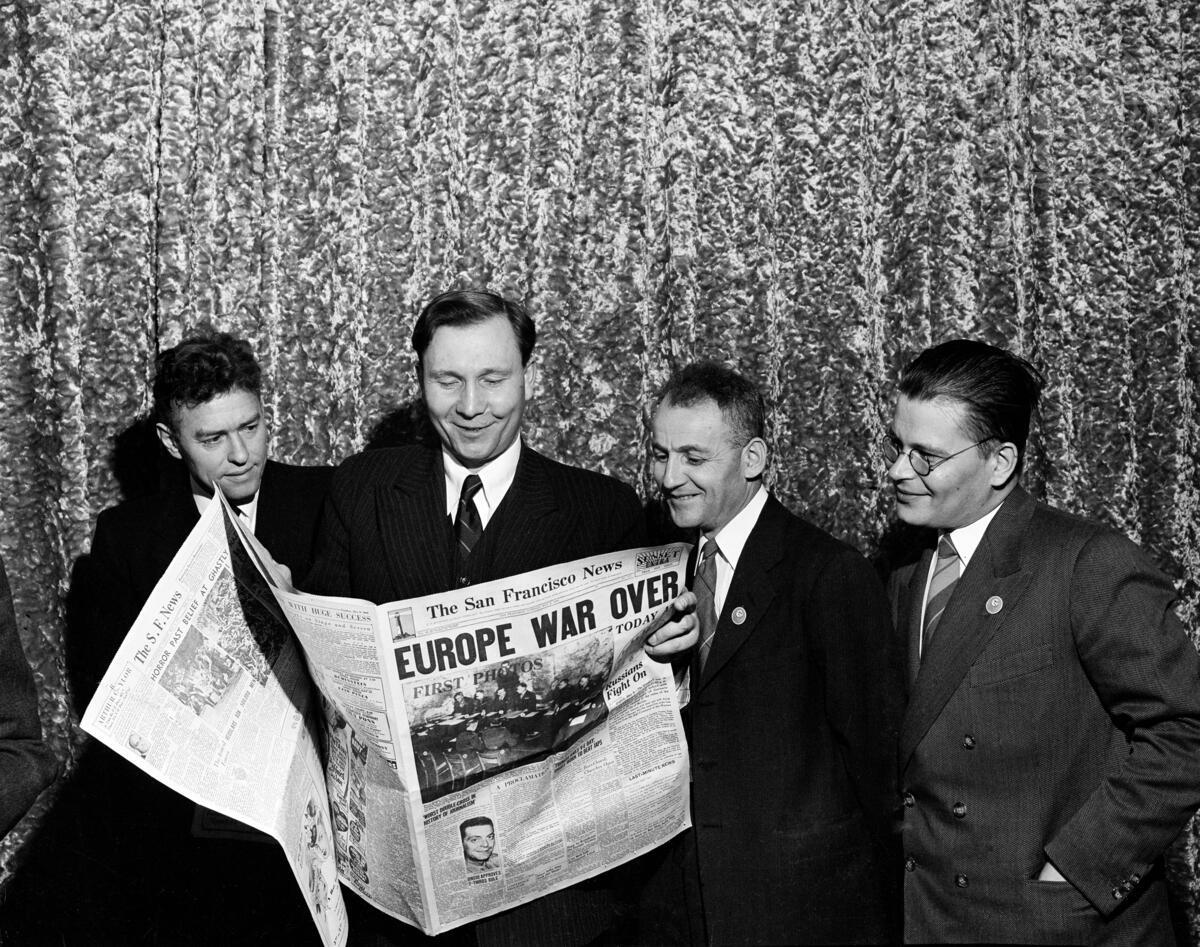
On October 24, 1945, the United Nations was officially founded following the ratification of the UN Charter by 29 nations, including the five permanent Security Council members. This stands as a watershed moment in 20th-century history, representing the world’s collective response to the devastation of World War II. The UN was conceived as an international organization dedicated to preventing future conflicts, promoting peace, and fostering cooperation among nations.
The San Francisco Conference: A Pivotal Moment in Global Diplomacy
The UN’s foundational document, the UN Charter, was drafted and adopted at the San Francisco Conference, which took place from April 25 to June 26, 1945. The conference was the largest international gathering of its time, bringing together 850 delegates from 50 nations. These nations were primarily Allied powers that had fought against the Axis powers in World War II. The conference was dominated by the “Big Four”: the United States, the Soviet Union, the United Kingdom, and China. These countries had already laid the groundwork for the Charter in preliminary negotiations such as the Yalta Conference in February 1945. Other important precursors had been the Atlantic Charter (1941), the Declaration by the United Nations (1942), and the Dumbarton Oaks Conference (1944). The aggressor states Germany, Italy, and Japan were excluded from the conference.
The conference was structured into four main commissions, each responsible for a different aspect of the charter: the General Assembly, the Security Council, the International Court of Justice, and the Secretariat. The foreign ministers of the Big Four took turns chairing the plenary sessions, reflecting their outsized influence. The atmosphere was a mix of optimism and tension. Delegates were acutely aware of the recent horrors of the war and the urgent need to forge a lasting peace. Yet they grappled with competing national interests and ideological differences.
Common Principles Amidst Deep Divisions
Despite their profound differences, the participating nations succeeded in establishing a set of core principles that would define the United Nations’ mission and structure at the San Francisco Conference. These principles emphasized multilateralism as the fundamental prerequisite for lasting global peace.
Peace and Renunciation of Force:
The Charter explicitly prohibits the use of force by member states except in cases of self-defense or collective security actions authorized by the Security Council. This was a direct response to the unchecked aggression that had led to World War II.
Sovereign Equality:
This principle was established to ensure, that every member state, regardless of size or power, would have an equal vote in the General Assembly. Smaller nations insisted on this principle as a way to ensure their sovereign equivalence to larger powers, particularly in peacekeeping decisions.
Human Rights and Fundamental Freedoms:
The Charter emphasizes the importance of human rights and the protection of fundamental freedoms as cornerstones of international peace and security. It commits all member states to promote “respect for human rights and for fundamental freedoms for all without distinction as to race, sex, language, or religion”.
The Shadow of the Cold War
The UN was born into a world that was already dividing into rival blocs. This limited its effectiveness but also made its existence more critical than ever. This shows even more, how much of a diplomatic masterpiece the successful establishment of such a global peacekeeping organization was.
By the time the Charter was ratified, relations between the Western Allies and the USSR had already begun to deteriorate. Disputes over Eastern Europe and Germany’s future, as well as ideological differences, created deep divisions. This became apparent in negotiations through intense debate and compromise. For instance, the veto power granted to the five permanent members of the Security Council (the U.S., USSR, UK, France, and China) was a contentious but necessary trade-off to secure the great powers’ support. The Security Council’s structure, consisting of five permanent and six rotating members, reflected both the realities of power politics and the desire for broader representation.
The first major test of UN unity, the Iran crisis of 1946, exposed these divisions, foreshadowing the paralysis of the Security Council during the Cold War. Despite these challenges, the shared fear of another world war compelled cooperation, and the UN continued to play a crucial role in promoting peace.
The Role of smaller States: Challenging the Great Powers
Although the main Allies of World War II dominated the San Francisco Conference, smaller states played a significant role in shaping the UN Charter. Countries from Latin America, the Philippines, and smaller European states pushed back against the great powers’ dominance, advocating for greater representation and safeguards against domination by them.
For example, smaller states succeeded in including provisions such as Article 2(7) of the Charter, which limited UN intervention in domestic affairs, and the expansion of the Economic and Social Council (ECOSOC) as one of the UN’s main bodies to address global inequality. These measures institutionalized a voice for smaller nations in ways that the League of Nations had not, reflecting a more inclusive approach to global governance.
From the Founding Charter to Reality: The UN’s First Months
The UN Charter was adopted unanimously on June 25, 1945, and opened for signature the following day. China was the first to sign, followed by the USSR, the United Kingdom, France, and the United States. In July 1945 the U.S. Senate ratified the Charter by a vote of 89 to two. By October 24, 1945, enough nations had ratified the Charter to officially bring the United Nations into existence.
In 1947, the General Assembly formally recognized October 24 as United Nations Day, and in 1971 it was declared an official international holiday. The UN’s early months were marked by symbolic and practical steps to establish its operations. These steps included selecting New York as the organization’s headquarters and the appointment of Trygve Lie as the first Secretary-General.
The UN faced immediate challenges, such as the urgent need to address postwar reconstruction and refugee crises. These early experiences set the stage for the evolving role of the UN in global affairs. The UN Charter and its history remain a testament to the possibility of international cooperation, even in an era of deep division. As the world continues to face complex challenges, the lessons of the San Francisco Conference and the UN’s early years offer valuable insights into the ongoing struggle for peace and justice.
Author
Henrike Claussen, historian and freelance cultural consultant with a focus on democracy education.