Human Rights
International Day for the Elimination of Violence Against Women

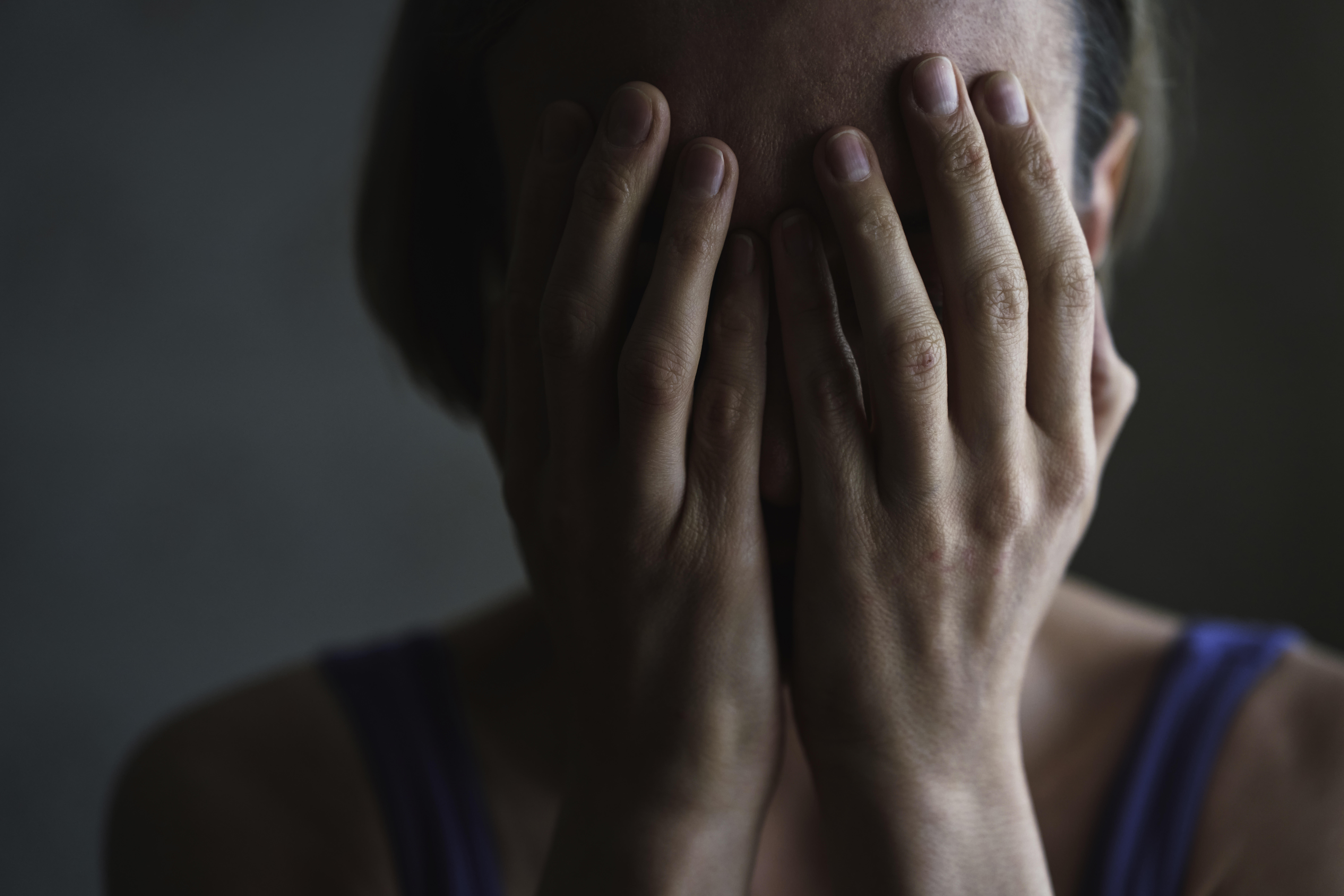
Gewalt gegen Frauen entsteht aus Machtstrukturen, falschen Männlichkeitsbildern und Schweigen.
© picture alliance / Westend61 | Arman ZhenikeyevClear rules against violence against women exist in Germany. But in reality, violence against women often occurs without explicit evidence in a complex field of tension between relationship dynamics and male-dominated power structures, which makes it difficult for constitutional institutions to distinguish right from wrong. We need to talk about how women are left alone or, in extreme cases, go from being victims to being accused—and what a liberal society must do about it.
“Help, help, please,” echoes through the night. She screams as loud as she can, her lungs ache, her heart races, her hands sweat. The blow with the fist was so violent that her jaw vibrates. Somehow she managed to break free and flee the apartment where she had lived with her partner for years. After a few minutes, police sirens sound and five burly police officers appear at the door, their boots thudding dully on the floor with every step. She falls into their arms like a small child. Help at last, she thinks as she gets into the police car in her slippers. She is injured and bleeding from the face. She is offered a painkiller, which she refuses; she does not feel the pain because of the adrenaline. During the drive, the police officer in the passenger seat mumbles something, the words rushing past her like the lights of the street lamps.
At the police station, the paperwork is quickly taken care of; she signs everything she is handed. Her cell phone and watch disappear into a transparent plastic bag. The police officers tell her that she has to stay. She explains that she has to go home; dinner is still on the stove. The men in black uniforms do not allow it; that is not possible, they say and laugh. She has to wait. Her lawyer will be here soon. She is confused, agitated, and at the same time paralyzed, a thousand thoughts racing through her head, but she understands neither what she is thinking nor what is happening. She sinks to her knees and claps her hands over her face, tears dripping down her chin, she is cold. A woman comes in and tells her to undress, then she is frisked all over her body. Afterwards, a guard leads her through a bare hallway into a dark room. Behind her, a heavy door slams shut and the key turns. She can hardly see anything in the pale light that falls from the neon light on the ceiling into the windowless cell. She hears people screaming, but she cannot see anyone, only a small mat lying on the concrete floor in front of the bars. She feels the urge to go to the toilet and is thirsty too. She presses a small bell in the room once, twice, three times, but no one comes. Eventually, a guard strolls past and reassures her that they are just following protocol. He leads her to the toilet, the walls are only half-height, she feels ashamed. She is allowed to wash her hands before being locked back in the cell.
When they come to get her, she has lost her sense of time and space. She does not know whether it is day or night, whether she has been in the cell for hours, weeks, or months. She was simply gone, as if she no longer existed. Two men lead her to a chair, where she has to have her photo taken in the glaring light of the spotlights: from the front and from the side in profile, a number plate is pressed against her chest, “keep still please.” “I did not do anything,” she pleads quietly as one of the men presses her fingers into black paste and rolls them on the paper. Outside, the lawyer is waiting, tapping her foot nervously; she does not really have time. The lawyer asks if a restraining order should be requested, but she does not want to sign anything anymore. A police officer informs her that she is now free to go and pushes a stack of documents through the Plexiglas window. With the file under her arm, she is shown the door. She stands on the street and stares into the empty space. She no longer knows her name or who she is. She wanders through the streets of the city until it gets dark.
In the months that follow, she loses 20 kg and goes through phases of complete powerlessness. She cannot seem to do anything right anymore and cannot get back to her normal everyday life. She writes to a friend:
"Since the attack, my life has been a hellish roller coaster ride that I have lost control of: I do not go to work, I no longer feel safe in my home, I sleep on friends' couches. I cannot sleep, I cannot eat, I throw up. I cannot do normal things like watch TV, sit still, or ride the subway. I start cooking, but shortly afterwards I forget what I was doing and the food burns. I am frightened by my silhouette reflected in the window. Every police siren, every loud noise makes me flinch. I can no longer walk down the street without nervously looking around to see if someone is following me. I panic when I see someone who looks like him or has a similar hairstyle. My hands are shaking, I feel hot and cold, my breath is short. My body does not obey me, my thoughts and nightmares consume me; they replay flashbacks of the events in endless loops. Now I understand what it means to be truly afraid."
This report from a victim represents a pattern experienced by many victims of gender-based violence: the moment the woman wants to break up with her boyfriend, he beats her up. When the police arrive at the scene, he portrays the shocked, speechless victim as the aggressor. His version of events is included in the police report, the public prosecutor's office initiates proceedings against her and demands a year in prison. In a trial through all instances, she proves her innocence; he is convicted of domestic violence. The crime hits her life like a bomb: as the defendant in a criminal case, she finds little help from government agencies in the period leading up to the verdict, she can no longer enter her home, and she is at the mercy of her perpetrator in her place of residence. She is angry about the double injustice she has experienced at the hands of the perpetrator and the prosecution, but her lawyers advise her not to show her rage: a female victim should appear frightened, not angry, in court. The trial lasts over two years, during which the perpetrator repeatedly appeals, keeping the victim psychologically tied to the trial and trapped in trauma—a typical perpetrator behavior when control over the ex-partner is prolonged by legal means.
The crux of the matter: perpetrator-victim reversal and secondary victimization
The perpetrator transferred responsibility for the violence to his victim—a classic case of victim blaming, followed by “secondary victimization” by the institutions: The state intervenes, but instead of receiving support and help, the victim is charged and accused—the experience of violence is followed by retraumatizing institutional violence by the law enforcement authorities. Violence against women, and domestic violence in particular, usually takes place behind closed doors, without witnesses. The justice system finds it difficult to assess cases in the gray area correctly when it encounters shock reactions, memory gaps, and behavior that does not correspond to common victim stereotypes. “In dubio pro reo” (when in doubt, for the defendant) is a valuable principle of the rule of law, and the wheels of justice turn slowly. In the gap during the grueling investigation period, affected women are left in legal limbo and are practically outlaws – threatened by the perpetrator and unprotected by the institutions. These women rely on the unwavering support of female networks as shelters are overcrowded in many places, restraining orders are not enforced, and victim protection is underfunded and overwhelmed. Victim protection agencies repeatedly report how women are not believed or
are given insufficient help. There are no exact figures on this, but the issue is so relevant that the German Federal Criminal Police Office has commissioned studies on expectations of the police and the judiciary and has launched training courses.
The police play a crucial role as the first responders at the scene of the crime. Whether a woman receives help should not depend on the intuition of a single officer. Spain, the much-praised model country for women's rights in Europe, has a national prevention program called “VioGén” that aims to facilitate consistent action against violence against women with a standardized set of measures—yet women still fall through the cracks when the police mark the risk as low on the questionnaire. When statements contradict each other, the quick response is: “You can also see it differently; it takes two to argue.” But gender-based violence must be named as such, without relativization or room for interpretation. Only then can it be made visible and punished. Violence must not be tolerated because it destroys the foundation of a person: trust in oneself and others. Suddenly, the world is no longer safe. In everyday life, the experience of violence eats away at the body, mind, and relationships. The traumatic experiences continue unabated while normal life falls apart.
Coercive control and the boiling frog
Many women do not initially realize that they are stuck in an abusive relationship. Violence rarely begins with a blow; it begins subtly. This phenomenon is often referred to as the “boiling frog” syndrome—the perpetrators increase the dose of coercive control so gradually that the victims, like a frog in increasingly hot water, do not realize that they are in danger. Psychological violence in the form of gaslighting (“You're imagining things,” “You're not normal”), threats, humiliation, jealousy, belittlement, withdrawal of money, and isolation do the rest to destabilize the victim's perception. The psychology of abuse and trauma reactions exacerbate the perpetrator's influence because an automatic protective reflex kicks in in the brains of victims of violence: in order to make the situations bearable, dissociation, trivialization, and a distorted view of the painful reality set in. The partner is the man she trusts, who apologizes and brings flowers because he destroyed the kitchen window. He cries and promises to change, saying he also had a difficult childhood. In short, the woman can no longer see the forest for the trees—and she cannot see the violence either. Fear, dependence, ambivalence, emotional attachment, and systematic control form a complex web from which only a few can free themselves with great effort and financial resources. In addition, the perpetrator is often deeply convinced of his own point of view. He believes she provoked him and is exaggerating, that she is hysterical, unstable, or crazy. Even those around them or professional helpers often fail to recognize such dynamics for a long time; the physical and therefore visible violence sometimes only becomes apparent at the end of the spiral.
Now, some outsiders may ask: Why doesn't she just leave? Because it is extremely dangerous. Statistically speaking, the most dangerous person in a woman's life is her intimate ex-partner, and the most dangerous moment is the breakup. Most femicides occur when the woman leaves the perpetrator and the house of cards of control collapses.
Why do men beat?
Some men beat because they can and are usually physically superior. Opportunity makes a bully – if the perpetrator has not learned to deal with anger, hurt, or unpleasant feelings and to communicate non-violently. But women are just as capable of violence. Violence is not a gene linked to a particular gender, origin, skin color, or milieu, but a consequence of dependencies and a socialization that rewards and practices dominance and aggression across all social classes. Violence against women arises primarily from power structures and misguided images of masculinity.
Toxic images of masculinity and politics
At the same time, “strong men” are currently making a comeback worldwide, both in the West and in the East: political leaders who propagate the power of the strongest and traditional role models – and thus embody those notions of masculinity in which control and violence are considered legitimate means of asserting their interests. In the US, Donald Trump boasts of a ruthless deportation policy and curtails abortion rights. In Russia, Putin is waging war against Ukraine and annexing territories in violation of international law; meanwhile, laws against domestic violence are being repealed in the Duma under the banner of “traditional values,” NGOs are being harassed, and international human rights standards are being openly rejected. A Russian saying states, “He loves her, so he beats her.” When misogynistic attitudes, authoritarian politics, and nationalism come together, the result is a toxic mixture: power remains unchecked, criticism is suppressed, violence spreads in both the private and political spheres, and society becomes brutalized.
In Europe, the new right is conjuring up an ultra-conservative image of the family and giving the impression that feminism has gone too far and that it is high time to roll back women's rights. Such efforts distort the real facts: women continue to be structurally disadvantaged, paid less, hold fewer political offices, and, particularly alarmingly, less than every four minutes a woman in Germany experiences violence. According to Eurostat/EU GBV data, approximately one in three women in Europe experiences physical and/or sexual violence in the course of her life—that is millions of women. The figures are only the tip of the iceberg; it is estimated, for example, that over 90% of cases of domestic violence are never reported.
Violence against women is not a private problem, but a structural issue for society and the rule of law.
All this shows that violence against women is not a marginal phenomenon or a private “relationship drama,” but a challenge for society as a whole. “Abuse thrives in silence,” says American Leslie Morgan Steiner in her famous TED Talk, and she does not only refer to the silence caused by shame, fear, and dependence on the part of those affected. We must be allowed to talk about perpetrators, victims, and also about the fact that the state, the judiciary, and the police are part of society, make mistakes, and—like all of us—must learn to look where it hurts. Removing taboos, raising awareness, and empowering people to deal with violence against women are the basis for recognizing and preventing violence. Gender-sensitive data collection and statistics, training, clear protocols for intervention, closer cross-border cooperation, faster procedures, low-threshold access to legal advice and psychosocial support, an expansion of shelters, and further development of criminal law in line with European standards such as the Istanbul Convention and the EU directives on protection against violence are some of the measures that can be taken to better protect those affected.
Germany has achieved a great progress for women. Given the political climate, we as a liberal society are called upon to strengthen our democracy, because the rule of law, freedom of the press, and a strong civil society are the best protection against violence in any form. Being able to live without fear and violence is a question of freedom that affects us all. Every person, whether man or woman, should be able to say: I am heard, my rights are protected, and I can make my own decisions about my life. I am free.