Blue Economy
Rethinking Tunisia’s Blue Economy: Governance, Climate, and Accountability at the Coastline

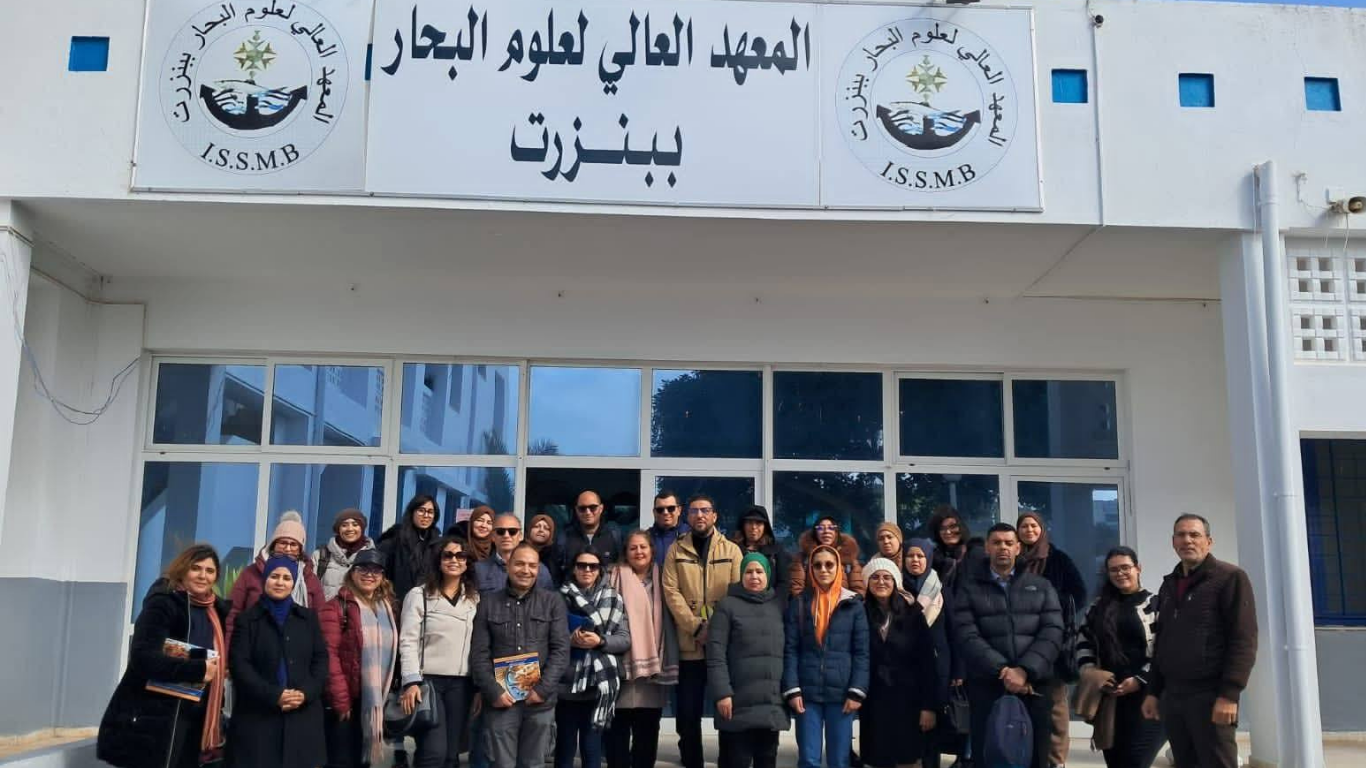
As part of its commitment to promoting sustainable development and informed public debate, FNF Tunisia participated in a training workshop on the Blue Economy organized by our strategic partner African Center for the Advancement of Journalists and Communicators.
The workshop provided an in-depth exploration of the key pillars of the blue economy, beginning with its main sectors: fisheries and aquaculture, ports and maritime transport, coastal and marine tourism, renewable marine energy, and related industries. Discussions highlighted how these sectors contribute to wealth creation and employment while requiring sustainable management to ensure long-term resilience.
A significant focus was placed on the relationship between the sea and climate change, including sea level rise, coastal erosion, and biodiversity loss. Participants examined the environmental pressures affecting Tunisia’s coastline and the urgent need for adaptive and preventive strategies.
The sessions also addressed governance and public policy frameworks, analyzing the legal environment, the roles of public institutions, municipalities, and civil society, and the importance of coordinated action in coastal management.
Another core component of the training centered on journalism and the blue economy. Participants explored how to simplify complex concepts for the public, interpret data and indicators accurately, and avoid common reporting errors. The workshop further strengthened investigative skills related to environmental issues such as overfishing, resource depletion, pollution, conflicts of interest, and accountability mechanisms.
Special attention was given to reliable sources of information, including official data, expert and academic reports, local stakeholders, open data platforms, and satellite imagery as tools for monitoring environmental changes.
The program also included a field visit to the coast of Bizerte and its sand dunes, organized in collaboration with the Higher Institute of Marine Sciences of Bizerte (ISSMB) and our partner TunSea Association. This field component reinforced the link between theory and practice and illustrated the importance of joining efforts with partners who share common values in advancing sustainable marine governance. It provided a concrete understanding of coastal realities and strengthened our collective commitment to protecting marine resources and fostering a resilient and sustainable blue economy.