Migration
Migration Management in Tunisia: Challenges and Opportunities

Migration has become one of the defining issues in the relationship between Tunisia and the European Union. It is at once an economic lifeline for many families, a political flashpoint for governments, and a human story of ambition, resilience, and risk.
While Tunisians have migrated to Europe for decades, recent years have seen a sharp rise in irregular crossings, particularly towards Italy. This increase is driven by a complex mix of factors from Tunisia’s deepening economic crisis and high unemployment to political instability and limited prospects for youth. These push factors are compounded by the pull of better opportunities abroad, stronger Tunisian diasporas in Europe, and the ease of communication through social media.
The Economic and Political Context in Tunisia
Tunisia’s economy has struggled in the wake of the COVID-19 pandemic, compounded by global inflation, reduced investment, and mounting public debt. For young people especially university graduates job opportunities are scarce. Regional disparities also mean that inland and southern areas have fewer economic prospects, pushing many to consider migration as the most viable option for a better life.
At the political level, the July 25, 2021 measures have reshaped Tunisia’s governance, centralising power and reducing parliamentary checks. This shift has created uncertainty among citizens and international partners alike, affecting both domestic confidence and foreign cooperation. In such a climate, migration is often perceived as an escape from both economic and political stagnation.
EU–Tunisia Migration Cooperation
The European Union has long been a key partner for Tunisia in managing migration. Agreements and funding have largely focused on two areas:
- Border control and security measures, including the interception of boats and the return of migrants.
- Support for migration governance, through training, equipment, and institutional strengthening.
While these measures aim to reduce irregular migration, they have been criticised for prioritising security over development and human rights. Many civil society actors argue that cooperation should also address the root causes of migration and expand safe, legal pathways for mobility.
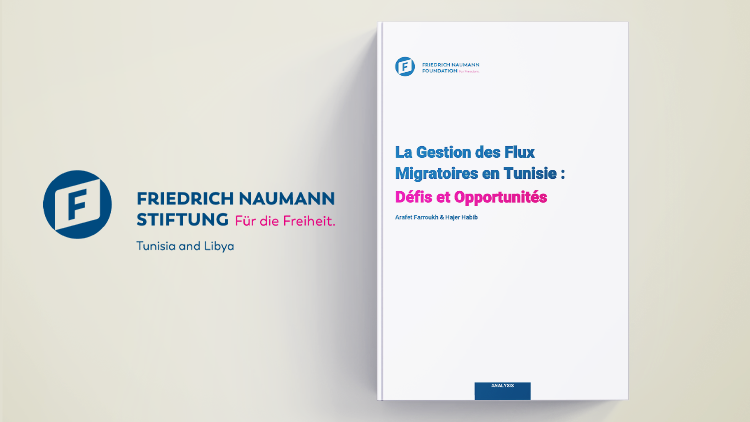
Findings from the Policy Paper
Our new policy paper argues that current approaches are too short-term and crisis-driven. It recommends shifting towards a comprehensive strategy that:
- Expands legal migration channels including work, study, and training opportunities for Tunisians in Europe, in line with labour market needs.
- Balances border management with rights protection ensuring that anti-smuggling operations respect international obligations towards migrants and asylum seekers.
- Invests in economic resilience targeting job creation, skills development, and regional equality to reduce migration pressure.
- Reforms bilateral agreements moving from a narrow focus on containment to a balanced partnership that recognises migration as a shared opportunity.
Expert Insight
Speaking on Express FM, economist Pr. Arafet Farroukh emphasised that “migration policy must be rooted in the socio-economic realities of Tunisia. Without tackling unemployment, inequality, and governance challenges, border measures alone will fail to deliver sustainable results.” His remarks underscore the paper’s call for integrated solutions that connect migration governance with economic reform.
Looking Forward
Migration will remain a central issue in Tunisia–EU relations for years to come. A shift towards balanced, development-oriented cooperation could turn migration from a source of tension into a driver of shared growth. The policy paper outlines actionable steps for both Tunisian and European policymakers to move in this direction.
-
French Version Here