Thailand
Selective Amnesty: Pheu Thai’s Bid for Reconciliation

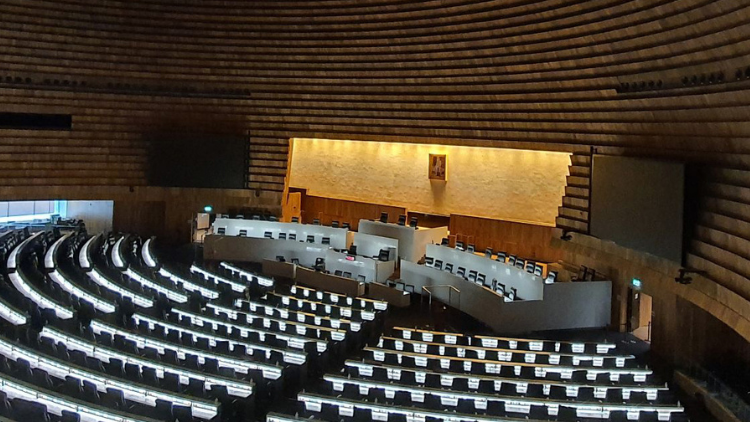
Thailand's Parliament
© 2017 The Secretariat of the House of Representatives.Thailand’s government led by the Pheu Thai Party is going through tumultuous times. With Prime Minister Paetongtarn Shinawatra suspended, the flagship legalization of casinos dropped and the Bhumjaithai Party, formerly the coalition’s second biggest member, now in the opposition, the current push for an amnesty bill comes at a strategically sensitive moment.
After two decades of confrontation between the conservative establishment and successive waves of prodemocracy protesters since the 2006 coup, there have been more than 5,000 prosecutions relating to political protests and expression, including at least 281 cases under the lèse‑majesté provision of the Criminal Code (Article 112). Charges have ranged from sedition, to minor offences such as using loudspeakers without permission.
This is not Pheu Thai’s first attempt at societal reconciliation through amnesty. In 2013, a Pheu Thai government led by Yingluck Shinawatra, Paetongtarn’s aunt, proposed an amnesty bill. At the time, political polarisation was rampant, with the red shirts and the yellow shirts facing off. The bill began as a narrowly defined pardon for demonstrators on all sides. Yet, a last‑minute committee rewrite expanded it into a “blanket” measure that would also have wiped out corruption charges against former prime minister Thaksin Shinawatra and murder indictments arising from the 2010 Ratchaprasong crackdown. The People’s Democratic Reform Committee and the opposition Democrat Party seized the moment, accusing Pheu Thai of “whitewashing”. Mass protests paralysed Bangkok and set the stage for the 2014 military coup, which installed the National Council for Peace and Order under General Prayut and delayed a return to elected government until 2019.
Twelve years later, amnesty is back on the agenda. On 16 July 2025, the House of Representatives put five separate draft bills to the vote. Two almost identical “Promote Peaceful Society” bills, sponsored by the conservative United Thai Nation Party and the Kla Tham Party, offered pardons for protest‑related actions going back to 2005 but explicitly excluded Article 112. A third “Social Harmony” bill from Bhumjaithai Party copied the same exclusions yet went further by embedding the ban on lèse‑majesté amnesty in the bill’s statement of principles, a procedural move that would make any later reversal extremely difficult.
In contrast, the People’s Amnesty Bill – initiated by civil society and backed by more than 36,700 signatures – proposed comprehensive amnesty for all peaceful political expression, including 112 cases, while expressly denying relief to coup leaders or state officials who committed serious human‑rights abuses. The opposition People’s Party advanced a hybrid draft: it would establish a parliamentary committee to review each case individually, allowing lèse‑majesté convictions to be considered but not guaranteed.
Bhumjaithai’s manoeuvre came at a delicate moment in coalition politics. The ruling Pheu Thai Party was still negotiating over an interim prime minister after the Constitutional Court suspended Paetongtarn Shinawatra, and did not declare its position on any draft until the floor debate. Bhumjaithai party members argued that pardoning Article 112 would “spark new unrest,” even as their own bill would shield participants in past coups by amnestying insurrection charges.
The first‑reading vote on 16 July 2025 significantly narrowed the scope of possible amnesty legislation. The United Thai Nation “Promote Peaceful Society” bill passed with 299 votes in favour and 171 abstentions; Kla Tham’s version drew 312 votes with 158 abstentions; and Bhumjaithai’s secured a similar margin of 311 votes in favour to 147 abstentions and 3 votes against. By contrast, the inclusive People’s Party draft received only 147 votes in favour to 319 against, and the People’s Amnesty Bill attracted just 149 votes in favour, 306 votes against and 20 abstentions as well as heavy resistance from government‑aligned MPs. Pheu Thai’s stance was clear: only six of its lawmakers backed the two broader drafts, while the rest joined coalition partners to advance all three restrictive bills.
The surviving three drafts now move to a 32‑member committee that must merge them into a single text. Because Bhumjaithai’s bill locks the exclusion of lèse‑majesté into its core principles, committee members cannot restore Article 112 amnesty without sending the issue back to the full House for a fresh vote – an outcome that looks improbable given the numbers from the first reading. Thailand appears headed for an amnesty that would lift legal burdens from many conservative protest leaders, but not from hundreds of prodemocracy activists, especially those accused of royal defamation. For Pheu Thai, once emblematic of reform, the episode is a stark reminder that the party now prioritises coalition stability over its former reformist image – a choice that aligns it with forces that once helped remove it from power.
*Kwin Veeravanichpattana is a Political Philosophy student at Thammasat University. He is currently doing an internship at the Friedrich Naumann Foundation for Freedom, Thailand Office.