Trade Inequality
Morocco's free trade era: Are smallholder farmers missing out?

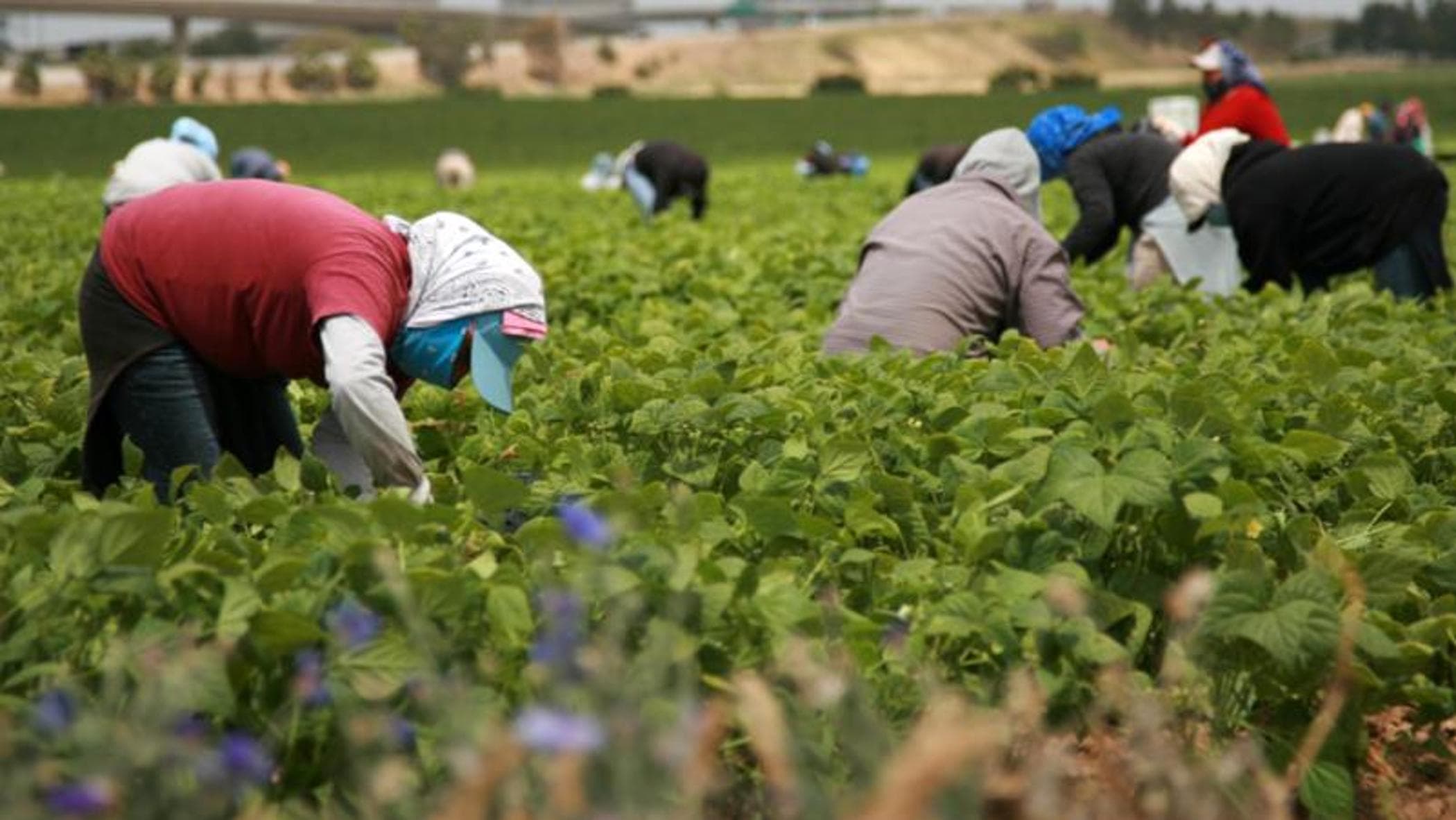
Ascending from endless space and warmly embracing the soil beneath, the sun casts golden light on Morocco’s southern plains. Lalla Fadma’s hands move swiftly through rows of tomato plants near Agadir. In just two days, her harvest will arrive in Parisian supermarkets, a testament to Morocco’s export ambition. But at home, her family shares bread for dinner. "We grow Europe’s fruits," she says with a faint smile, "but sometimes there’s no side for our tea.
In the arsenal of nations seeking to enhance their trade, investment, and economic interests on the global stage (Bayne &Woolcock, 2016; Van Bergeijk, 2014; Côté et al., 2020), Morocco’s ambitious free trade policy with Europe is no exception. Morocco’s position has been a pivotal one in its quality of a bridging cornerstone between Europe and Africa. Its economic landscape has been fundamentally reshaped by three decades of trade liberalization - primarily with its economically powerful European partners. What began in the 1990s as a cautious opening has evolved into a strategic embrace of Free Trade Agreements (FTAs). Today, with over 54 FTAs spanning Europe, Africa, and the Americas, the latters became a direct catalyst for foreign investment and industrial modernization. Yet this openness remains a double-edged sword: while urban industrial zones thrive, rural communities often face economic exclusion.
A STORY OF UNEVEN SUCCESS…
Morocco’s FTA journey began with the 2000 EU Association Agreement. Moroccan policymakers labelled trade liberalization as the golden key to the doors of modernization, opening the kingdom’s economy to a new chapter. The numbers did not disappoint, as in less than two decades, trade’s share of GDP jumped from about 59% in 2000 to about 79% in 2019 (Office des Changes, 2023). Slowly but surely, Morocco started to position itself as a strategic automotive cluster, as the Renault-Nissan factory in Tangier became a leading symbol of the open-market policies’ success. Even though it is only operational since 2012, it now produces 400,000 vehicles annually, driving automotive exports from $300 million to $14.2 billion. Furthermore, in agrobusiness, the results were particularly striking. Large citrus and berry/red fruit groups, notably in Souss-Massa alongside hubs such as Larache and Kenitra, have leveraged the EU market access to high performance agri-logistics facilities, invest in drip irrigation, and even secure higher prices when it comes to large scale retail. These companies, therefore, became symbols of FTA’s success story.
Yet, as the terrain shifts inland, these advantages taper as well. Wandering through the fields, if we let our gaze linger a little longer, two contrasting visions unfold. On one side, agribusiness giants dominating a big majority of exports. On the other, smallholder farmers like Lalla Fadma (who represent 80% of Morocco’s agricultural workforce) who are sidelined. Despite smallholder agriculture being one of the crucial pillars of Morocco’s economy and rural livelihood, it seems to be disconnected from the benefits of trade liberalization. The divide within the agricultural sector, itself, is growing sharper. So what went wrong?
THE RISE OF FTAs
"Development cannot be decreed; it is built through ambitious policies, investment in human capital and rigorous economic governance. It is therefore necessary to join forces at the national, regional and global levels to fill the development financing gap and thus contribute to the emergence of the Africa we are calling for."
— His Majesty King Mohammed VI, Ibrahim Governance Weekend 2025
Morocco’s embrace of free trade agreements is by no means accidental. On the opposite, it is a calculated strategic choice. This strategy definitely has a clear winner: Industry. Anchored by the Tangier Med economic zone and EU market access, it now employs 220,000 workers and generates 22% of exports. However, that economic progress is still highly localized, as it mostly occurs in coastal zones, rather than being spread evenly across the country. In other words, even though agricultural exports increased, they mostly originate from large agro-industrial conglomerates concentrated in irrigated zones like Souss-Massa and Dakhla-Oued Eddahab. However, for Morocco’s 1.4 million smallholder farmers, many of them are located in landlocked, mountainous, or semi-arid regions such as Béni Mellal-Khénifra or Azilal. They therefore remain excluded from these export circuits, as they lack the necessary infrastructure. These are not merely contourable hiccups, but rather structural exclusions. For instance, three-quarters of Moroccan farms are under 5 hectares, making economies of scale nearly impossible. On another hand, as stated by the Food and Agriculture Organization, only 12% of smallholders have access to refrigerated transport, resulting in post-harvest losses of up to 30%.
All this geographic concentration of trade benefits is also backed by empirical modeling evidence. In fact, Bouya and Lechheb’s 2024 spatial gravity analysis finds that Morocco’s trade flows exhibit only moderate spatial autocorrelation, which means that geography alone does not determine trade success. So even though rural areas are physically close to markets, they still do not benefit. Trade success is not all about where you are, but what infrastructure exists around you. In other words, these infrastructural variables (logistic corridors, export financing, etc.) play a stronger role in deciding of who benefits from FTAs.
LESSONS FROM THE TEXTILE COLLAPSE
Though not the main focus here, Morocco’s textile sector offers a brief yet a supporting example of what might be the outcome if trade liberalization doesn’t go hand in hand with preparedness. Put in alternate wording, if it isn’t matched with sustained investment in up-to-date technology, supporting infrastructure, awareness and sector-specific reforms. It all took place with the FTA that Morocco signed with Turkey in 2006. What started as a trade partnership full of promises took the form of a challenge. Moroccan producers benefited at first from the preferential access to Turkish markets. But by 2010, a rapid and painful decline took place.
Why? The problem was productivity. Or rather, fragile local competitiveness of Moroccan producers in the situation where they were directly exposed to strong foreign competition. In fact, under the FTA, Turkish textile firms gained broad access to the Moroccan market, and highly supplied the latter with better technology paired with equally high efficiency. Moroccan companies, competing on their own turf, were unable to outperform the foreign competition. As a result, Moroccan textile employment dropped from around 200 000 in 2010 to about 140 000 by 2023 (Ait Ali, 2023).
Here again, free trade itself is no villain. Rather, it unveiled accumulated structural weaknesses. Differently put, simply signing agreements isn’t enough. Without upgrading local capabilities, FTAs expose firms to brutal competition, and can erode vulnerable industries from within.
What’s being done and what’s missing
Global trade, now more than ever, is in an ever-shifting environment, whose volatility is particularly tangible. A lot of cases served as a reminder of the risks that come with over-dependence, especially on imported goods. In Morocco’s case, the Eurozone still absorbs 68% of exports. As stated earlier, the FTAs are not the problem, as they did what they were supposed to do. But rather, the lack of inclusive national policies to accompany them was what widened regional gaps rather than closing them.
In parallel, Morocco’s strategic position as the bridge to Africa and ratification of the African Continental Free Trade Agreement (AfCFTA) sends a strong message of its ambition of deepening South-South ties and thus reducing the dependence on the EU market. All these assets can offer a vision of the potential of Morocco’s trade model. The Moroccan government has already launched important initiatives. For instance, the Generation Green plan (2020-2030) which succeeded Plan Maroc Vert, and other than boosting exportations, focused also on the empowerment of youth/smallholder farmers. Plus, programs like “Al Moutmir” fostered sustainable agriculture and access to technology. What’s missing here in the equation is the inclusive trade aspect. There’s a clear focus on ports over inland regions. Also, despite having over 50 FTAs, only 37% of eligible Moroccan companies use them actively mostly because of bureaucratic and logistical complexity (OECD, 2022). Working on closing the gap can start by working on simplifying and centralizing trade governance and making it more accessible in the first place. It all starts with understanding and consciousness. Instead of subsidy programs, working on providing targeted help and support to smallholders can go a long way. The immediate priority is investment in adequate infrastructure. Not in abstract terms, but in the format of cold chain networks (or temperature-controlled supply chains) that will keep the goods at a safe temperature from the point of production to the final consumer. This will directly tackle the issue of post-harvest losses stated earlier. Next, working on improving feeder roads in focused provinces such as Azilal or Béni Mellal-Khénifra will enhance the goods’ safe arrival to established collection points, and their seamless flow into international export supply chains. Good feeder roads, indeed, mean shorter travel times, benefits over cost, and less damage to the products. Under AfCFTA, Morocco could consider co-investing with partner countries in such infrastructure, as a way to improve regional connectivity and facilitate pan-African trade. None of this is revolutionary, yet its impact is certain to outstrip expectations.
Lalla Fadma’s children now attend a school built with revenues from tomato exports. A faint sign of progress. Her story crystallizes Morocco’s next trade chapter: A complete trade success story. Leveraging FTAs requires not just signatures, but a unifying vision linking between coast and hinterland, farm and factory, policy and people with adequate political will and investments in the necessary infrastructure.
This publication is part of the "Youth Task Force Analysts" series. This program provides young Moroccan researchers and civil society actors with a platform to share their opinions and analyses on current issues in politics, economy, and culture in Morocco.
REFERENCES:
- Ait Ali, A. (2023). Industrial policy and export performance: The Moroccan case (Economic Research Forum Working Paper No. 1567).
- Bouya, H., & Lechheb, H. (2024). Gravitational dynamics of trade: Exploring Morocco’s economic diplomacy in Africa. Review of Economics and Finance, 22, 189–198.
- Haut-Commissariat au Plan (HCP). (2022). Enquête sur la pauvreté multidimensionnelle. Royaume du Maroc.
- Food and Agriculture Organization. (2021). Post-harvest losses in Morocco.
- Organisation for Economic Co-operation and Development. (2022). Trade facilitation and rules of origin in Morocco. OECD Publishing.
- Office des Changes. (2023). Rapport annuel sur le commerce extérieur 2023.
- World Bank. (2022). Morocco poverty assessment: Strengthening inclusion.
- International Labour Organization. (2023). Trade adjustment programs in Chile and Mexico: Comparative evaluation.
- African Development Bank. (2023). Africa’s macroeconomic performance and outlook.
- Ministry of Industry & Trade (Morocco). (2023). Stratégie nationale d’exportation 2030.
- European Commission. (2020). EU-Morocco trade relations report. DG Trade.
- World Trade Organization. (2020). Morocco’s agricultural trade policies: A green box analysis.
- Moroccan Agency for Investment & Export Development (AMDIE). (2024). SME export readiness survey.
- Agénor, P.-R., & El Aynaoui, K. (2015). Morocco: Growth Strategy for 2025 in an Evolving International Environment. Rabat: OCP Policy Center.