Climate Resilience
Agriculture Under Pressure: Climate Change and Morocco’s Food Security

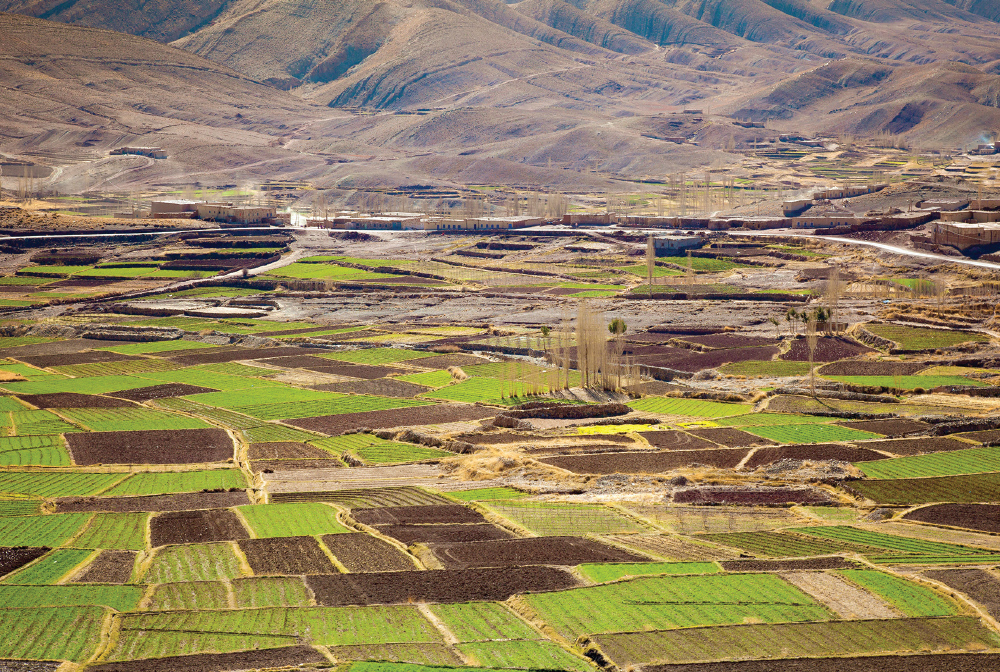
Agriculture has always held a central place in Morocco’s economy and identity. It contributes around 13–14% of GDP and employs about 40% of the workforce (Ministry of Economy, 2019). In rural areas, over 60% of people depend directly on agriculture for their livelihoods[1]. Most are smallholders — farmers cultivating less than five hectares, often on rainfed plots. They are vital not only for food production but also for maintaining rural employment, social stability, and the continuity of traditional farming knowledge passed down across generations. When agriculture falters, it destabilizes not only rural communities but the social and economic fabric of the entire country.
Yet, the climate is changing faster than the system can adapt. Average annual temperatures have risen by up to 2°C since the early 20th century, with recent warming outpacing the global average (Woillez, 2019). Rainfall has become erratic, alternating between destructive floods and prolonged droughts. With rainfed agriculture covering about 60% of cultivated land, the impact is severe. Wheat — Morocco’s staple crop — has seen dramatic yield swings: 11.47 million tonnes in 2015 collapsed to 3.35 million in 2016. Each dry year forces the country to import more cereals, spending nearly 20% of export revenues on food imports, four times the global average (FAO, 2021). This growing dependence is not just an economic burden; it is a national food security risk.
For decades, Morocco has sought to modernize its agriculture. The Green Morocco Plan (Plan Maroc Vert, PMV), launched in 2008, aimed to boost competitiveness and productivity through two pillars:
- Pillar I: investment in large, market-oriented farms and irrigation infrastructure.
- Pillar II: support for smallholders through “solidarity agriculture” projects.
The outcomes were mixed. The plan succeeded in increasing agricultural exports and irrigated surfaces and contributed to steady GDP growth[2]. However, the benefits were unevenly distributed. Large and export-oriented farms captured most gains, while many smallholders saw limited improvement in income or productivity.
This imbalance stemmed from the design and implementation of the PMV. Access to subsidies and modern irrigation required formal land titles, technical expertise, and capital, which small farmers often lacked. Wealthier farmers were better positioned to meet eligibility criteria and co-financing requirements, giving them disproportionate access to public funds and equipment (Ameur et al., 2017). In contrast, smallholders faced high costs, fragmented land, and limited access to credit and markets. Many could not benefit from the plan’s incentives and became more dependent on seasonal labor or remittances.[3]
The UN Special Rapporteur on the Right to Food (2015) also noted that planning and monitoring mechanisms excluded local farmer organizations and regional voices, concentrating decision-making in national institutions and private agribusiness actors. This top-down approach limited local ownership and ignored traditional knowledge that could have informed adaptation strategies to water scarcity.
Meanwhile, the shift toward water-intensive crops like citrus and avocados — encouraged by the PMV’s export targets — worsened water stress. In regions like Souss-Massa, groundwater depletion accelerated as aquifers were overexploited to sustain export production (Saidi & Diouri, 2017). The focus on exports diversified revenue but also deepened dependency on imported wheat and exposed the country to global market volatility.
The paradox is stark: Morocco’s agriculture is growing, but not inclusively. Export-oriented farms thrive[4], while smallholders — the backbone of rural Morocco — face intensifying climate risks with minimal institutional protection. This divide is not only economic but also cultural. Small-scale farming is deeply embedded in rural identity, family networks, and community traditions. It shapes local cuisines, seasonal rhythms, and the transmission of ancestral land stewardship practices. The decline of smallholder agriculture thus threatens to erode more than livelihoods — it risks the loss of Morocco’s rural heritage.
However, the argument that “smallholder decline is inevitable as economies industrialize” overlooks Morocco’s specific reality. In a country where rural poverty remains high and agriculture employs nearly half the workforce[5], abandoning smallholders would have heavy social costs: increased migration, urban precarity, and rural depopulation. Small farms also play a key ecological role in maintaining biodiversity and managing landscapes. Preserving and adapting them is therefore not about resisting modernization but ensuring a just and resilient transition.
Agriculture is not just an economic sector in Morocco — it is a cornerstone of culture, identity, and sovereignty. Fields are more than production sites; they are spaces of memory, family continuity, and resilience. Unless smallholders are placed at the center of climate adaptation, Morocco risks not only greater dependence on imports but also the erosion of its rural fabric and collective identity.
Morocco stands at a crossroads. It can continue down the path of uneven growth, or it can build an agricultural model that is fair, sustainable, and climate-resilient — one that values both productivity and people. The future of food security, and the dignity of millions of rural families, depends on that choice.
Bibliography
- Ameur, F., Dahan, M., & Faysse, N. (2017). Les subventions agricoles au Maroc : effets redistributifs et efficacité. CIRAD–INRAE.
- BELAHSEN, S., KHELLAF, A., & BELAHSEN, M. (2016). Evaluation de la stratégie agricole du Maroc (Plan Maroc Vert) : Une analyse en équilibre général dynamique. Dossiers De Recherches En Économie Et Gestion, 5(1), 13–46.
- Benamar, J. (2020). In the shadows of colonial agricultural policies: Morocco’s political failure in building a successful model for development. The Journal of North African Studies, 26(4), 733–755. https://doi.org/10.1080/13629387.2020.1713759
- Bibliography
Akesbi, N. (2006). Evolution et perspectives de l’agriculture marocaine. Rapport, 50, 85-198.Amachraa, A. (2023). Navigating Morocco's Agricultural Policy: Unraveling the Nexus of Water, Food Security, and Trade Tensions in Global Value Chains. - FAO & EBRD. (2023). Water Productivity in Morocco’s Agriculture: Policy Options and Pathways.
- Faysse, N. (2015). The rationale of the Green Morocco Plan: missing links between goals and implementation. The Journal of North African Studies, 20(4), 622-634. https://doi.org/10.34874/IMIST.PRSM/doreg-v5i1.15224
- HUNGER, F. T. E., & INSECURITY, F. (2024). Food Security and Nutrition in the World.
- MAPMDREF. (2019). Plan Maroc Vert: Bilan d’une décennie (2008–2018). Ministère de l’Agriculture, de la Pêche Maritime, du Développement Rural et des Eaux et Forêts, Rabat.
- OECD. (2022). Agricultural Policy Monitoring and Evaluation: Morocco 2022.
- Saidi, A., & Diouri, M. (2017). Agriculture irriguée et stress hydrique au Maroc. Revue Marocaine des Sciences Agronomiques et Vétérinaires, 5(2), 45–54.
- UN Special Rapporteur on the Right to Food. (2015). Report of the Special Rapporteur on the Right to Food, Mission to Morocco (A/HRC/28/65/Add.2). United Nations Human Rights Council.
- Woillez, M.-N. (2019). Les tendances climatiques au Maroc : évolution des températures et des précipitations. Météo-France & Direction de la Météorologie Nationale, Rabat.
- World Bank. (2022). Employment in agriculture (% of total employment) – Morocco. World Bank Data. Retrieved from: https://data.worldbank.org
[1] Abdelmajid, S., Mukhtar, A., Baig, M. B., & Reed, M. R. (2021). Climate change, agricultural policy and food security in Morocco. In Emerging challenges to food production and security in Asia, Middle East, and Africa: Climate risks and resource scarcity (pp. 171-196). Cham: Springer International Publishing.
[2] MAPMDREF (2019). Plan Maroc Vert: Bilan d’une décennie (2008–2018). Ministère de l’Agriculture et de la Pêche Maritime, Développement Rural et Eaux et Forêts.
[3] International Fund for Agricultural Development (IFAD). (2022). Rural development and smallholder resilience in Morocco. International Fund for Agricultural Development. https://www.ifad.org/en/web/operations/w/country/morocco
[4] https://oxfordbusinessgroup.com/reports/morocco/2020-report/economy/bea…
[5] World Bank (2022) – Employment in agriculture (% of total employment) – Morocco: https://data.worldbank.org/indicator/SL.AGR.EMPL.ZS?locations=MA