Ibn Khaldun - Policy Brief
How Free Markets Can Drive Environmental Sustainability
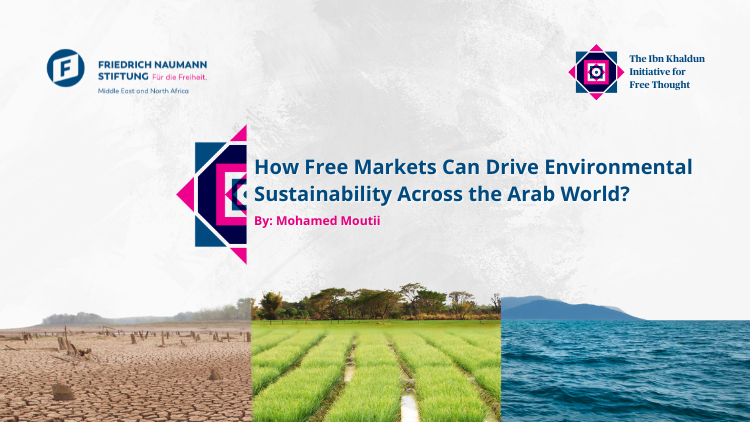
In the face of escalating environmental challenges, from acute water scarcity to rising temperatures and biodiversity loss, the Arab world stands at a critical crossroads. How can a region so dependent on fossil fuels and constrained by limited natural resources transition to a more sustainable future? A growing body of evidence suggests that the answer lies not in heavy-handed regulation but in embracing the principles of economic freedom.
A new policy brief by Mohamed Moutii titled "How Free Markets Can Drive Environmental Sustainability Across the Arab World" argues that secure property rights, open markets, and voluntary exchange are not just tools for economic prosperity; they are also essential drivers of environmental stewardship. Rather than viewing environmental sustainability and economic growth as conflicting goals, Moutii’s analysis shows they are fundamentally intertwined.
A Region Under Environmental Stress
From Cairo to Casablanca and Riyadh to Rabat, the Arab world is experiencing intense environmental pressure. The region is among the most water-scarce in the world, with 14 Arab countries ranking as “extremely water stressed.” Climate change threatens agricultural productivity and infrastructure, while carbon emissions remain high due to reliance on oil and gas. Waste management systems are overburdened, plastic pollution is rampant, and biodiversity is being lost at alarming rates.
Public concern is mounting. A 2017 survey by the Arab Forum for Environment and Development (AFED) found that 95% of respondents across 22 Arab countries felt their governments weren’t doing enough to tackle environmental issues. But what should be done?
Free Markets: A Path Toward Sustainability
Rather than doubling down on state-led, top-down environmental regulations, Moutii argues that sustainable development in the Arab world must be anchored in economic freedom. He demonstrates how free markets, driven by secure property rights and open competition, incentivize innovation and investment in green technologies, without compromising economic growth.
Data from international indexes such as Yale’s Environmental Performance Index (EPI) and the Heritage Foundation’s Economic Freedom Index show a strong correlation between economic freedom and environmental outcomes. Countries with freer markets tend to have cleaner environments, faster innovation cycles, and more effective investments in sustainability.
Ultimately, Moutii makes a compelling case that economic freedom is not a luxury but a necessity for environmental sustainability. As the Arab world seeks to adapt to climate realities, free markets, when guided by sound governance and ecological awareness, can play a transformative role.
To explore the full analysis and policy roadmap, download the complete policy brief: "How Free Markets Can Drive Environmental Sustainability Across the Arab World" by Mohamed Moutii.