Youth & Politics
Youth & Politics: What’s Stopping the Conversation?

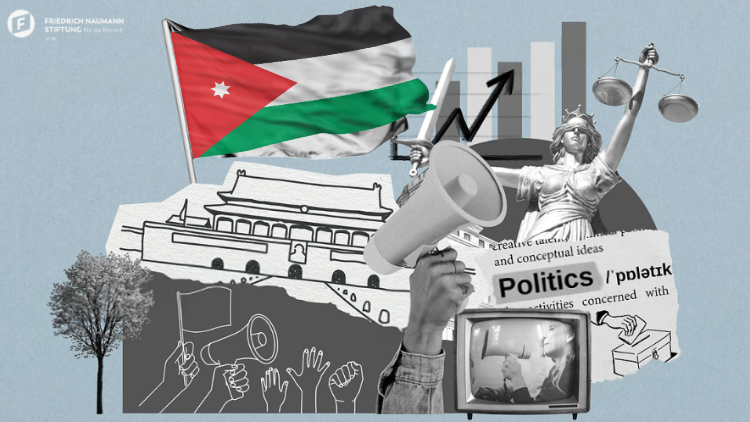
In Jordan and Beyond, Young People Care — Just Not in the Way You Think
If you ask most young people in Jordan how they feel about politics, you’ll likely get a sigh, a shrug, or a polite “I don’t really follow that stuff.” But dig just a little deeper — maybe over a late-night tea or a group chat conversation after a big news headline — and you’ll hear opinions. Big ones. Smart ones. Passionate ones.
So, if the interest is there, why does “getting involved in politics” still feel so out of reach?
Across the MENA region, young people make up more than half the population. That’s not just a statistic — it’s a superpower. But many of them feel disconnected from formal political spaces: parliament sessions, party platforms, speeches on TV. It’s not that they don’t care. It’s that the conversation doesn’t feel like it includes them — or reflects them.
Let’s unpack why.
“I Don’t Think My Voice Really Matters”
This is one of the most common reasons youth disengage. Whether it’s frustration with bureaucracy, a sense that nothing ever changes, or the feeling that decisions are made “somewhere else,” there’s a quiet disconnect. In some cases, it’s rooted in real past experiences. In others, it’s something young people inherit — from family, media, or their communities.
This isn’t apathy. It’s distance. And rebuilding that connection takes more than voter registration campaigns. It takes trust.
Where’s the Civic Education?
In many schools across the region, “civic education” is taught as theory, not practice. Students might memorize the structure of government or learn the dates of key historical events — but few are asked what they think about public life, or how they might shape it.
By the time they reach university, many students have never participated in a debate, joined a student council, or been encouraged to question how things work. The message, though unspoken, is clear: politics is for the grown-ups.
But what if it wasn’t?
The Social Side of Silence
For a lot of young people, politics feels… awkward. It’s the kind of topic that’s avoided at family dinners, in classrooms, or even in friend groups. Fear of saying “the wrong thing,” offending someone, or crossing invisible lines keeps the conversation quiet.
Add to that social media, where opinions are public and fast-moving, and it’s easy to understand why many young people keep theirs to themselves.
Still, there’s a quiet shift happening — and it’s worth noticing.
A New Kind of Engagement
Not all political action looks like joining a party or running for office. Sometimes it looks like organizing a community clean-up, launching a podcast on social issues, or making a viral reel about fuel prices. Jordanian youth — like many across the region — are starting to find new languages for political expression. Languages rooted in creativity, community, and lived experience.
What we’re seeing isn’t a lack of interest. It’s a redefinition of participation.
The more flexible our systems are — the more open they are to non-traditional forms of input — the more likely young people are to step in, speak up, and stay involved.
Where FNF Stands In
At the Friedrich Naumann Foundation for Freedom, we believe in opening space for exactly this kind of shift. Youth don’t need to be “taught” politics — they need to be invited into it. Through dialogue, through workshops, through platforms that reflect their voices, not just quote them.
Creating safe, inclusive, and modern spaces for youth to engage — even informally — is part of how liberal societies grow. And the earlier this happens, the more confident young people become in shaping the future they want to live in.
So what’s stopping the conversation? Maybe fear. Maybe formality. Maybe just tradition.
But what’s starting it — quietly, creatively, and bravely — is something even stronger: the belief that young voices matter, and that change doesn’t always begin with a speech. Sometimes, it starts with a question.